Skip to content

Best light setup for beareded dragon

Getting the lighting right for our bearded dragon is one of the most important things we can do for their health. It’s not just about

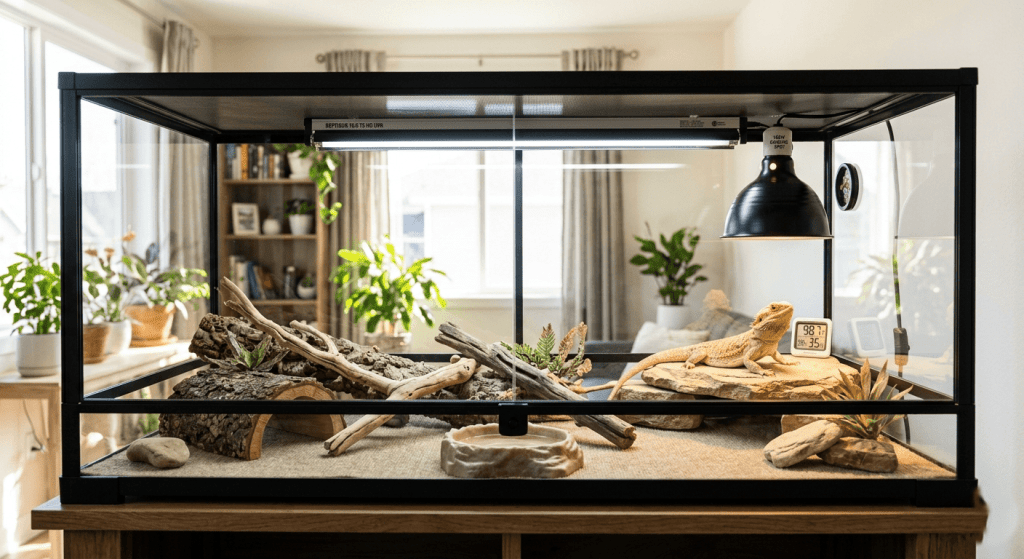
Table of Contents

A bright, clear photograph of a spacious glass terrarium setup for a bearded dragon,

Getting the lighting right for our bearded dragon is one of the most important things we can do for their health. It’s not just about helping us to see them; it’s about providing the energy they need to survive and thrive.

A proper setup requires two main things: a heat lamp for basking and a special UVB light for vitamin D3 synthesis. Here’s how to get it right.

💡 The Two Essential Lights

We need two distinct types of lights working together.

1. The Heat Lamp (For Basking)

This provides the high temperatures our bearded dragon needs to digest food and stay active.
  • Type of Bulb: A white, bright light is best. A halogen flood bulb is highly recommended as it produces a good amount of heat and bright light, closely mimicking the sun.
  • Wattage: This depends on our enclosure size and room temperature. A 100-watt bulb is a common starting point for a standard tank. For larger enclosures, we might need a 150-watt bulb.
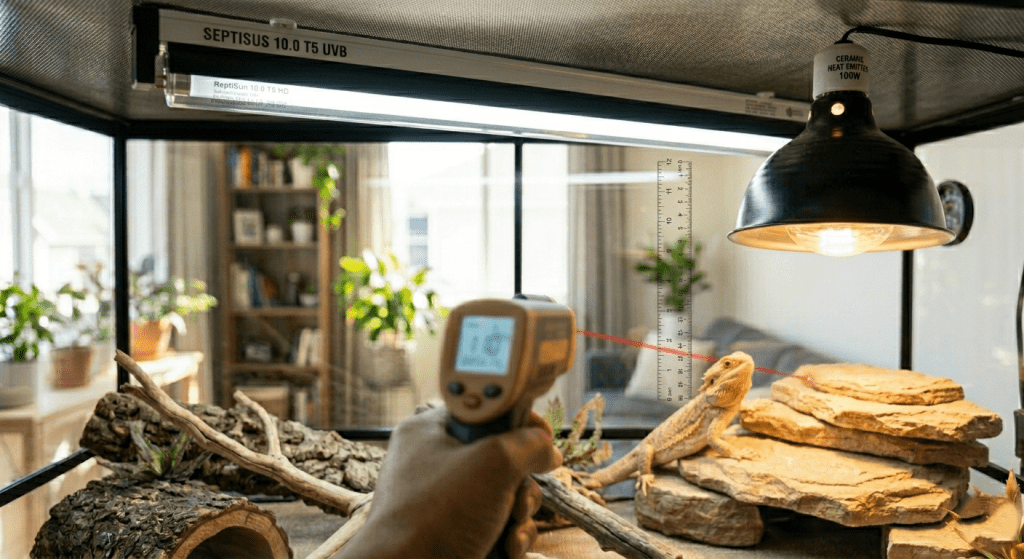
  • Placement: Position the heat lamp at one end of the enclosure, pointing down at a designated basking spot (like a flat rock or branch).

2. The UVB Light (For Vitamin D3)

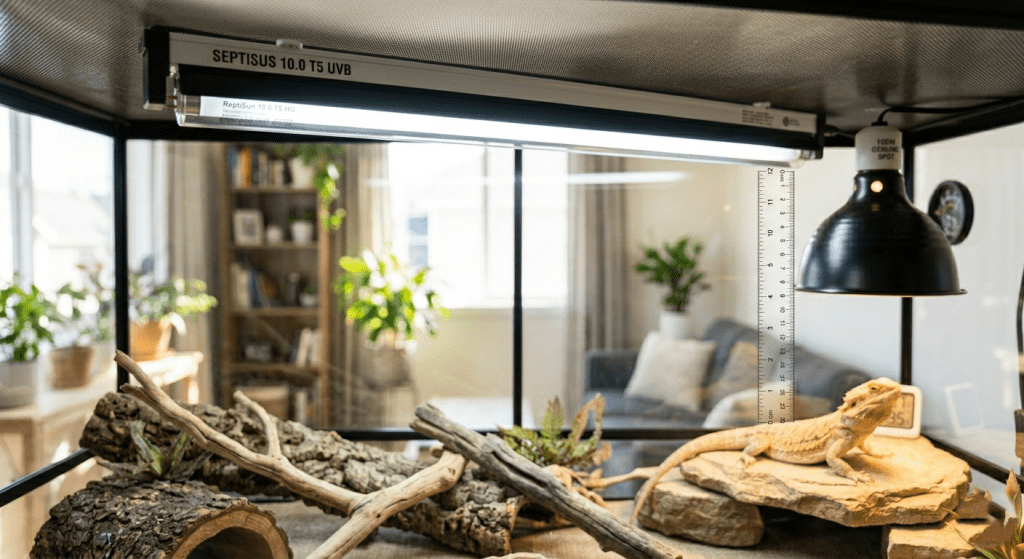
A close-up, educational photograph of a linear T5 HO UVB fluorescent tube light mounted inside a glass terrarium. The light is positioned about 12 inches above a basking rock. The label "ReptiSun 10.0 T5 HO" is slightly visible. The lighting is bright and clean. The background is softly blurred. The mood is professional and informative. Photorealistic, sharp focus, high resolution, family-friendly, perfect for a blog article about UVB lighting for bearded dragons.

This is non-negotiable. Without it, our dragon can’t absorb calcium, leading to a devastating disease called Metabolic Bone Disease (MBD).

  • Type of Bulb: ONLY use a linear fluorescent tube, not a compact or coil bulb. The best and most trusted brands are the Arcadia T5 HO 12% and the Zoo Med ReptiSun 10.0 T5 HO.
  • Length: The bulb should be about two-thirds the length of your enclosure.
  • Placement: Position the UVB tube on the same side of the enclosure as the heat lamp. It should be mounted inside the enclosure if you have a mesh top (which can block UVB rays), or placed on top of a wide-mesh screen.

🌡️ Getting the Temperatures Right

We can’t just guess the temperature. You must use a thermometer to check.
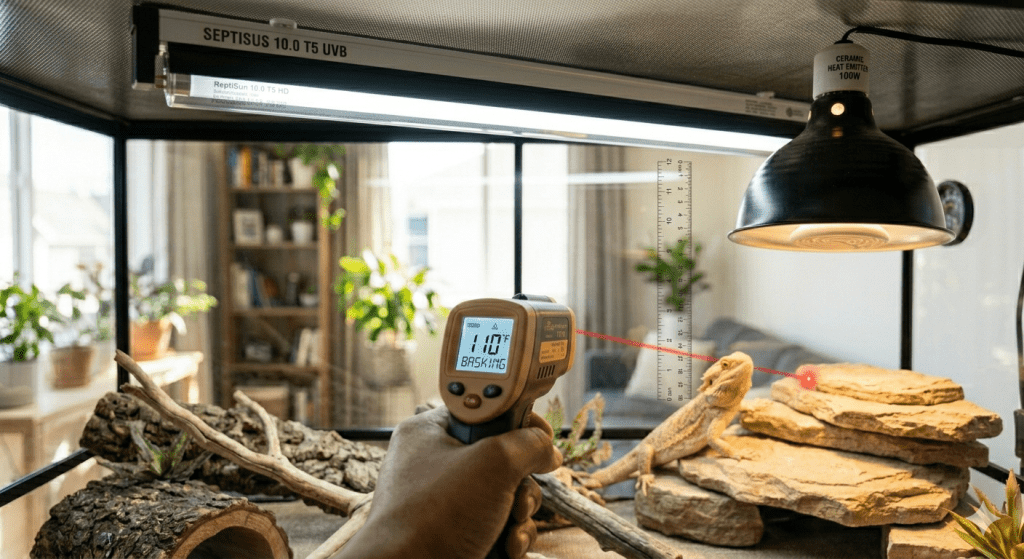
A close-up photograph of a digital thermometer gun pointing at a basking rock under a heat lamp, showing a temperature reading of 110°F. A healthy bearded dragon is sitting nearby on the rock. The heat lamp is visible above. The background is a clean glass terrarium with natural décor. The mood is practical and educational. Photorealistic, high resolution, 4k, family-friendly, perfect for a blog article about bearded dragon temperature requirements.
AreaTemperature
Basking Surface (the spot directly under the heat lamp)105-115°F (40-46°C)
Warm Side Ambient (the air temperature on the warm side)90-100°F (32-38°C)
Cool Side Ambient (the air temperature on the cool side)72-80°F (22-27°C)

Pro Tip

: To avoid overheating, use a lamp dimming switch on your heat lamp. This allows you to fine-tune the temperature precisely.


📏 The Perfect Distance: UVB to Basking Spot

The distance between your UVB bulb and your bearded dragon is critical.
  • The UVB bulb should be positioned no more than 12-15 inches (30-38 cm) from the basking spot.
  • Make sure there is no glass or plastic between the bulb and your dragon, as these materials block almost all UVB rays.

A close-up photograph of a halogen heat lamp fixture mounted above a glass terrarium, shining bright warm light down onto a basking rock below. The lamp is positioned at one end of the enclosure. The light is warm and golden. The background is softly blurred with plants visible. The mood is bright, warm, and educational. Photorealistic, high resolution, 4k, family-friendly, perfect for a blog article about heat lamps for bearded dragons.

🕒 The Right Lighting Schedule

our bearded dragon needs a consistent day/night cycle to stay healthy.

  • Daytime: Keep both the heat and UVB lights on for 12 to 14 hours a day.
  • Nighttime: Turn off ALL lights at night. They need complete darkness to sleep properly. Red or blue “night lights” disrupt their sleep and should not be used.
  • Automate It: The easiest way to manage this is to plug your lights into a simple, cheap timer plug.

🌟 The Extra Touch: “Brightness”

Bearded dragons are “sun worshippers”. They benefit from very bright, full-spectrum light. To really make your dragon feel at home, you can add a separate 6500K T5 fluorescent bulb for extra visible light. This is great for their wellbeing and makes their home look much nicer.


📝 A Quick Recap

  1. Buy a linear T5 HO UVB bulb (Arcadia 12% or ReptiSun 10.0) and a halogen heat lamp.
  2. Place both lights on the same side of the tank, over the basking spot.
  3. Position the UVB bulb 12-15 inches from the basking area, with no glass or plastic blocking it.
  4. Monitor the temperatures with a thermometer, aiming for 105-115°F on the basking spot.
  5. Set lights on a timer for a 12-14 hour day and a completely dark night.

Getting this right from the start is the single best thing you can do for your beardie’s health and happiness. Good luck setting up your dragon’s home!
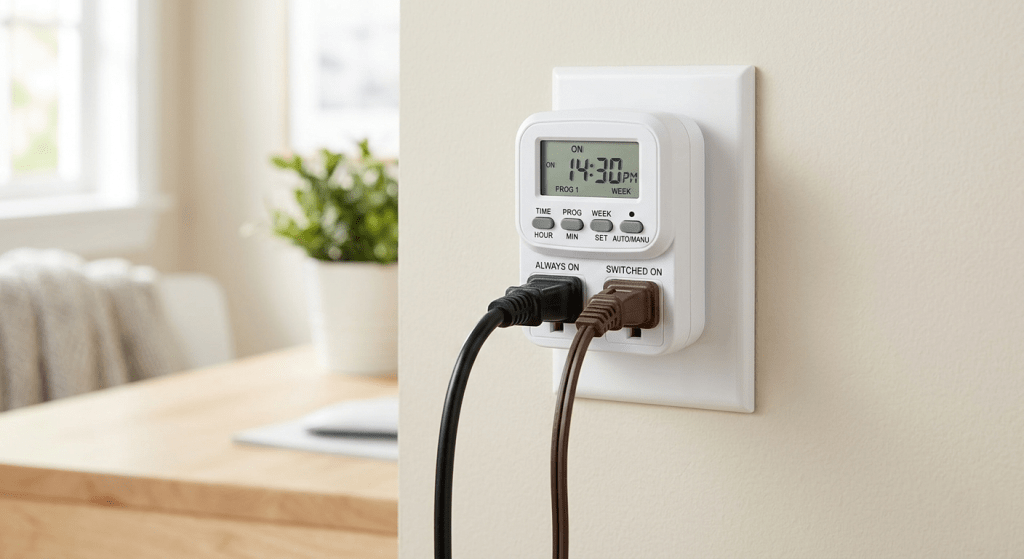
A clear, simple photograph of a digital timer plug plugged into a wall outlet with two lamp cords connected to it. The timer screen shows "ON" and a time setting. The background is a clean, bright room. The mood is practical and simple. Photorealistic, high resolution, family-friendly, educational, perfect for a blog article about automating bearded dragon lighting.

Leave a Reply

Your email address will not be published. Required fields are marked *

Latest Posts