“The Complete Bearded Dragon Diet Chart: What to Feed Daily (With Printable PDF)
So I just brought home a bearded dragon, or maybe you’ve had one for a while and you’re still confused about what to feed them.

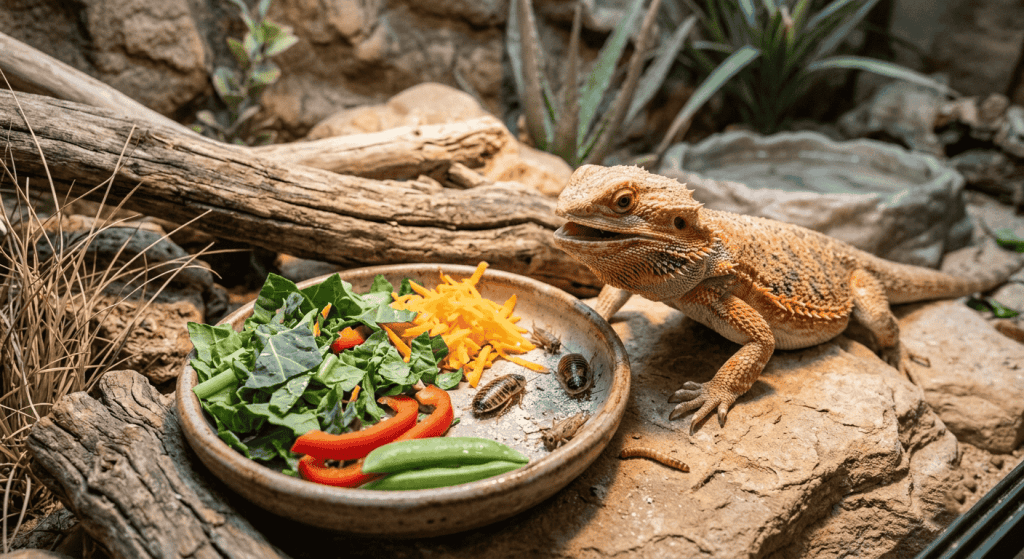
So I just brought home a bearded dragon, or maybe you’ve had one for a while and you’re still confused about what to feed them. Trust me, I get it. The internet is full of conflicting advice, and it’s easy to feel overwhelmed.
Here’s the good news: feeding a bearded dragon isn’t complicated once you understand the basics. I’ve put together this complete diet chart to make things simple. Whether you need a daily feeding guide, a printable PDF, or just want to know which veggies are safe, you’ll find everything right here.
Bearded dragons are omnivores, meaning they eat both plants and animals. In the wild, they come from the arid parts of Australia where food can be scarce, so they’ve evolved to eat a wide variety of things. But in captivity, it’s up to you to get their nutrition right.
Here’s the thing: most bearded dragon health problems veterinarians see—weak legs, soft jaws, poor growth—are caused by incorrect diet. Getting the diet right from the start is the single best thing you can do for your dragon’s health.
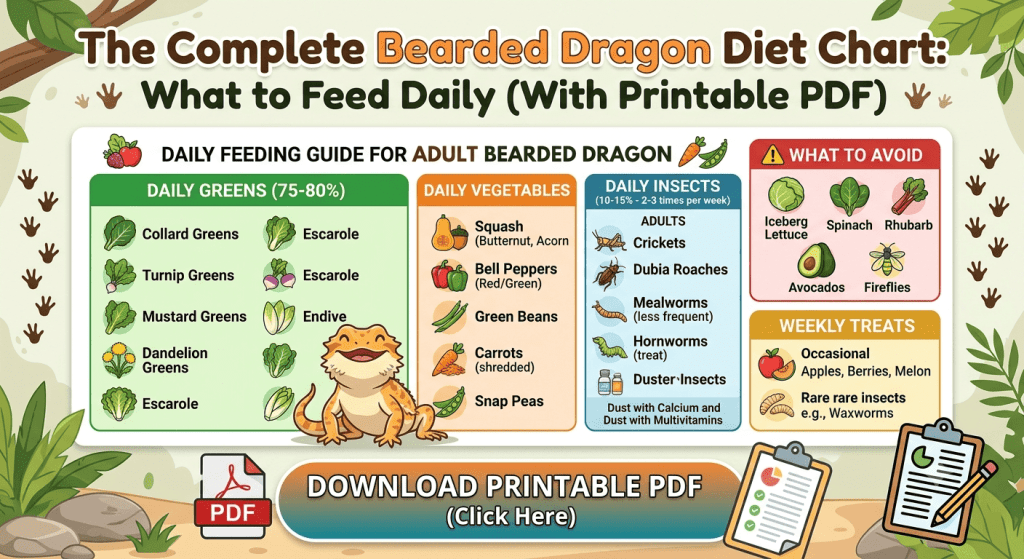
The most important rule is this: baby dragons eat different things than adults. Their nutritional needs change as they grow. Here’s the quick breakdown:
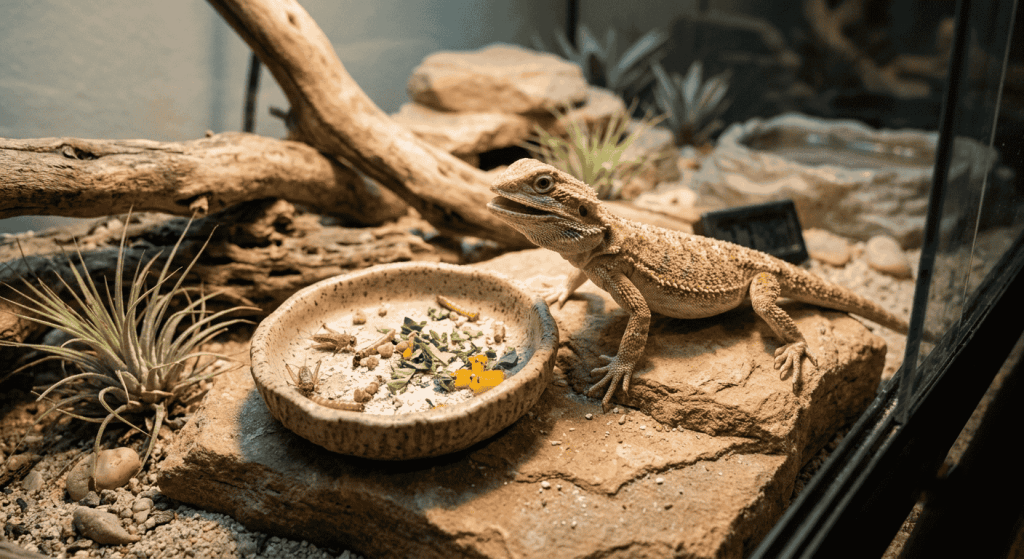
Baby dragons are growing fast and need lots of protein. Their diet should be about 70% insects and 30% greens.
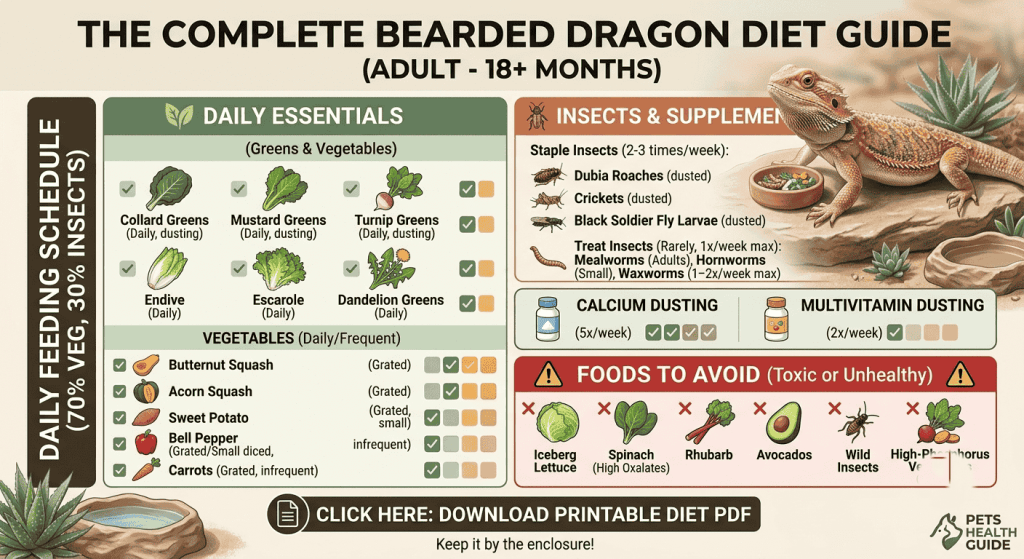
As they get older, the balance shifts. Juveniles need about 50% insects and 50% plant matter.
Adults are mostly herbivorous. Their diet should be about 80% plant matter and 20% insects.
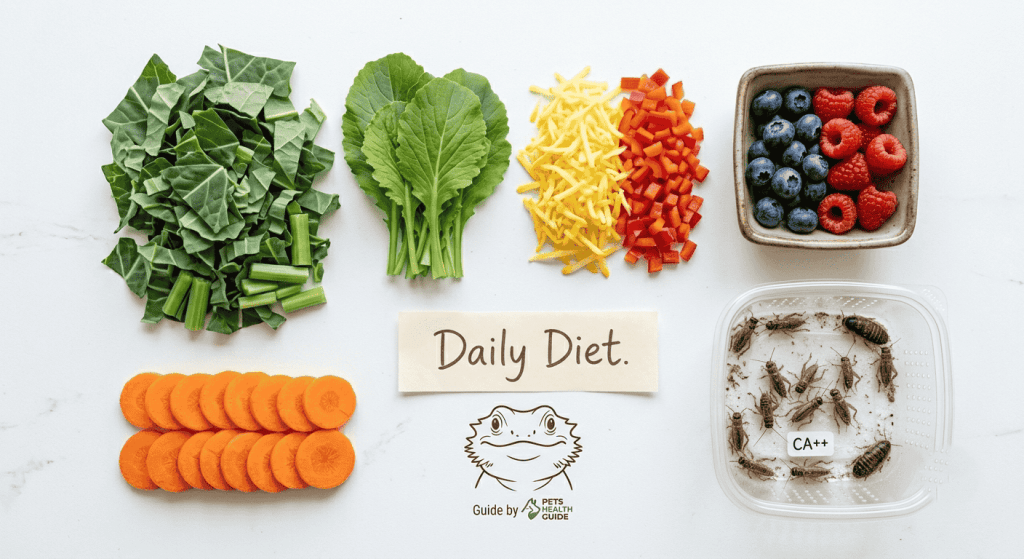
Leafy greens should make up the majority of your dragon’s plant intake. As a rule, anything dark green and leafy is a good choice.
These vegetables have excellent calcium-to-phosphorus ratios and can be fed daily without worry. The ideal ratio is at least 2:1 calcium to phosphorus.
Quick rule: If it’s dark green and leafy, it’s probably a good daily option.
These are great but shouldn’t be the only thing we feed:
Here’s something many owners get wrong: fruits should NOT be fed every day.
Fruits are high in sugar and low in minerals. They should make up no more than 5-10% of the total diet. In fact, some experts recommend excluding fruits entirely because they’re the primary dietary cause of dental problems in bearded dragons.
Safe fruits (as occasional treats only):
How often: Once a week at most, and in very small amounts.
Important: Swiss chard, spinach, and beet greens contain oxalates that can bind calcium and prevent absorption—feed these sparingly.
| Age | Insects | Plant Matter |
|---|---|---|
| 0-6 months | 70% | 30% |
| 6-12 months | 50% | 50% |
| 12+ months | 20% | 80% |
Don’t feed the same thing every day. Rotate between different greens and vegetables to ensure your dragon gets a range of nutrients.
Finely chop vegetables and mix them together. This prevents your dragon from picking out only their favourite bits.
Always wash fruits and vegetables before feeding to remove pesticides and dirt.
Vegetables can be offered cooked or raw, but raw is more natural and retains more nutrients.
Feed insects a high-calcium diet for 24-72 hours before offering them to your dragon. This makes the insects more nutritious.
Dust insects with calcium powder 1-2 times weekly for adults, and 4-5 times weekly for juveniles.
Wild-caught insects often contain parasites.
Never feed an insect whose length is wider than the width of your dragon’s head.
Mistake #1: Feeding too many insects to adults. Adult dragons should eat mostly plants, not bugs. Overfeeding insects can lead to obesity and liver problems.
Mistake #2: Feeding fruits daily. Fruits are treats, not meals. Stick to once a week at most.
Mistake #3: Ignoring calcium supplementation. Without enough calcium, dragons develop Metabolic Bone Disease—a painful and preventable condition.
Mistake #4: Feeding nutrient-poor greens. Iceberg lettuce and celery have almost no nutritional value. Stick to dark leafy greens.
✅ Start with dark leafy greens (collard, mustard, or turnip greens)
✅ Add chopped vegetables (squash, bell peppers, carrots)
✅ Sprinkle with a small amount of variety (a different green or veggie)
✅ Offer gut-loaded insects 3-4 times per week (adults) or daily (babies)
✅ Dust insects with calcium powder
✅ Offer fruit as a treat once a week at most
✅ Provide fresh water daily
Feeding your bearded dragon doesn’t have to be complicated. Remember the golden rules:
Get these basics right, and your bearded dragon will thrive. They’ll have strong bones, bright eyes, and plenty of energy to bask and explore.
And if you’re ever unsure about a specific food, stick to the safe list. A boring but safe meal is always better than a risky one.
Disclaimer
The information in this article is for educational purposes only.
Pingback: Best Light Setup For Beareded Dragon | Paws & Antlers
Pingback: Bearded Dragon Brumation: What It Is And How To Handle It | Paws & Antlers