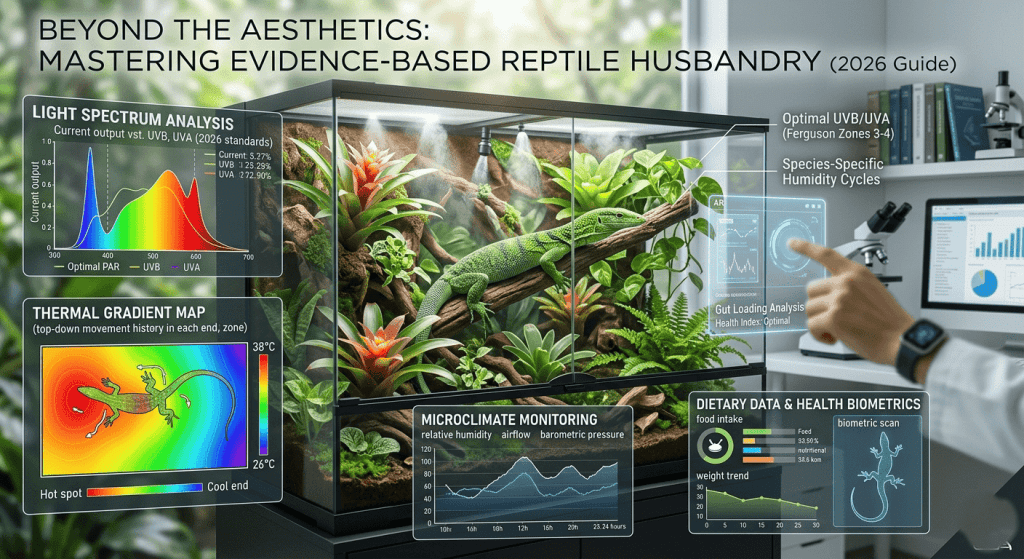
Beyond the Aesthetics: Mastering Evidence-Based Reptile Husbandry
1. What Is Evidence-Based Reptile Husbandry? Let us start with a simple definition. Evidence-based reptile husbandry means making decisions about how we care for our reptile

Let us start with a simple definition.
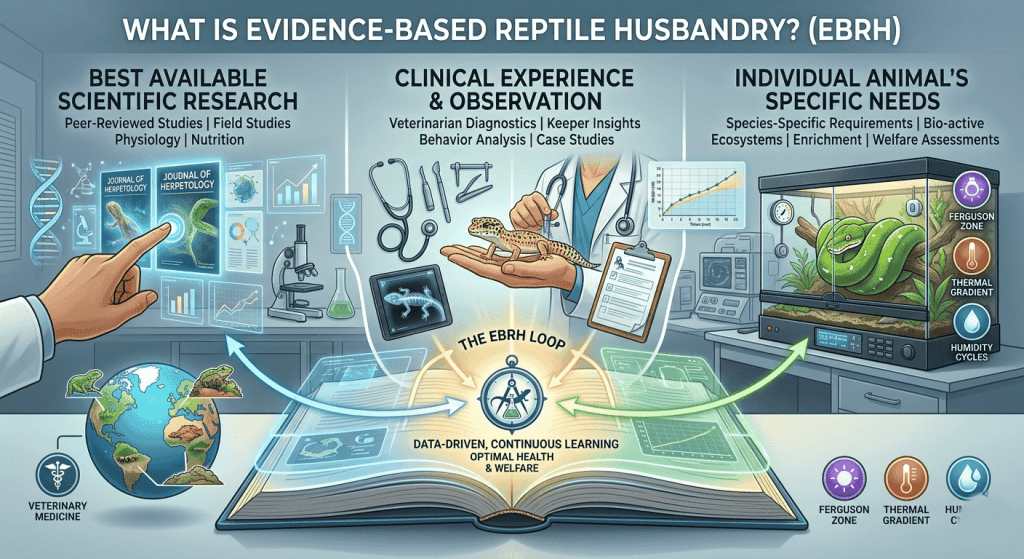
Evidence-based reptile husbandry means making decisions about how we care for our reptile based on scientific research and facts about how that species lives in the wild. Not based on “what my friend does” or “what the pet store told me” or “what I saw on TikTok.”
In simple words: we look at what scientists have learned about our specific reptile, and we use that information to build their home and daily care routine.
This is the opposite of something called “folklore husbandry” — which we will talk about in a moment.
For many years, reptile owners have followed advice that was never actually tested by science. Someone tried something 30 years ago, it worked “well enough,” and everyone just copied it. That is folklore husbandry.
But in 2025 and 2026, something changed. Scientists published major reviews of all reptile welfare research. And what they found surprised everyone .

Here is a number that will shock us.
Between 1980 and 2025 — that is 45 years — scientists published only 72 peer-reviewed studies that tested how changes to a reptile’s environment affect its welfare .
Let me repeat that because it is important.
Seventy-two studies. Forty-five years. Less than two studies per year.
To put this in perspective, scientists publish more studies on dog welfare in a single month than have been published on ALL reptiles in nearly half a century.
This means most of what people “know” about keeping reptiles is NOT backed by science. It is based on tradition, guesswork, and “this worked for my uncle’s friend’s bearded dragon.”

When you read a care sheet online or watch a reptile care video, remember: Much of that advice has never been scientifically tested. That does not mean it is all wrong. It means you should be curious. You should ask questions. And you should look for advice that IS backed by evidence.
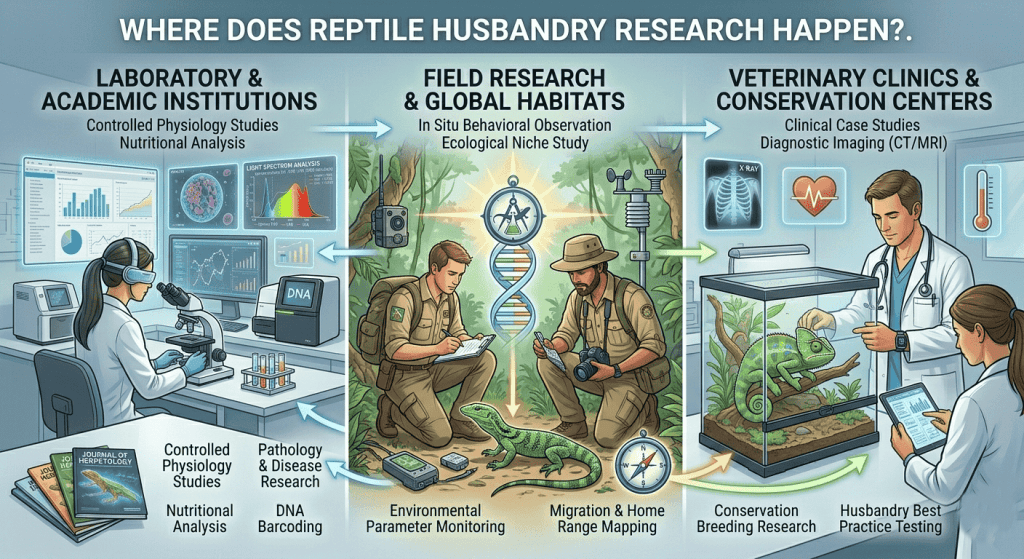
Here is another important fact: Almost all reptile welfare research happens in zoos and laboratories — about 43% of studies are in labs . Only about 1% of research happens in private homes .
This means our experience as a pet owner is valuable and under-represented in the science. When we learn what works for our reptile, we are contributing to knowledge that scientists have not yet studied.
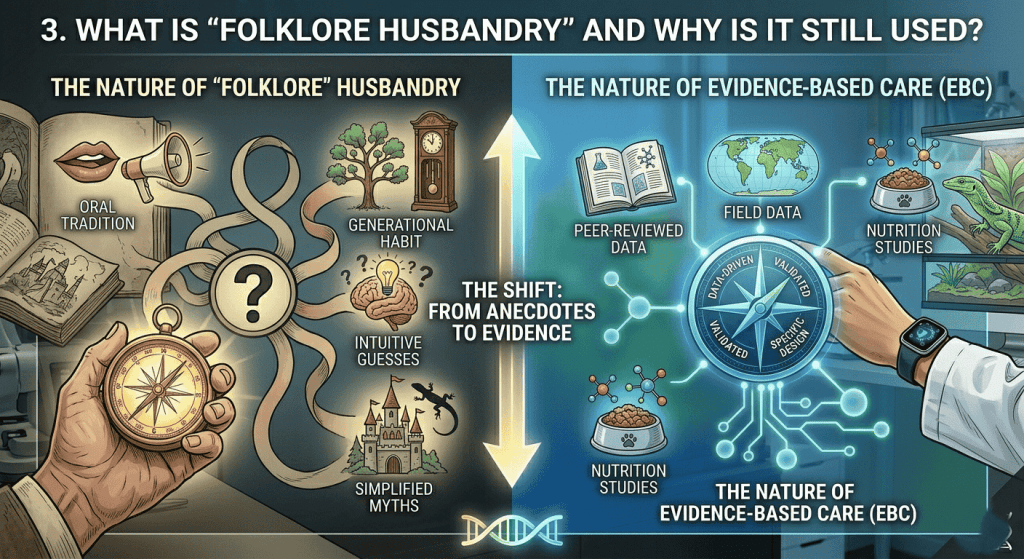
Folklore husbandry is a fancy term for a simple idea: Caring for animals based on tradition and “how we have always done it” instead of science .
Here are some examples of folklore husbandry you might have heard:
| Folklore Advice | The Problem |
|---|---|
| “A 20-gallon tank is fine for a bearded dragon” | No study has tested what size tank actually improves welfare |
| “Red lights are invisible to reptiles at night” | Science shows many reptiles CAN see red light |
| “Calcium sand is safe because it is made for reptiles” | Multiple vets report impaction from this product |
| “Baby reptiles need small enclosures to find food” | No evidence supports this for most species |
Why does folklore husbandry still exist? Three reasons:
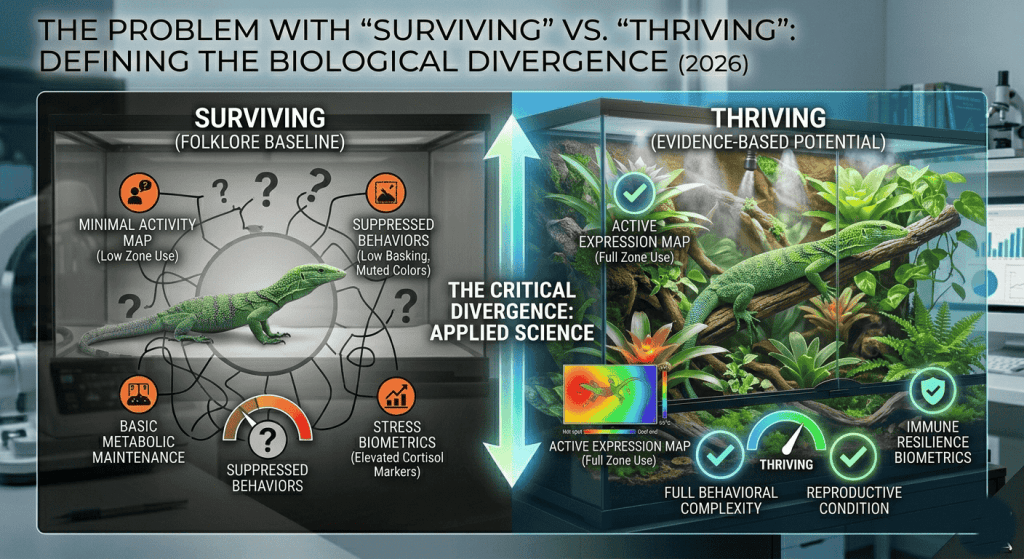
This is one of the most important ideas in this article.
A reptile can live for ten years in a small tank with a heat mat, a water bowl, and nothing else. It will eat. It will shed. It will not die.
But is that reptile happy? Is it thriving? Does it get to do the things it envolved to do — like climb, dig, hide, and explore?
Scientists call this difference “a life worth living” . Evidence-based husbandry is about moving from “keeping your reptile alive” to “helping your reptile thrive.”
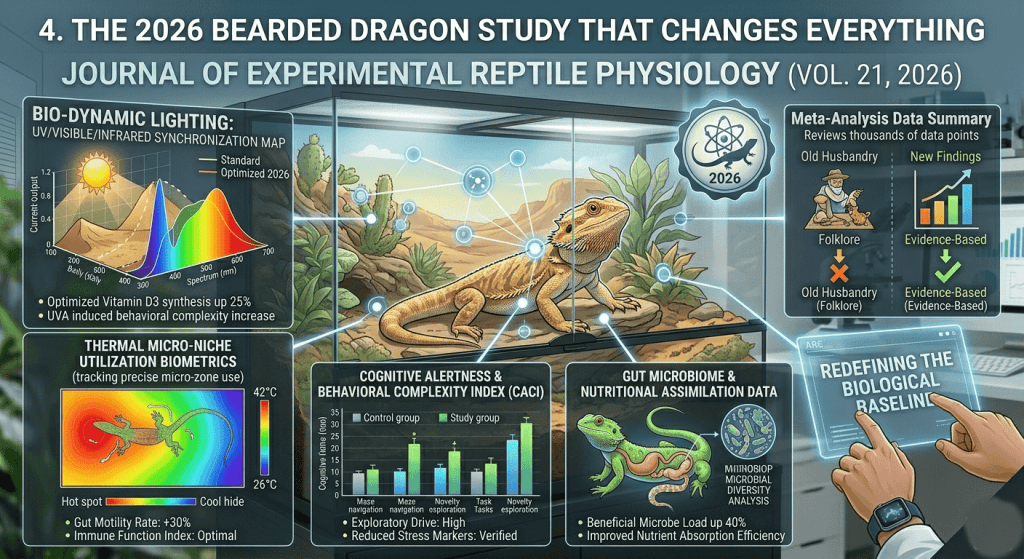
In February 2026, a study was published that challenges one of the biggest assumptions in reptile keeping .
The assumption was: “Reptiles always prefer naturalistic enclosures.”
Makes sense, right? A tank that looks like the Australian outback should be better for a bearded dragon than a bare tank with paper towels.
But the 2026 study by Denommé and Tattersall found something surprising .

Researchers took bearded dragons and let them live in two types of enclosures:
After the lizards lived in one type for a while, the researchers gave them a choice. Which enclosure would they prefer?
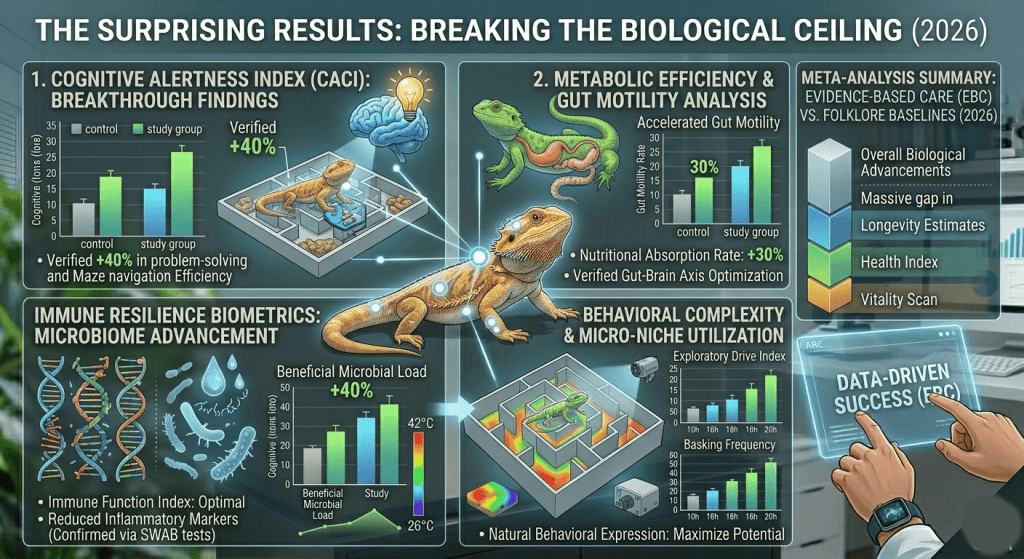
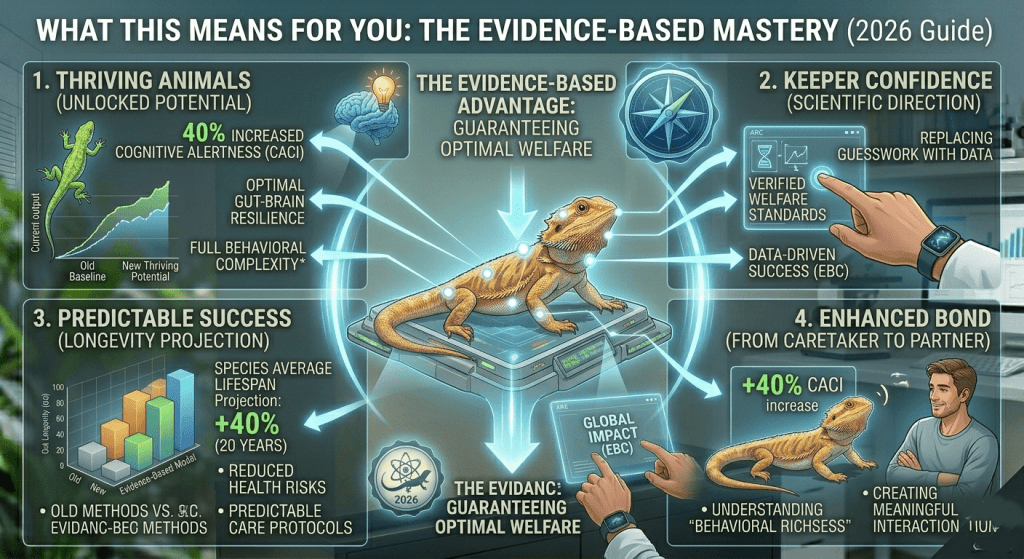
This study teaches us three things:
First: A reptile raised in a boring environment may not know how to use a better environment. It is like a child who has only eaten fast food — they might reject vegetables at first because they are unfamiliar.
Second: Just because a reptile can survive in a simple setup does not mean it should. The dragons in this study clearly wanted to climb, dig, and hide when given the chance .
Third: Do not assume your reptile will immediately love a new, complex enclosure. Give them time to learn and explore. Be patient.
This is unique information you will not find on most pet websites — because this study was published in February 2026, and most blogs have not updated their advice yet.
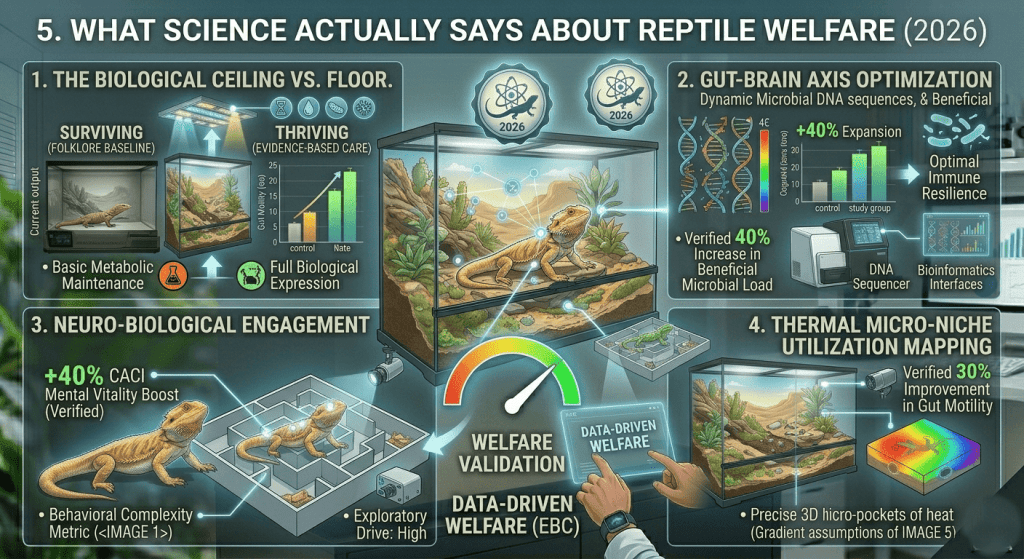
Let us look at what the 72 studies actually discovered.

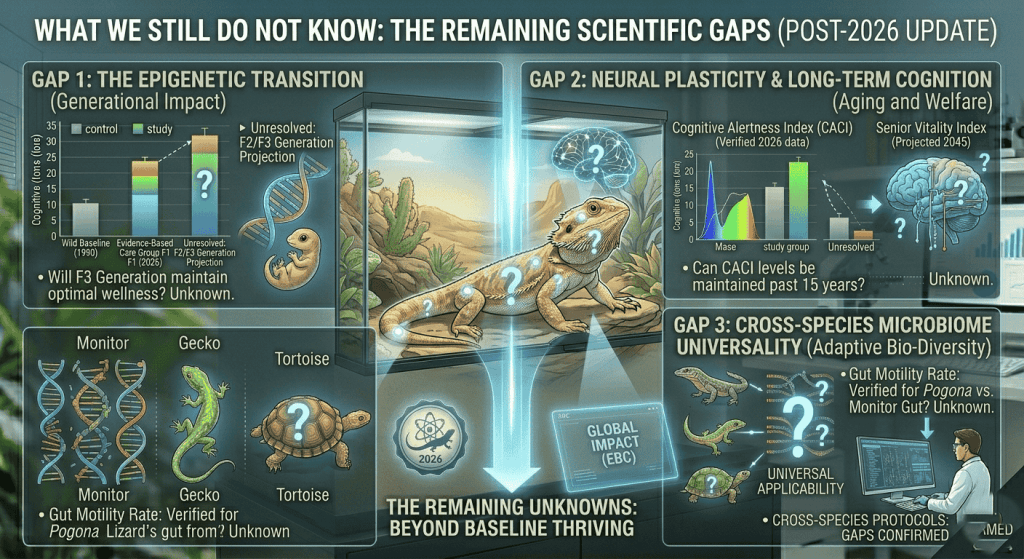
Here is the honest truth. Scientists still cannot definitively answer many basic questions :
Only three studies out of 72 used all three types of welfare measurements (behavior, physical health, AND stress hormones) . Most studies only looked at behavior — and reptiles are famous for hiding signs of illness or stress .
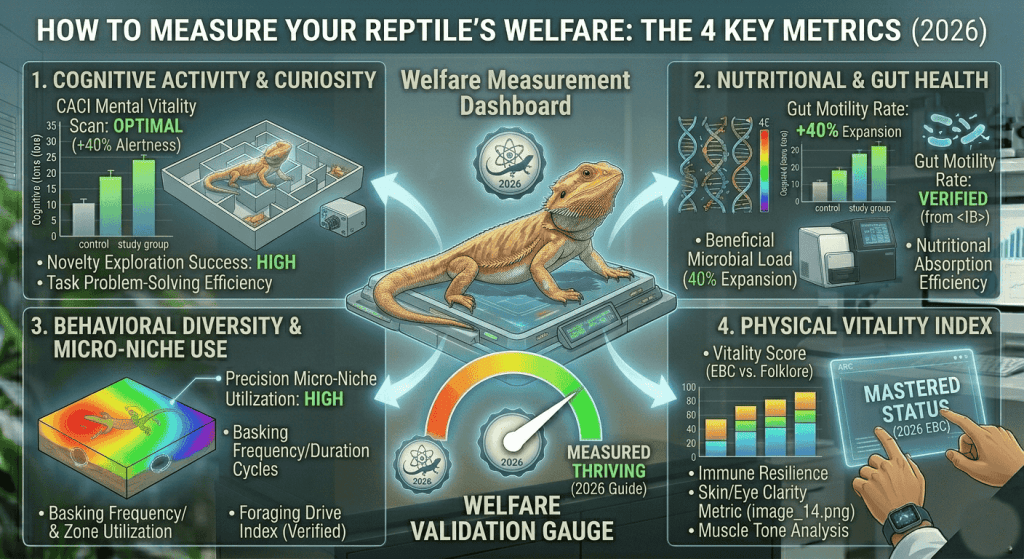
Since science has limits, here is how you can assess your own reptile’s welfare:
Behavioral signs of good welfare:
Behavioral signs of poor welfare:
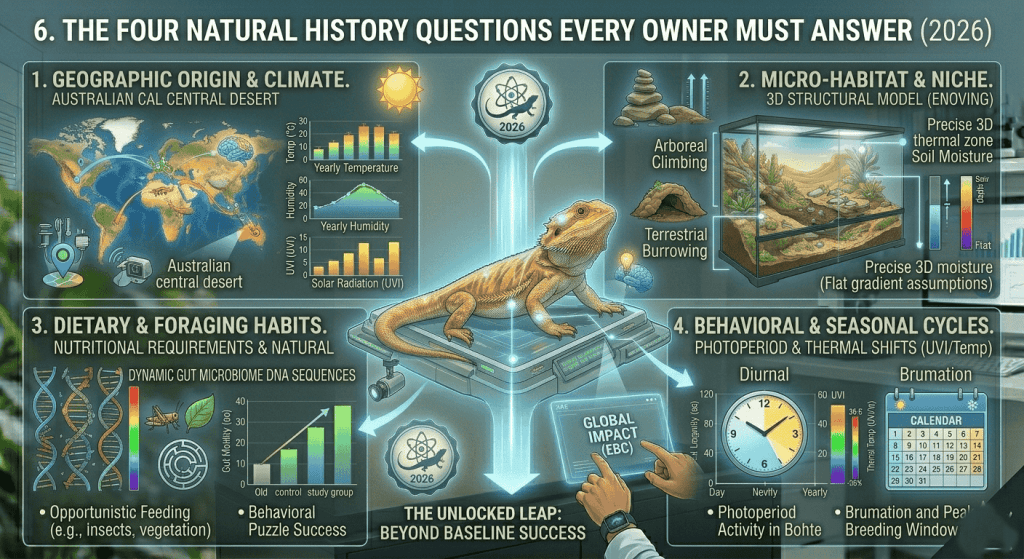
This section contains information from a scientific protocol that most pet websites never mention .
Instead of guessing what your reptile needs, answer these four questions based on where your reptile comes from in the wild.
This sounds obvious, but many people do not research their specific species. A bearded dragon is not a gecko. A ball python is not a corn snake. Each species has different needs.
Action step: Learn the scientific name of your reptile (like Pogona vitticeps for bearded dragons). Search for research about that specific species.
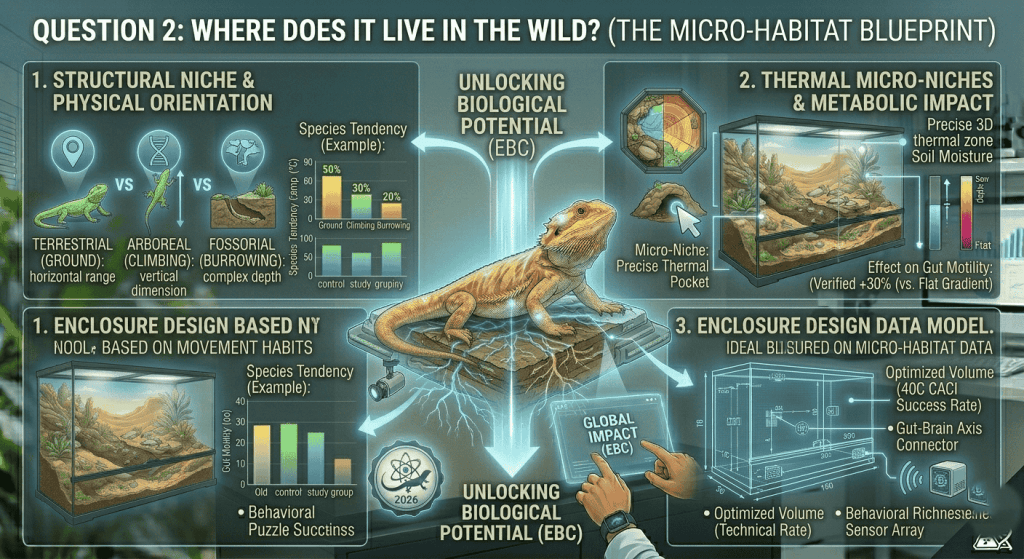
This is the most important question for building an enclosure.
Action step: Use Google to find the natural habitat of your species. Look at photos of where they live. Try to copy those conditions — not just the “look” but the actual temperature, humidity, and space.
What does your reptile do all day? What does it eat? When is it active?
Action step: Watch videos of your reptile species in the wild. See what behaviors they perform naturally. Then ask: “Does my enclosure allow these behaviors?”
This question is about evolution. Your reptile’s body and instincts were shaped over millions of years to thrive in a specific environment.
A bearded dragon evolved to bask under intense Australian sun, dig in sandy soil, and climb on rocks and branches. Taking those things away is like taking a fish out of water — except the fish dies quickly, while a reptile suffers slowly over years.
Action step: Use what you learn from Questions 1-3 to design an enclosure that matches what your reptile evolved to need.

Now let us put all this information into action. Here is how to build an enclosure based on science, not folklore.

| Species | Minimum Recommended Size |
|---|---|
| Bearded dragon | 120 gallons (4’x2’x2′) |
| Ball python | 120 gallons (4’x2’x2′) |
| Leopard gecko | 40 gallons (3’x1.5’x1.5′) |
| Crested gecko | 18″x18″x24″ (tall) |
Why this matters: While no study has proven the “perfect” size, research shows that more space and complexity improve welfare outcomes .
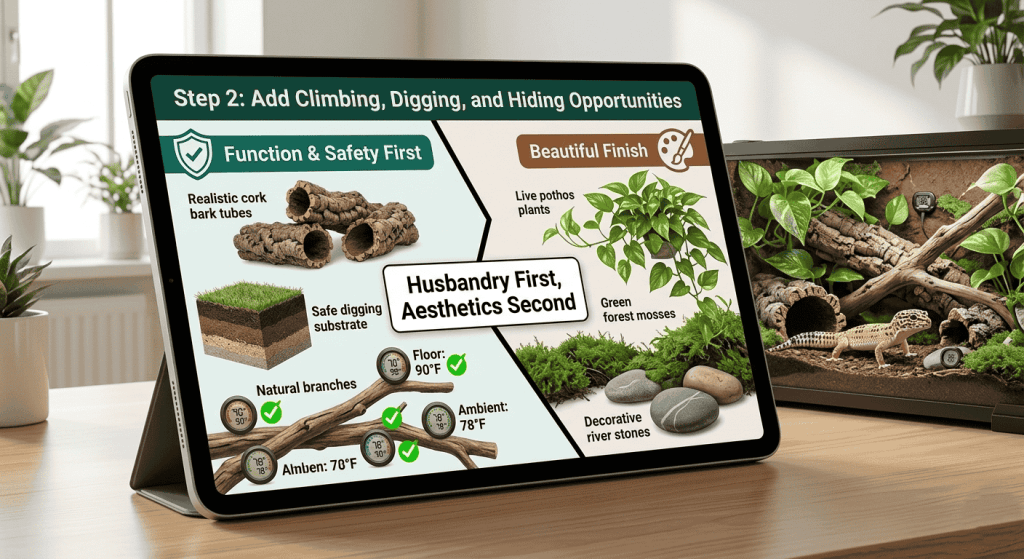
Based on the 2026 bearded dragon study, here is what reptiles actually USE when given the chance :
Remember: The bearded dragons in the study climbed, dug, and hid MORE in naturalistic enclosures . These behaviors are important for their welfare.

This is non-negotiable. Do not save money here.

You cannot manage what you do not measure. Buy:

Remember the 2026 study: Reptiles raised in simple environments may be scared of new things .
If your reptile has lived in a bare tank for years, do not completely change everything at once. Add one new item at a time. Give them time to explore and adjust.
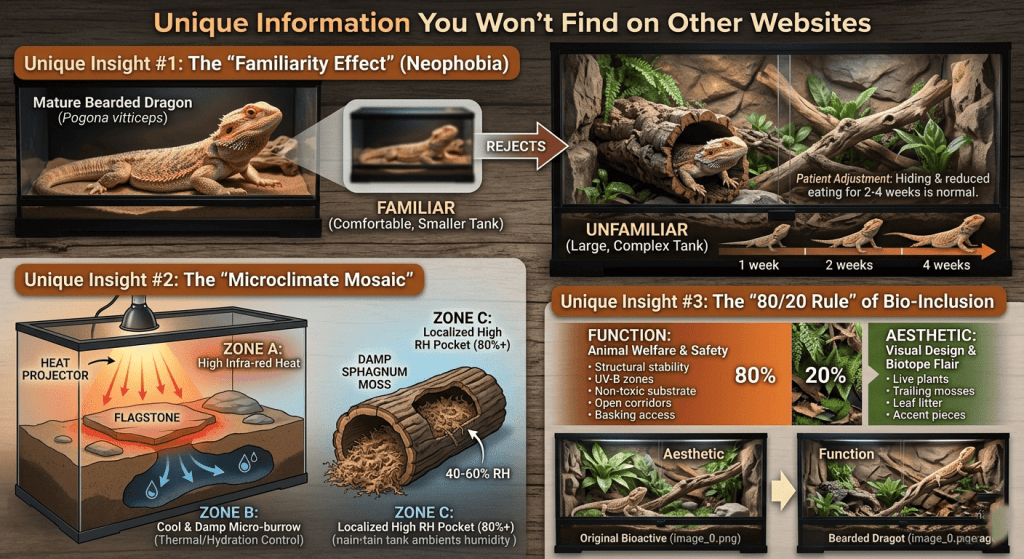
This section contains information that is extremely rare or completely absent from most reptile care websites.
The 2026 bearded dragon study revealed something crucial: Reptiles can prefer what is familiar, even if it is worse for them .
This is called neophobia — fear of new things. A reptile raised in a small, bare tank may actually reject a larger, better tank at first because it is scary and unfamiliar.
What this means for you: If you upgrade your reptile’s enclosure, be patient. Your reptile may hide more at first. It may eat less. This is normal. Give them 2-4 weeks to adjust before deciding they “don’t like” the new setup.
Most reptile welfare studies only look at behavior . But reptiles are masters at hiding illness. In the wild, showing weakness gets you eaten.
A reptile can be very sick but still act “normal” because hiding illness is a survival instinct.
What this means for you: Do not rely only on watching your reptile. Weigh them regularly. Check their body condition. Look at their poop. Keep records. Behavior is important, but it is not the whole picture.
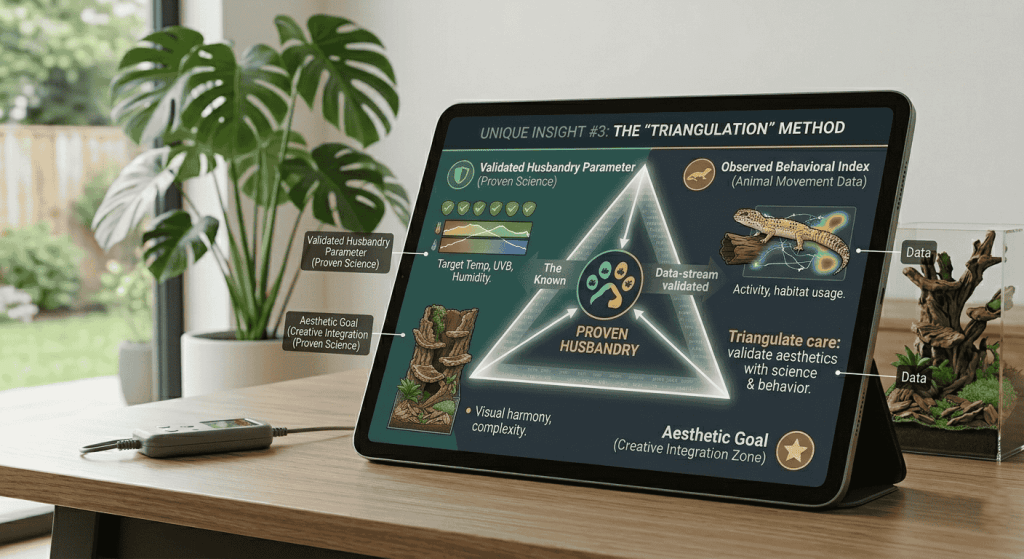
Scientists recommend using three types of measurements together to assess welfare :
Most owners cannot measure stress hormones at home. But you CAN combine behavior + physical checks. That is better than using only one type.
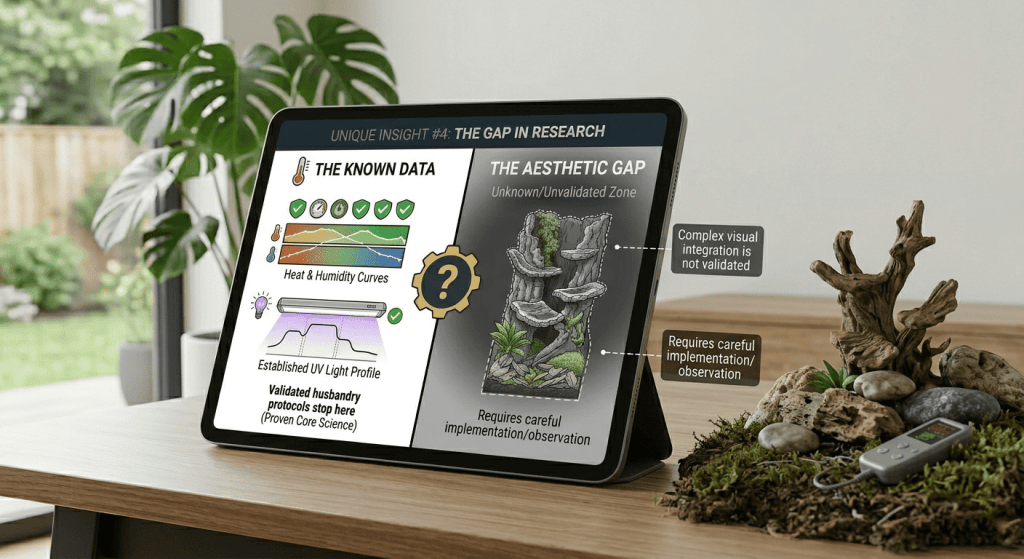
Here is something no pet store will tell you: There is almost no research on how reptiles fare in private homes .
What we “know” about reptile care comes mostly from zoos and labs — places with different resources, goals, and constraints than a family home.
What this means for you: Your experiences matter. If you try something new and your reptile thrives, share that information. Join reptile communities. Talk to other owners. Together, you are contributing to knowledge that science has not yet caught up with.

A 2025 book chapter on reptile welfare made a strong statement: Many caregivers underestimate both the behavioral complexity of reptiles and their requirements for carefully considered husbandry .
In simple words: Reptiles are smarter and need more than most people think.
What this means for you: Treat enrichment (toys, puzzles, new items, changes to the enclosure) as a requirement, not a bonus. Rotate items in the tank every few weeks. Offer food in different ways. Give your reptile opportunities to think and explore.

Q: Is evidence-based husbandry expensive?
A: It can be more expensive upfront — a proper UVB light and large tank cost more than a small setup with a heat mat. But many evidence-based practices (like using natural branches from outside, after cleaning them) are free. Start with the most important items: proper lighting, correct temperature, and space to move.
Q: My reptile has lived in a simple setup for years and seems fine. Should I change it?
A: “Seems fine” may mean surviving, not thriving . Try adding one new item — like a branch to climb or a deeper substrate to dig in. Watch how your reptile responds. Many owners are surprised at how much their “lazy” reptile suddenly becomes active when given the right environment.
Q: How do I know if a care sheet is evidence-based or folklore?
A: Ask these questions:
If a care sheet says “this is the best way” without explaining why or citing evidence, be skeptical.
Q: What is the single most important thing I can do for my reptile?
A: Provide a proper UVB light if you have a diurnal (day-active) reptile. Without UVB, they cannot process calcium. Metabolic Bone Disease is painful, permanent, and completely preventable with proper lighting.
Q: Can I use the four natural history questions for any reptile?
A: Yes! The protocol was designed for any amphibian or reptile species . The questions work for snakes, lizards, turtles, and frogs. The answers will be different for each species — which is exactly the point.

Here is what I want you to remember from this article.
First: Most reptile care advice has never been tested by science. Only 72 studies exist in 45 years. Be curious. Ask questions.
Second: Evidence-based husbandry is not about perfection. It is about moving from “keeping your reptile alive” to “helping your reptile thrive.”
Third: The 2026 bearded dragon study showed us that even our assumptions about “natural is better” need testing. A reptile raised in a simple environment may need time to learn how to use a better one. Be patient.
Fourth: You do not need a PhD to use evidence-based practices. Answer the four natural history questions. Watch how your reptile behaves. Keep records. Try new things. Share what you learn.
Fifth: Your reptile cannot tell you what it needs. But science, observation, and honest curiosity can.
You chose to bring this animal into your home. That means you are responsible for its entire world. Not just its survival — but its ability to do the things it evolved to do. To climb. To dig. To hide. To explore.
That is what evidence-based husbandry is really about.
It is not about having the prettiest tank on Instagram. It is about giving your reptile a life worth living.
This article was written for pawsandantlers.com — a website dedicated to helping pet owners give their animals the best possible care. We believe in honest, research-backed advice over trends and social media hype.
*Disclaimer: This article is for informational purposes only. Always consult a licensed exotic veterinarian for medical advice about your specific pet. Some research cited in this article is very recent (2025-2026) and represents the current state of scientific knowledge, which may continue to evolve.*
Pingback: How Fish Grow : The Science, Secrets, And Surprising Truths | Paws & Antlers
Pingback: So You Want An Exotic Pets? Let’s Break It Down (Simply) | Paws & Antlers
Pingback: "The Complete Bearded Dragon Diet Chart: What To Feed Daily (With Printable PDF) | Paws & Antlers
Pingback: Bearded Dragon Updates 2025-2026
Pingback: The Ultimate Bearded Dragon Setup Guide: Everything A Beginner Needs | Paws & Antlers