The Ultimate Guide to Keeping a Sugar Glider as a Pet
Hi seekers! You’ve seen the videos. Those tiny creatures with enormous eyes, gliding through the air like furry little superheroes, bonding with their humans and

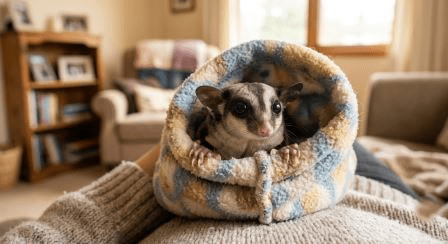
Hi seekers! You’ve seen the videos. Those tiny creatures with enormous eyes, gliding through the air like furry little superheroes, bonding with their humans and snuggling into pockets. It’s easy to see why sugar gliders have become so popular.
But here’s the truth that most cute videos won’t show you: sugar gliders are not beginner pets. They’re not even intermediate pets. They are complex, demanding, and require a level of commitment that most people aren’t prepared for.
One sugar glider rescue founder put it bluntly: “Generally speaking, sugar gliders don’t make great pets.” They’re wild animals with specialized needs that are “very difficult and very expensive to meet.”
Before you bring one of these enchanting creatures into your home, let me walk you through everything you need to know—the good, the bad, and the absolutely essential.
Sugar gliders (Petaurus breviceps) are small, nocturnal marsupials native to the forests of Australia, Indonesia, and Papua New Guinea. In the wild, they live in colonies of six to ten individuals and spend their nights gliding through the treetops, snacking on nectar and insects.
Their name comes from two things:
Key facts:
That 12–15 year lifespan is important to remember. You’re not getting a pet for a couple of years—you’re making a decade-and-a-half commitment.
Let me say this as clearly as possible: Sugar gliders are highly social animals and should NEVER be housed alone.
In the wild, they live in family groups of up to 10 adults. They crave companionship and love to play. Keeping one alone often leads to serious behavior problems.
What happens when a sugar glider is kept alone:
The recommendation: Keep them in pairs or small groups—ideally, family groups of 2 to 6 animals. Some experts even recommend six to eight gliders housed together, but at least two is an absolute must.
Here’s the catch: In a group, dominant males mark other members with their scent. Newcomers lacking that scent may be attacked. Introductions must be done carefully and gradually.
What about bonding with humans?
Sugar gliders can form strong bonds with their owners, but they bond even more strongly with their own species. A glider that’s well-socialized with its human family can be affectionate and interactive, but it will always need the company of other gliders first.
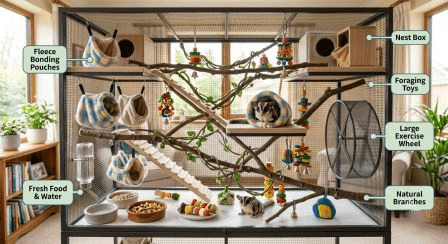
Sugar gliders are active, curious creatures that need space to climb, jump, and glide. A small cage is a death sentence for their mental and physical health.
Minimum cage size recommended by experts:
| Source | Minimum Size |
|---|---|
| Merck Veterinary Manual | 24″ long × 36″ wide × 36″ high |
| PetMD (for a pair) | 24″ × 24″ × 48″ |
Real talk: Get the largest cage you can possibly afford. Bigger is always better.
Cage requirements:
Nest boxes and pouches:
Bedding:
Temperature:
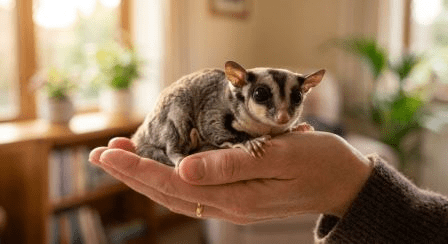
Sugar gliders require at least 2 hours of interactive contact per day—and this should happen in the evening or at night when they’re naturally awake.
Why evenings? Sugar gliders are nocturnal. Waking them or handling them during the daytime causes stress and increases the risk of illness. They’re most playful and vocal in the evening and at night.
What those 2+ hours look like:
Never let them roam unsupervised. Sugar gliders can move incredibly quickly and squeeze into impossibly small spaces. A poor enclosure or allowing them to roam freely can result in serious injury.
What if you can’t give them 2+ hours every day? Then a sugar glider isn’t the right pet for you. It’s that simple.

Sugar glider nutrition is one of the most debated topics in exotic pet care. Here’s what the experts say.
Sugar gliders are opportunistic omnivores. In the wild, they eat:
This diet is extremely difficult to replicate in captivity—which is why there’s so much controversy about what to feed them.
According to the Association of Sugar Glider Veterinarians, daily food intake should be approximately 15–20% of body weight, divided as follows:
| Component | Percentage of Diet |
|---|---|
| Nutritionally balanced pelleted kibble | 1/3 |
| Nectar/sap-based mixture | 1/3 |
| Insects, calcium-based multivitamin, fresh vegetables and fruits | 1/3 |
Extruded kibble formulated for sugar gliders should be freely available all day by choice.
Protein sources:
Fruits and vegetables:
Foods to AVOID:
High-oxalate foods to avoid (they impair calcium absorption):
Raspberries, strawberries, blackberries, spinach, carrots, beets, pears, lettuce, figs, and collards
Some experts recommend a combination of Leadbeater’s mixture, insects, fresh produce, and nuts as a more natural alternative. Pelleted diets are available, but it’s unclear whether they meet all nutritional needs.
The bottom line: Whatever diet you choose, make sure it’s balanced. Many websites recommend feeding only fruits and sugar syrups—these diets are not nutritionally balanced and can lead to weak bones, tremors, seizures, and death.
Many health problems in sugar gliders are linked to diet—malnutrition, obesity, and vitamin and mineral imbalances. Others come from infections with bacteria, fungi, or parasites.
Male-specific issues: Paraphimosis (persistent and painful “sticking out” of the head of the penis), which can cause injury and may need surgical care.
Clinical signs of disease in sugar gliders can be vague: depression, loss of appetite, and weight loss are the most readily detected.
Other warning signs:
Critical: Dehydrated or very ill sugar gliders can decline quickly. Bring them to the vet immediately.
This is crucial. Sugar glider ownership is illegal in some places and restricted in others.
| Location | Status |
|---|---|
| California | Illegal |
| Alaska | Illegal |
| Hawaii | Illegal |
| Pennsylvania | Special permit required |
| New York City | Illegal (even though legal in most of NY state) |
Always check:
If you own four or more breeding females, you may be subject to the US federal Animal Welfare Act and need to register or obtain a license.
Let me be honest with you.
Sugar gliders are:
They are NOT:
One rescue founder’s warning: “People buy them because they’re cute, but they can live up to 15 years, and caring for them is a big commitment.” She started her rescue because she saw so many sugar gliders who were “just going from bad home to bad home.”
If you’re still interested:
Sugar gliders can be wonderful, rewarding pets—but only for the right person. If you’re that person, they’ll reward you with years of fascination, affection, and joy. If you’re not, please, for their sake, choose a different pet.
These aren’t toys. They’re not accessories. They’re living, breathing, feeling creatures who deserve owners who truly understand what they’re signing up for.
Pingback: What Is Best To Feed Sugar Glider | Paws & Antlers