
The Connection Between Anxiety and Health Problems in Dogs
Hi seekers! You probably know when your dog is anxious. Maybe they pace when you grab your keys. Maybe they hide during thunderstorms. Maybe they
Hi seekers! You probably know when your dog is anxious. Maybe they pace when you grab your keys. Maybe they hide during thunderstorms. Maybe they
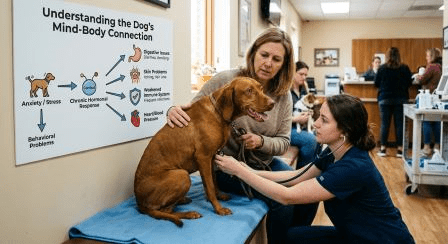
Hi seekers! You probably know when your dog is anxious. Maybe they pace when you grab your keys. Maybe they hide during thunderstorms. Maybe they tremble at the vet’s office.
But here’s something most dog owners don’t realize: anxiety isn’t just a behavioral issue—it’s a health issue too.
When your dog is stressed or anxious, their body releases hormones that can, over time, cause real, measurable damage to their physical health. And some of the most recent scientific discoveries are revealing just how deep that connection goes.
When a dog experiences anxiety, their body goes into “fight or flight” mode. This triggers the release of stress hormones, primarily cortisol.
A small spike in cortisol now and then is normal. But when anxiety becomes chronic—when your dog is stressed day after day—that cortisol stays elevated. And that’s where the problems start.
Chronically elevated cortisol can:
In short: anxiety doesn’t just make your dog feel bad—it makes their body work against itself.
Have you ever felt “butterflies” in your stomach before a big presentation? That’s your gut reacting to stress. The same thing happens to dogs.
The connection between the brain and the digestive system is called the gut-brain axis. And it works both ways—stress affects the gut, and an unhealthy gut can make anxiety worse.
Stress colitis is one of the most common digestive issues caused by anxiety in dogs.
What it looks like:
Stress can disrupt the normal functioning of the colon, leading to inflammation, an imbalance of gut bacteria, and the overgrowth of harmful bacteria.
Even without full-blown colitis, chronic anxiety can cause:
The stress of anxiety can “overwhelm the stomach and intestines”, leading to digestive upset that seems to have no physical cause.
Recent research has uncovered something fascinating: the bacteria in your dog’s gut may be linked to their anxiety levels.
A 2025 study found that specific bacteria in the gut microbiome are associated with increased anxiety in dogs. Using machine learning, researchers could predict a dog’s anxiety level based solely on their gut bacteria composition.
One particular type of bacteria, Blautia, was consistently linked to anxiety.
This doesn’t mean gut bacteria cause anxiety—but it does suggest a powerful two-way connection. Anxiety can disrupt the gut, and a disrupted gut can make anxiety worse, creating a vicious cycle.
This is one of the most striking recent discoveries. A 2025 study found that chronic anxiety is associated with measurable changes in heart function.
Researchers studied 36 anxious dogs and found:
What this means for you: These findings suggest that anxiety doesn’t just affect your dog’s mind—it may also affect their heart, potentially putting them at risk for cardiovascular problems down the line.
Interestingly, this mirrors what we see in humans, where chronic anxiety is linked to heart problems.
Your dog’s immune system is their defense against infections and disease. Chronic anxiety can weaken that defense.
When anxiety is chronic, it can:
One study on dogs subjected to chronic stress found that they showed clear hormonal markers of poor welfare, including elevated cortisol levels.
What this means for you: An anxious dog is more likely to get sick and take longer to recover. If your dog seems to catch every bug that goes around, anxiety could be a contributing factor.
Dogs with anxiety often show it on their skin—through itching, licking, and hair loss.
This is a condition where a dog obsessively licks one area—often on a front leg—to the point of creating a raw, infected sore.
What causes it? Often, it’s psychological. Stress, anxiety, separation anxiety, boredom, or compulsive behavior. It’s especially common in large, active dogs left alone for long periods.
Dogs under severe stress may:
Research has confirmed that dogs with extreme anxiety or separation anxiety have an increased severity and frequency of skin disorders.
There’s also a two-way connection between skin problems and anxiety. Dogs with chronic itchy skin conditions (like atopic dermatitis) are more likely to show anxiety and fear-related behaviors.
The itching causes stress, which makes the itching worse, which causes more stress. Breaking this cycle often requires treating both the physical condition and the anxiety.
Before you can address anxiety’s physical effects, you need to recognize it. Common signs include:
Behavioral signs:
Physical signs:
What causes your dog’s anxiety? Common triggers include:
Once you know the trigger, you can work on managing it.
If your dog has stress colitis:
Always check with your vet before starting any treatment.
For some dogs, anti-anxiety medications are life-changing. Common options include:
These should always be prescribed and monitored by a vet.
Given the strong connection between gut health and anxiety, consider:
Anxiety in dogs isn’t just a “behavior problem.” It’s a health problem that can affect your dog’s gut, heart, immune system, and skin.
The research is clear: chronic anxiety is physically damaging to dogs.
If your dog shows signs of anxiety, don’t just “wait for them to get over it.” Take it seriously. Talk to your vet. Consider working with a behaviorist. The sooner you address the anxiety, the sooner you can protect your dog’s health.
And remember: treating anxiety isn’t just about making your dog “better behaved.” It’s about giving them a longer, healthier, more comfortable life.
How Casinos Are Rebounding After COVID-19: Recovery Strategies Revealed The COVID-19 pandemic has had a
Олимп казино официальный сайт в Казахстане – Olimp Casino ▶️ ИГРАТЬ Содержимое Преимущества игры в
Олимп казино официальный сайт в Казахстане – Olimp Casino ▶️ ИГРАТЬ Содержимое Преимущества игры в
Олимп казино официальный сайт в Казахстане – Olimp Casino ▶️ ИГРАТЬ Содержимое Преимущества игры в
Олимп казино официальный сайт в Казахстане – Olimp Casino ▶️ ИГРАТЬ Содержимое Преимущества игры в
Олимп казино официальный сайт в Казахстане – Olimp Casino ▶️ ИГРАТЬ Содержимое Преимущества игры в