Dog Diarrhea: Home Remedies, Causes, and When to Seek Help
You wake up in the morning, let your dog out, and then you see it. A pile of loose, watery stool that definitely wasn’t there

You wake up in the morning, let your dog out, and then you see it. A pile of loose, watery stool that definitely wasn’t there last night. Your heart sinks. What did they eat? Is this serious? Should I call the vet?
Take a breath. You’re not alone. Diarrhea is one of the most common reasons dog owners rush to the vet. But here’s the truth that most guides won’t tell you: in many cases, mild diarrhea can be managed at home with simple, vet-approved remedies.
But sometimes, it’s an emergency. And knowing the difference could save your dog’s life.
Let me walk you through everything you need to know—causes, home remedies, when to call the vet, and some fascinating 2025-2026 research that most pet websites haven’t covered yet.
A recent study confirmed that acute diarrhea is a common clinical condition in dogs, with 1-in-12 dogs diagnosed each year under primary veterinary care. That’s about 8% of all dogs visiting a vet for this specific issue.
Here’s the good news: most cases resolve within 24-48 hours with proper home care. The bad news? Some cases are serious and require immediate veterinary attention.
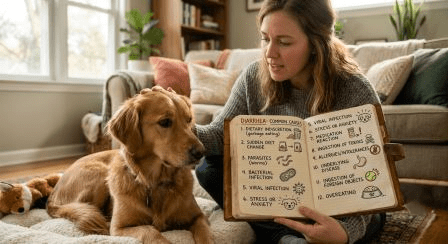
Dog diarrhea can be caused by a whole host of things—diet issues, gut problems, and health problems elsewhere in the body. Here’s a breakdown of the most common culprits:
| Cause | What It Looks Like |
|---|---|
| Sudden diet change | Switching food too quickly without a gradual transition |
| Food intolerance | Some dogs react badly to wheat, dairy, or certain proteins |
| Eating garbage or spoiled food | The classic “garbage gut” |
| Table scraps | Rich, fatty foods that upset sensitive stomachs |
| Too many treats | Overloading the digestive system |
| Cause | What It Looks Like |
|---|---|
| Intestinal parasites | Tapeworms, roundworms, giardia |
| Bacterial infections | Salmonella, E. coli, Campylobacter |
| Viral infections | Parvovirus (especially in puppies) |
| Antibiotic-associated diarrhea | Common side effect of certain medications |
| Cause | What It Looks Like |
|---|---|
| Stress | Boarding, moving, new family members |
| Inflammatory bowel disease | Chronic digestive issues |
| Pancreatitis | Often triggered by fatty foods |
| Kidney or liver disease | Systemic illness affecting digestion |
| Toxins | Ingestion of poisonous substances |
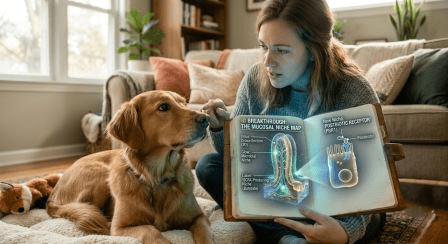
This is where things get really interesting. Here are recent discoveries that most pet websites haven’t covered yet.
A 2026 pilot study evaluated a novel probiotic formulation in dogs with diarrhea. Clinical improvement was noted in 8 out of 11 dogs after administration.
The study also found increases in fecal microbiome alpha-diversity, which is a fancy way of saying the dogs’ gut bacteria became healthier and more balanced. This is important because a diverse gut microbiome is linked to better overall health.
What this means for you: Probiotics are emerging as a legitimate, science-backed treatment for dog diarrhea. But not all probiotics are created equal. Look for dog-specific probiotics rather than human ones.
A 2025 randomized, double-blinded, controlled trial tested a new highly digestible prescription diet containing probiotics, prebiotics, and other gut-supporting ingredients.
The results were impressive:
What this means for you: If your dog has recurrent or persistent diarrhea, ask your vet about specialized prescription diets. They can make a real difference.
A 2025 study identified that Pediococcus acidilactici GLP06, a probiotic strain derived from dogs, can help mitigate antibiotic-associated diarrhea.
This is significant because antibiotics are a common cause of diarrhea in dogs. The study used blood biochemical tests, 16s rRNA sequencing, and fecal metabolomics to confirm the probiotic’s effectiveness.
What this means for you: If your dog is prescribed antibiotics, ask your vet about adding a probiotic to prevent diarrhea before it starts.
A 2026 study explored the use of oral recombinant epidermal growth factor (EGF) to repair intestinal injury and alleviate diarrhea in dogs.
This is cutting-edge science. The researchers created a special strain of bacteria that produces EGF and demonstrated its potential to repair intestinal damage in both mice and dogs.
What this means for you: This is still in the research phase, but it points to a future where we can treat the underlying cause of diarrhea—intestinal injury—rather than just managing symptoms.
A 2025 case report documented a dog with severe acute hemorrhagic diarrhea syndrome that required hospitalization.
The dog had a 12-24 hour history of bloody diarrhea and lethargy and needed intensive supportive care, including placement of a rectal Foley catheter to manage fecal contamination.
What this means for you: Bloody diarrhea is always an emergency. Don’t wait to see if it gets better.
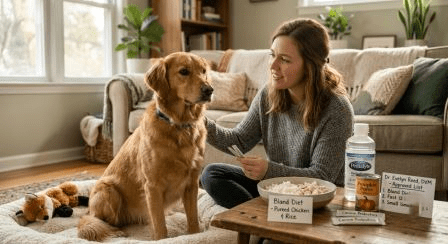
If your dog has mild diarrhea, is acting normally, and doesn’t have any red flags, you can try these home remedies.
Some vets recommend withholding food for 6-12 hours to give the digestive system a rest.
Important: Always provide fresh water during this time to prevent dehydration.
Exception: Puppies, senior dogs, and dogs with health conditions should not be fasted without veterinary guidance.
After the fast, offer a bland diet in small, frequent meals.
Good options:
Why pumpkin? Plain canned pumpkin is a great source of soluble fiber, which helps bulk up stools and firm things up.
What to avoid:
Important: Never give human anti-diarrheal medicines to your dog unless your vet specifically approves.
Dog-specific probiotics can help restore gut balance and speed recovery.
Look for:
Diarrhea causes fluid loss. Make sure your dog has constant access to fresh, clean water.
For severe cases, your vet may recommend pet-specific electrolyte solutions.
Once stools improve (usually within 24-48 hours), gradually transition back to your dog’s regular food.
How to do it:
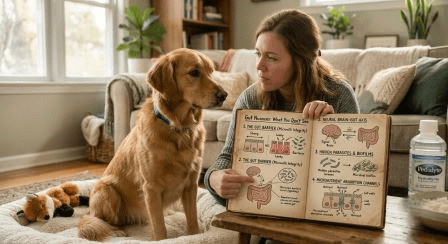
Recent research has found that continuing to feed dogs through bouts of diarrhea supports normal gut function and prevents further problems.
This goes against the old-school advice of withholding food for extended periods. The current thinking: a short fast (6-12 hours) is okay, but prolonged fasting can be counterproductive.
Some sources suggest that raw dog food may help prevent diarrhea because it’s 100% natural and easy to digest.
Caveat: Raw diets come with their own risks (bacterial contamination). Always consult your vet before switching to a raw diet, especially if your dog has existing health issues.
A 2025 review found that there is limited evidence that antimicrobials are any more effective than placebo for treating acute, uncomplicated diarrhea.
Instead, gastrointestinal nutraceuticals (prebiotics, probiotics, and synbiotics) are increasingly recommended.
What this means for you: If your vet prescribes antibiotics for uncomplicated diarrhea, it’s worth asking if they’re really necessary.
Not all diarrhea can be managed at home. Here’s when to seek professional help.
| Sign | Why It’s Serious |
|---|---|
| Bloody diarrhea (bright red or dark/tarry) | Could indicate hemorrhagic gastroenteritis or parvovirus |
| Repeated vomiting along with diarrhea | Risk of severe dehydration |
| Lethargy or weakness (too weak to stand) | Systemic illness |
| Fever (rectal temperature >103°F/39.4°C) | Infection |
| Bloated, painful abdomen | Possible blockage or bloat |
| Not eating for more than 24 hours | Nutritional crisis |
| Signs of dehydration | Dry gums, sunken eyes, loss of skin elasticity |
| Sign | Why It Matters |
|---|---|
| Diarrhea lasting more than 24-48 hours | Chronic issue needing investigation |
| Diarrhea with weight loss | Could indicate protein-losing enteropathy |
| Changes in drinking or urination | Could indicate kidney disease |
| Loss of appetite | Underlying illness |
| Your dog is a puppy, senior, or has pre-existing health conditions | Higher risk of dehydration |
If you take your dog to the vet for diarrhea, here’s what to expect:
Depending on the diagnosis, treatment may include:
| Prevention Strategy | Why It Works |
|---|---|
| Gradual diet changes | Prevents dietary upset from sudden food switches |
| Avoid table scraps | Rich, fatty foods trigger pancreatitis and diarrhea |
| Regular deworming | Prevents parasitic infections |
| Keep garbage secured | Prevents “garbage gut” |
| Probiotics | Supports healthy gut bacteria |
| Regular vet checkups | Catches problems early |
| Vaccinations | Protects against parvovirus and other viral causes |
Dog diarrhea is common—1-in-12 dogs will be diagnosed with it each year. Most cases are mild and resolve within a day or two with simple home care.
Your quick checklist:
And remember: Science is constantly evolving. In 2025-2026 alone, researchers discovered new probiotic treatments, developed faster-acting prescription diets, and identified new mechanisms for intestinal repair. If your dog has recurrent or persistent diarrhea, don’t give up—there may be new treatments available that your vet can recommend.
Your dog is trying to tell you something. Learning to read the signs—and knowing when to act—is the best thing you can do for them.