The Ultimate Dog Grooming & Care Guide for a Happy, Healthy Pup
Grooming is one of those things that sounds simple enough—brush your dog, give them a bath, trim their nails. But when you actually sit down


Grooming is one of those things that sounds simple enough—brush your dog, give them a bath, trim their nails. But when you actually sit down to do it, it can feel surprisingly overwhelming. What brush should you use? How often should you bathe them? What if you accidentally cut the quick?
I’ve been there. And the truth is, grooming isn’t just about making your dog look pretty. It’s one of the most important things you can do for their health and happiness. Regular grooming helps you spot lumps and bumps early, reduces shedding, prevents painful mats, and builds trust between you and your pup. It’s also a great way to save money—professional grooming adds up fast.
Let’s break this down step by step, so you can groom your dog at home with confidence.
Here’s something most people don’t realize: grooming isn’t cosmetic. It’s healthcare.
When you brush your dog regularly, you’re distributing natural skin oils, stimulating circulation, and removing dead hair and dirt. You’re also preventing mats and tangles that can pull on their skin and cause pain.
More importantly, grooming gives you a hands-on view of your dog’s body. While brushing or bathing, you’ll often notice lumps, bumps, hot spots, or parasites much earlier than you would otherwise. That early detection can make a real difference in your dog’s health outcomes.
And there’s a behavioral benefit too. Calm, routine handling tends to lower anxiety in many dogs and improves their tolerance of future care—vet visits, nail trims, and exams all become easier.
You don’t need professional-grade equipment to get started. Here’s a basic list of what you’ll need:
| Tool | Purpose |
|---|---|
| Brushes and combs | Choose based on your dog’s coat type |
| Nail clippers or grinder | For regular nail trims |
| Styptic powder | Stops bleeding if you accidentally cut the quick |
| Dog shampoo and conditioner | Gentle, pH-balanced formulas |
| Towels | For drying after baths |
| Low-heat, low-noise blow dryer | Optional but helpful for thick coats |
| Ear cleaning solution | Vet-approved, never alcohol or hydrogen peroxide |
| Cotton balls | For ear cleaning |
| Dog toothbrush and toothpaste | Never use human toothpaste |
If your dog is large or wiggly, a grooming table with a non-slip surface can be a game-changer.
Brushing is the foundation of good grooming. It removes loose hair, prevents mats, and keeps your dog’s coat shiny and healthy.
How often should you brush?
How to brush properly:
Pro tip: Brush your dog when they’re relaxed—after a walk or a meal—and check for lumps, bumps, fleas, and ticks as you go.

Dogs don’t need baths as often as you might think. Over-bathing strips their skin of natural oils and can cause dryness and irritation.
How often should you bathe your dog?
Most dogs need a bath every 4 to 12 weeks, depending on their activity level and skin condition. Dogs that spend a lot of time outdoors or get into muddy situations may need more frequent baths. Dogs with healthy, normal skin can go longer.
Step-by-step bathing:
Pro tip: Place a non-slip mat in the tub to prevent slipping. And never leave your dog unattended on an elevated surface.
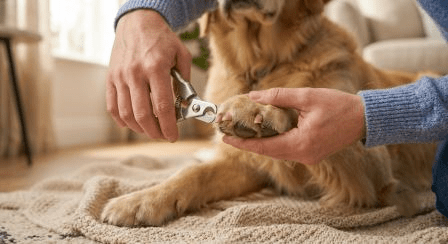
This is the part most owners dread. And honestly? I get it. Nobody wants to accidentally hurt their dog.
But here’s the thing: overgrown nails can cause pain, affect your dog’s gait, and even lead to joint problems. Regular trims are essential.
How often should you trim?
Every 3 to 6 weeks, or whenever you hear your dog’s nails clicking on hard floors.
How to trim safely:
What if you cut the quick?
It happens to the best of us. Apply styptic powder or cornstarch to stop the bleeding. Apply gentle pressure for a few minutes. Avoid trimming that nail again for the day to reduce stress and pain.
Pro tip: Start nail trims early with puppies so they get used to the process. And always have styptic powder on hand before you start.
Ear infections are one of the most common medical problems in dogs. Regular cleaning can help prevent them—but over-cleaning can cause irritation.
How often should you clean?
Check your dog’s ears weekly for wax, odor, or redness. Clean only when needed—not on a rigid schedule.
How to clean safely:
When to see a vet: If your dog shows redness, odor, excessive wax, head shaking, or scratching at the ears, it could be an infection.
Dental disease is one of the most common health problems in dogs—and it affects more than just their breath. Bacteria in the mouth can travel through the bloodstream and affect the heart, liver, and kidneys.
How often should you brush?
Daily is ideal. But even brushing 2 to 3 times a week can reduce plaque and support better oral health.
How to brush your dog’s teeth:
Important: Never use human toothpaste. It can be toxic to dogs. Always use dog-safe toothpaste.
Different coats need different approaches. Here’s a quick guide:
Short, smooth coats (Boxers, Beagles, Dachshunds)
Double coats (Huskies, German Shepherds, Golden Retrievers)
Curly coats (Poodles, Bichons)
Wire coats (Terriers, Schnauzers)
Not everything needs to be DIY. Here’s when to hire a pro:
And always see a vet if you find persistent itching, sores, lumps, or sudden behavior changes during grooming.
| Task | Frequency | Key Tool |
|---|---|---|
| Brushing | Daily to weekly (depends on coat) | Brush suited to coat type |
| Bathing | Every 4–12 weeks | Dog shampoo |
| Nail trimming | Every 3–6 weeks | Nail clippers + styptic powder |
| Ear cleaning | As needed (check weekly) | Vet-approved cleaner |
| Teeth brushing | Daily or 2–3x weekly | Dog toothbrush + toothpaste |
Grooming doesn’t have to be complicated or stressful. Start small. Brush your dog while watching TV. Let them sniff the toothbrush before you use it. Make it a calm, positive experience—not a battle.
The more you do it, the easier it gets. And the benefits—a healthier, happier, better-looking pup—are absolutely worth it.
Pingback: How To Clean Your Dog‘s Ears Without A Vet (Step-by-Step) | Paws & Antlers
The nail trimming part got me. I still hand that job to the vet after one bad experience with the quick, and honestly the bathing schedule is the thing I always second-guess in winter. The brush advice was the part I actually needed — I’ve been using the same slicker on a short coat for two years and wondering why it did nothing.
The bit that overlapped with my week: our boarding place wanted vaccination records uploaded before drop-off, and all I had was a photo of the vet’s printout, slightly crooked, taken on the kitchen counter. I ran it through LensUp document scanner, straightened it, and saved it as a PDF small enough for their form. The compression aims at whatever size you pick rather than hitting it exactly, so it landed a little over on my first try and I went down a step. Files never leave the laptop while it works, which mattered since it had my address and the dog’s chip number on it.