Skip to content

The Ultimate Guide to Keeping a Sugar Glider as a Pet

Hi seekers! You’ve seen the videos. Those tiny creatures with enormous eyes, gliding through the air like furry little superheroes, bonding with their humans and

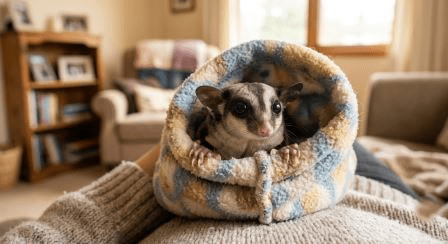
Table of Contents

A bright, heartwarming photograph of a sugar glider peeking out from a soft fleece bonding pouch, with its large dark eyes and tiny paws visible. The glider looks curious and alert. The background is a cozy room with warm lighting. The mood is cute, inviting, and educational. Photorealistic, high resolution, 4k, family-friendly, perfect for a blog article about sugar glider pets.

Hi seekers! You’ve seen the videos. Those tiny creatures with enormous eyes, gliding through the air like furry little superheroes, bonding with their humans and snuggling into pockets. It’s easy to see why sugar gliders have become so popular.

But here’s the truth that most cute videos won’t show you: sugar gliders are not beginner pets. They’re not even intermediate pets. They are complex, demanding, and require a level of commitment that most people aren’t prepared for.

One sugar glider rescue founder put it bluntly: “Generally speaking, sugar gliders don’t make great pets.” They’re wild animals with specialized needs that are “very difficult and very expensive to meet.”

Before you bring one of these enchanting creatures into your home, let me walk you through everything you need to know—the good, the bad, and the absolutely essential.


What Exactly Is a Sugar Glider?

Sugar gliders (Petaurus breviceps) are small, nocturnal marsupials native to the forests of Australia, Indonesia, and Papua New Guinea. In the wild, they live in colonies of six to ten individuals and spend their nights gliding through the treetops, snacking on nectar and insects.

Their name comes from two things:

  1. Sugar – They love sweet foods like nectar and sap
  2. Glider – They have a membrane called the patagium that stretches from their front feet to their hind legs, allowing them to glide up to 50 meters between trees

Key facts:

  • Lifespan: 9–15 years in captivity (sometimes up to 12–14 years with excellent care)
  • Size: Body 5–12 inches (13–30 cm); tail 6–9 inches (15–23 cm)
  • Weight: Males 4–6 ounces (110–170 grams); females 3–5 ounces (85–140 grams)
  • Activity pattern: Nocturnal (active at night)

That 12–15 year lifespan is important to remember. You’re not getting a pet for a couple of years—you’re making a decade-and-a-half commitment.


The Social Reality: They Cannot Live Alone

Let me say this as clearly as possible: Sugar gliders are highly social animals and should NEVER be housed alone.

In the wild, they live in family groups of up to 10 adults. They crave companionship and love to play. Keeping one alone often leads to serious behavior problems.

What happens when a sugar glider is kept alone:

  • Depression
  • Overgrooming and fur loss (often at the base of the tail)
  • Self-injury
  • Changes in eating or drinking
  • Pacing
  • Eating of droppings
  • In extreme cases, self-mutilation

The recommendation: Keep them in pairs or small groups—ideally, family groups of 2 to 6 animals. Some experts even recommend six to eight gliders housed together, but at least two is an absolute must.

Here’s the catch: In a group, dominant males mark other members with their scent. Newcomers lacking that scent may be attacked. Introductions must be done carefully and gradually.

What about bonding with humans?

Sugar gliders can form strong bonds with their owners, but they bond even more strongly with their own species. A glider that’s well-socialized with its human family can be affectionate and interactive, but it will always need the company of other gliders first.

The Cage: Bigger Is NOT Optional

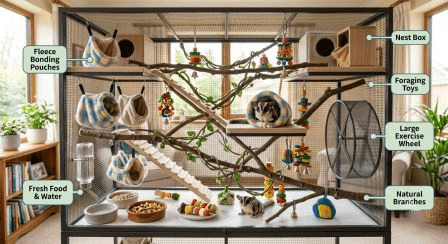
A clean, organized photograph of a large multi-level sugar glider cage with fleece pouches, nest boxes, food and water dishes, branches, toys, and an exercise wheel. The cage looks spacious and well-maintained. Bright natural lighting. Educational, photorealistic, high resolution, family-friendly.

Sugar gliders are active, curious creatures that need space to climb, jump, and glide. A small cage is a death sentence for their mental and physical health.

Minimum cage size recommended by experts:

SourceMinimum Size
Merck Veterinary Manual24″ long × 36″ wide × 36″ high
PetMD (for a pair)24″ × 24″ × 48″

Real talk: Get the largest cage you can possibly afford. Bigger is always better.

Cage requirements:

  • Material: PVC-coated or powder-coated wire
  • Bar spacing: No larger than 1 inch × ½ inch (2.5 cm × 1.3 cm) to prevent escapes, especially by juveniles
  • Doors: Secure latches—sugar gliders are skilled escape artists
  • Multi-level: They love to climb and do best in multi-level cages
  • Wire bottom: Lets droppings fall to a tray for easier cleaning

Nest boxes and pouches:

  • Provide fleece pouches or nest boxes for sleeping
  • Place them high in the cage
  • Ensure there’s clearance above the pouch so their gliding membranes (patagium) don’t rub on the cage roof
  • If you have multiple animals, provide multiple hiding spots

Bedding:

  • Safe: Shredded newspaper, paper towels, recycled paper, or aspen shavings
  • AVOID: Pine and other soft-wood shavings (their oils irritate airways)
  • AVOID: Cotton bedding (fibers can wrap around toes and cut off circulation)

Temperature:

  • Preferred range: 80–88°F (27–31°C)
  • Tolerable range: 60–90°F (15–32°C)
  • Keep the cage away from vents and direct sunlight
  • Avoid sudden temperature changes

The Daily Time Commitment: This Is Not Optional

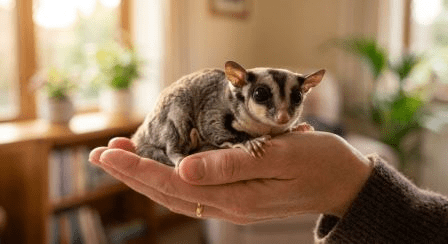
A close-up photograph of a sugar glider sitting calmly on a person's hand, looking comfortable and trusting. Soft warm lighting. The mood is gentle and affectionate. Photorealistic, high resolution, family-friendly.

Sugar gliders require at least 2 hours of interactive contact per day—and this should happen in the evening or at night when they’re naturally awake.

Why evenings? Sugar gliders are nocturnal. Waking them or handling them during the daytime causes stress and increases the risk of illness. They’re most playful and vocal in the evening and at night.

What those 2+ hours look like:

  • Supervised out-of-cage time in a secure, glider-proofed room
  • Playing, climbing, and exploring
  • Bonding time (they love bonding pouches)
  • Social interaction with you AND other gliders

Never let them roam unsupervised. Sugar gliders can move incredibly quickly and squeeze into impossibly small spaces. A poor enclosure or allowing them to roam freely can result in serious injury.

What if you can’t give them 2+ hours every day? Then a sugar glider isn’t the right pet for you. It’s that simple.


Diet: The Controversy and the Science

A clean, educational photograph showing a sugar glider's food setup: a bowl of pelleted kibble, fresh vegetables and fruits, and a dish of mealworms. The background is clean and bright. Educational, photorealistic, high resolution, family-friendly.

Sugar glider nutrition is one of the most debated topics in exotic pet care. Here’s what the experts say.

What They Eat in the Wild

Sugar gliders are opportunistic omnivores. In the wild, they eat:

  • Sap and gum from eucalyptus and acacia trees
  • Nectar and pollen
  • Manna (sugar deposits from sap oozing from tree wounds)
  • Honeydew (sugar secreted by sap-sucking insects)
  • Insects and spiders

This diet is extremely difficult to replicate in captivity—which is why there’s so much controversy about what to feed them.

The Daily Diet (Expert Recommended)

According to the Association of Sugar Glider Veterinarians, daily food intake should be approximately 15–20% of body weight, divided as follows:

ComponentPercentage of Diet
Nutritionally balanced pelleted kibble1/3
Nectar/sap-based mixture1/3
Insects, calcium-based multivitamin, fresh vegetables and fruits1/3

Extruded kibble formulated for sugar gliders should be freely available all day by choice.

Protein sources:

  • Insects: mealworms or crickets (gut-loaded or dusted with calcium)
  • Small pieces of cooked poultry
  • Boiled eggs

Fruits and vegetables:

  • Small amounts as treats only—no more than 10% of total diet
  • Critical: Since sugar gliders love sweets, fruits will be eaten preferentially to the exclusion of a healthy balanced diet
  • Fresh or organic foods are preferred (they’re sensitive to toxins and preservatives)

Foods to AVOID:

  • Chocolate (NEVER feed)
  • Dairy products (NEVER feed)
  • Canned fruit (excess sodium and preservatives)
  • Foods treated with pesticides
  • Raw meat and eggs
  • Caffeine
  • Frequent high-fat treats
  • Fruit pits and seeds

High-oxalate foods to avoid (they impair calcium absorption):
Raspberries, strawberries, blackberries, spinach, carrots, beets, pears, lettuce, figs, and collards

Is There a Better Diet?

Some experts recommend a combination of Leadbeater’s mixture, insects, fresh produce, and nuts as a more natural alternative. Pelleted diets are available, but it’s unclear whether they meet all nutritional needs.

The bottom line: Whatever diet you choose, make sure it’s balanced. Many websites recommend feeding only fruits and sugar syrups—these diets are not nutritionally balanced and can lead to weak bones, tremors, seizures, and death.


Health: What to Watch For

Many health problems in sugar gliders are linked to diet—malnutrition, obesity, and vitamin and mineral imbalances. Others come from infections with bacteria, fungi, or parasites.

Common Health Issues

ConditionWhat to Know
Malnutrition and Metabolic Bone DiseasePrevent with balanced diet, calcium and vitamin D3 supplements, gut-loaded or dusted insects
ObesityPrevent with proper diet and exercise
Bacterial infectionsCan present as skin infections or sepsis
ParasitesGiardia, Cryptosporidium, and Trichomonas can cause diarrhea, vomiting, and weight loss
ToxoplasmosisCommon and serious; can be contracted from cat feces
Eye injuriesCommon from fighting; can lead to ulcers or conjunctivitis
Lumpy jaw (actinomycosis)Bacterial abscesses in the jaw that can be life-threatening if untreated
ConstipationCan result from dehydration, low-fiber diet, stress, or lack of exercise
Hypocalcemia (low calcium)Results from imbalance of calcium, phosphorus, and vitamin D
Hypoproteinemia (low protein)Results from inadequate dietary protein

Male-specific issues: Paraphimosis (persistent and painful “sticking out” of the head of the penis), which can cause injury and may need surgical care.

Signs of Illness

Clinical signs of disease in sugar gliders can be vague: depression, loss of appetite, and weight loss are the most readily detected.

Other warning signs:

  • Weakness, slow responses
  • Thinness, dehydration
  • Pale gums, bruising, swelling
  • Abnormal droppings
  • Breathing trouble
  • Bald patches
  • Dragging back legs
  • Sunken eyes
  • Sneezing or nasal discharge
  • Ocular discharge
  • Lumps on the face or neck

Critical: Dehydrated or very ill sugar gliders can decline quickly. Bring them to the vet immediately.

Veterinary Care

  • Schedule a new-pet checkup and yearly exams, including fecal tests for parasites and harmful bacteria
  • Find a vet experienced with exotic pets BEFORE you need one
  • Socialize your glider well at home—it makes exams easier
  • Your vet may recommend sedation for a more thorough exam

Legal Considerations: Is It Even Legal Where You Live?

This is crucial. Sugar glider ownership is illegal in some places and restricted in others.

LocationStatus
CaliforniaIllegal
AlaskaIllegal
HawaiiIllegal
PennsylvaniaSpecial permit required
New York CityIllegal (even though legal in most of NY state)

Always check:

  • Your state’s fish and wildlife department
  • Your local city and county government
  • Regional USDA office if you plan to breed

If you own four or more breeding females, you may be subject to the US federal Animal Welfare Act and need to register or obtain a license.


The Bottom Line: Should You Get a Sugar Glider?

Let me be honest with you.

Sugar gliders are:

  • High-maintenance – They need daily interaction, specialized diets, large cages, and constant attention
  • Long-lived – 9–15 years is a huge commitment
  • Social – You CANNOT keep just one
  • Expensive – Between the cage, diet, vet care, and multiple gliders, costs add up fast
  • Nocturnal – They’re awake when you’re sleeping and vice versa
  • Escape artists – They will find ways out of poorly secured cages
  • Prone to health issues – Many problems are linked to diet, and veterinary care is specialized and expensive

They are NOT:

  • Low-maintenance
  • Good for children (they’re delicate and easily stressed)
  • Good for people with busy schedules
  • Good for people who want a pet they can cuddle all day (they sleep during the day!)

One rescue founder’s warning: “People buy them because they’re cute, but they can live up to 15 years, and caring for them is a big commitment.” She started her rescue because she saw so many sugar gliders who were “just going from bad home to bad home.”

If you’re still interested:

  1. Adopt, don’t shop. Many sugar gliders need rehoming.
  2. Get at least TWO.
  3. Spend a month researching before you buy anything.
  4. Find a vet who specializes in exotic pets BEFORE you bring them home.
  5. Set up the cage completely before the gliders arrive.
  6. Budget for ongoing costs—food, supplements, vet care, and enrichment.
  7. Be prepared for a 10+ year commitment.

Sugar gliders can be wonderful, rewarding pets—but only for the right person. If you’re that person, they’ll reward you with years of fascination, affection, and joy. If you’re not, please, for their sake, choose a different pet.

These aren’t toys. They’re not accessories. They’re living, breathing, feeling creatures who deserve owners who truly understand what they’re signing up for.

1 thought on “The Ultimate Guide to Keeping a Sugar Glider as a Pet”

  1. Pingback: What Is Best To Feed Sugar Glider | Paws & Antlers

Leave a Reply

Your email address will not be published. Required fields are marked *

Latest Posts