What Do Scorpions Eat and Drink? A Complete Feeding Guide
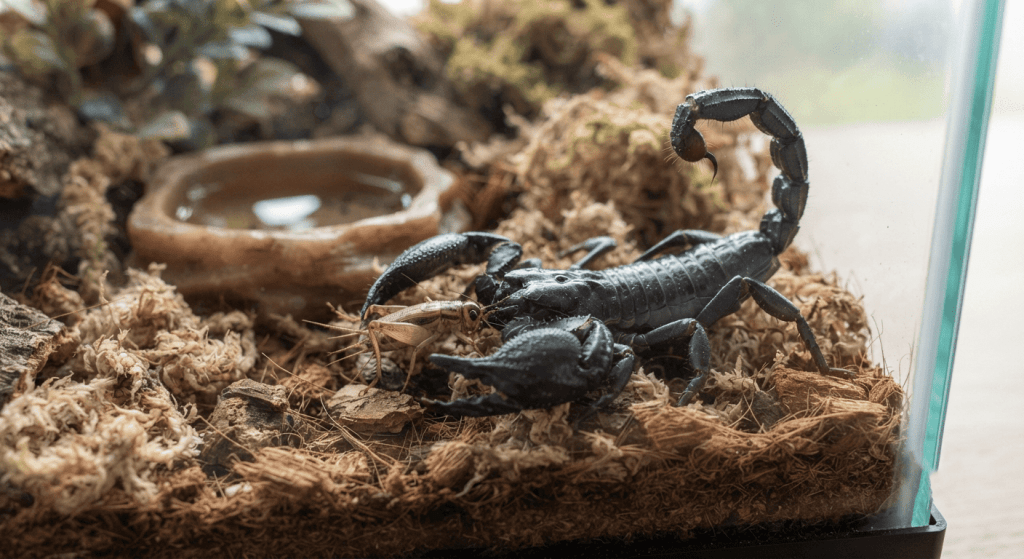
Hi seekers! If you’ve just brought home a pet scorpion, one of the first questions on your mind is probably: what do I feed this thing?
Hi seekers! If you’ve just brought home a pet scorpion, one of the first questions on your mind is probably: what do I feed this thing?
Hi seekers! If you’ve just brought home a pet scorpion, one of the first questions on your mind is probably: what do I feed this thing?
The good news is that scorpions are actually pretty simple to feed. They’re carnivorous, they eat live insects, and they don’t need to eat every day. But there are a few important rules to follow—and getting them right makes all the difference between a healthy, active scorpion and one that’s stressed or malnourished.
Let’s break it all down.
Scorpions are carnivores—they eat meat, and in captivity, that means live insects. They’re also opportunistic hunters, meaning they’ll eat whatever they can catch and overpower.
Here are the most popular and readily available food options:
This is crucial. The prey you offer should be no larger than the width of your scorpion’s pincers. A good rule of thumb is that the prey should be smaller than your scorpion’s body (excluding the tail).
Feeding prey that’s too large can stress your scorpion, make it difficult for them to catch, or even pose a danger.
Scorpions don’t need to eat every day. In fact, overfeeding is a common mistake.
Some sources say adults can be fed once a fortnight. It really depends on the species and the size of the meal.
A general guideline: Feed your adult scorpion about 3–6 large crickets per week (or the equivalent in other prey).
This is normal from time to time. If your scorpion doesn’t eat, remove the food and wait a few days before trying again.
Scorpions can survive for weeks or even months without food as long as they have water. So don’t panic if they skip a meal—especially if they’re about to molt.
This is where a lot of new keepers get confused.
The short answer is: yes, scorpions need water. But how they get it depends on the species and their environment.
Scorpions get moisture in three main ways:
It depends on the species.
But here’s the thing: Even desert species need water. As one experienced keeper put it: “if you don’t give a scorpion water or moist spots, they will die”.
All water given to scorpions for drinking, as well as water used for misting, must be 100% free of chlorine and heavy metals. Use dechlorinated water or bottled water.
Here’s something many beginners overlook: you are what you eat.
If you feed your scorpion insects that are malnourished, your scorpion will be malnourished too. That’s why gut-loading is so important.
Gut-loading means feeding nutritious food to the insects before you offer them to your scorpion. This improves the nutritional value of the prey.
Some keepers also dust their feeder insects with calcium and vitamin supplements before offering them to their scorpion. This is especially important for growing juveniles.
Emperor scorpions are the most popular pet species. They eat primarily crickets and roaches, but may occasionally enjoy a pinkie mouse (for adults only, and sparingly due to high fat content).
Desert species are typically smaller and require less frequent feeding. They get most of their moisture from their prey and the humidity in their enclosure.
These smaller scorpions may prefer smaller prey like pinhead crickets or small roaches.
Feeding a pet scorpion is straightforward once you know the basics:
Scorpions are fascinating, low-maintenance pets—but they’re not “set it and forget it.” A little attention to their diet goes a long way in keeping them healthy, active, and happy for years to come.
A: No, adult scorpions typically only need to be fed once or twice a week.
A: No, it is better to provide a small, shallow water dish to ensure the scorpion stays properly hydrated.
A: Scorpions often stop eating when they are preparing to molt (shed their skin), or they may become lethargic if the environment is too cold.
A: No, scorpions are strict carnivores and only eat meat (insects). However, you can feed vegetables to your feeder insects (a process called “gut-loading”) to ensure your scorpion receives better nutrition.
A: Because they can slow down their metabolism, scorpions can survive for months without food.
How Casinos Are Rebounding After COVID-19: Recovery Strategies Revealed The COVID-19 pandemic has had a
Олимп казино официальный сайт в Казахстане – Olimp Casino ▶️ ИГРАТЬ Содержимое Преимущества игры в
Олимп казино официальный сайт в Казахстане – Olimp Casino ▶️ ИГРАТЬ Содержимое Преимущества игры в
Олимп казино официальный сайт в Казахстане – Olimp Casino ▶️ ИГРАТЬ Содержимое Преимущества игры в
Олимп казино официальный сайт в Казахстане – Olimp Casino ▶️ ИГРАТЬ Содержимое Преимущества игры в
Олимп казино официальный сайт в Казахстане – Olimp Casino ▶️ ИГРАТЬ Содержимое Преимущества игры в