First Things First: Are Scorpions Good Pets?
The short answer is yes—but only for the right person. Scorpions are not like dogs or cats. They don’t want to cuddle. They don’t recognize

The short answer is yes—but only for the right person.
Scorpions are not like dogs or cats. They don’t want to cuddle. They don’t recognize you. They won’t come when called. What they will do is sit in their enclosure, look incredibly cool, and let you watch them go about their mysterious little lives.
If you’re the type of person who finds joy in observing natural behaviors rather than interacting with a pet, a scorpion might be perfect for you. Think of them more like a living aquarium than a traditional pet.
Ask yourself these questions before you commit:
If you answered yes to all of these, keep reading.
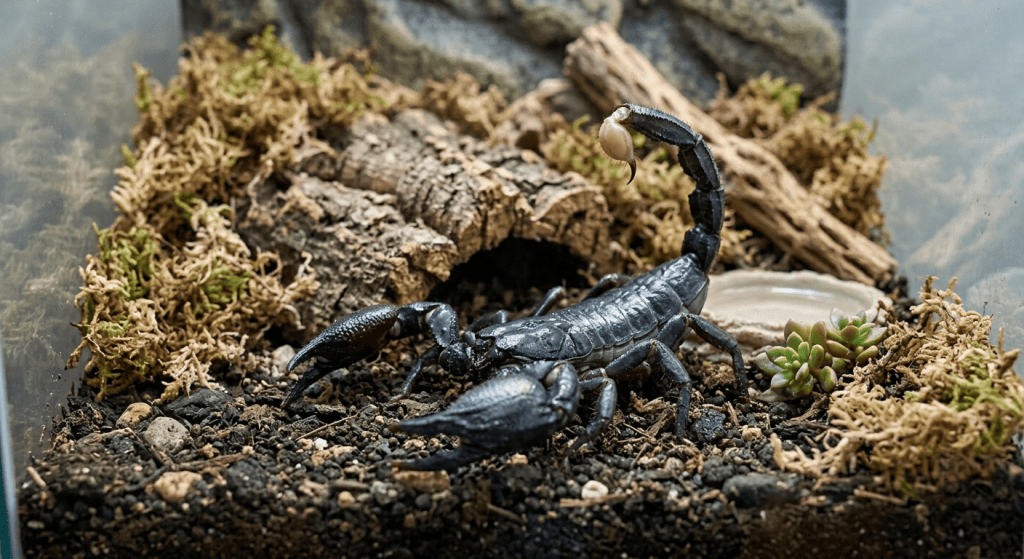
Here’s the most important piece of advice I can give you: start with an Emperor Scorpion.
The Emperor Scorpion (Pandinus imperator) is widely considered the best choice for beginners. They’re one of the largest scorpion species in the world, growing up to 8 inches. They’re glossy black, impressive to look at, and—most importantly—they’re known for being docile and tolerant.
Their venom is mild, about as painful as a bee sting. They rarely sting unless they feel genuinely threatened.
Other beginner-friendly options:
Species to avoid as a beginner:
This is where most new keepers mess up. Scorpions have specific needs, and if you don’t meet them, your scorpion won’t thrive.
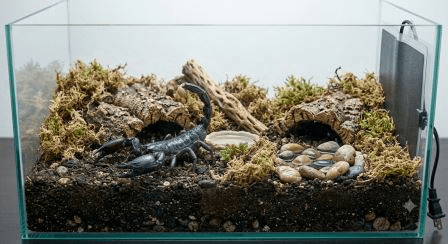
A 10-gallon glass tank is usually perfect for one adult scorpion. Glass is ideal because it holds heat well and gives you a clear view of your pet.
Critical: You need a secure, locking screen lid. Scorpions can squeeze through incredibly small openings. If there’s a gap, they will find it and escape. Trust me on this.
Don’t go too big. A tank larger than 20 gallons can make it harder for your scorpion to catch its prey.
The substrate needs to match your scorpion’s natural habitat.
For tropical species (Emperor, Asian Forest):
For desert species:
This is non-negotiable. Get a thermometer and a hygrometer.
Tropical species (Emperor, Asian Forest):
Desert species:
Use a heat mat on the side of the tank, not underneath. Heating from below can overheat the substrate and harm your scorpion.
Scorpions are shy creatures. They need places to hide and feel secure.
Good options:
Don’t overcrowd the tank, but do give them at least one good hiding spot. Some species, like Emperors, will dig extensive burrow systems if you give them deep enough substrate.
Most scorpions are fully nocturnal and don’t need special lighting. They prefer dim environments.
If you want to watch them at night, you can use a red or blue “night light” which won’t disturb them.
And here’s a fun fact: if you shine a UV (blacklight) on your scorpion, they will glow a beautiful blue-green color. It’s caused by compounds in their exoskeleton. Pretty cool, right?
Scorpions are carnivorous insectivores. They eat live prey.
Good food options:
Important rules:
Feeding schedule:
Prey size rule: The prey should be smaller than your scorpion’s pincer span.
Scorpions get most of their water from their food and humidity. But you should still provide a shallow water dish.
Safety tip: Add smooth stones to the bottom of the dish so your scorpion doesn’t submerge and drown.
Change the water daily.
Here’s what most guides won’t tell you straight up: you really shouldn’t handle your scorpion.
I know, I know. You want to hold your cool new pet. But here’s why it’s a bad idea:
The exception: Some experienced keepers do handle Emperor Scorpions because they’re so docile. But even then, handling should be minimal.
If you must move your scorpion:
One more thing: Never handle a scorpion that has recently molted. Their new exoskeleton is soft and vulnerable until it hardens, which takes about a week.
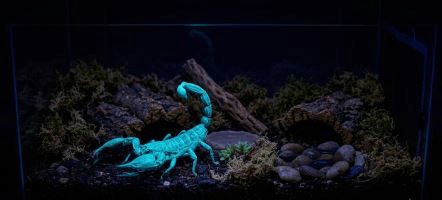
That blue-green glow under UV light isn’t just for show. Scientists believe it might help scorpions detect UV light in their environment, which could help them avoid exposure during the day. Some researchers even think it might be a way for them to communicate or find each other.
Unlike many insects that lay eggs, female scorpions give live birth. The babies are born alive and immediately climb onto their mother’s back, where they stay until their first molt. If you ever see a scorpion with babies on its back, leave them alone—it’s a critical time for their survival.
Scorpions molt (shed their exoskeleton) about twice a year. During this time, they may hide for days and refuse food.
Here’s what most guides won’t tell you: If the humidity isn’t high enough, your scorpion may not be able to molt completely. A failed molt can be deadly. After they molt, do not feed them for about a week while their new exoskeleton hardens. Their new “skin” is soft and vulnerable.
Most scorpions are solitary and will cannibalize each other. But some species, like certain bark scorpions, can live communally. If you’re keeping multiple scorpions, do your research on the specific species first. For beginners, stick to one scorpion per tank.
Only about 25 species of scorpions worldwide have venom that can kill a human. The most famous is the Death Stalker scorpion (Leiurus quinquestriatus). Never buy a “hot” (highly venomous) species as a beginner. Stick with Emperors or Asian Forest scorpions, and you’ll be fine.
Mistake #1: Not enough humidity. This is the #1 killer of tropical scorpions. Get a hygrometer and check it daily.
Mistake #2: Overfeeding. Adult scorpions don’t need to eat every day. Overfeeding can lead to obesity and health problems.
Mistake #3: Handling too much. Your scorpion isn’t a puppy. Leave it alone.
Mistake #4: Using the wrong substrate. Desert species need sand. Tropical species need moisture-retaining substrate. Get it right.
Mistake #5: Forgetting about the lid. Scorpions are escape artists. Check your lid regularly.
Keeping a scorpion is a unique and rewarding experience. They’re fascinating to watch, low-maintenance, and they live for years—some up to 10 years with proper care.
But they’re not for everyone. They’re display pets, not cuddle buddies. They require specific conditions. And they demand respect.
If you’re ready to provide the right environment and appreciate these creatures for what they are—ancient, mysterious, and beautiful—you’ll find scorpion keeping to be an incredibly cool hobby.
Just remember: do your research, set up the enclosure properly before you bring your scorpion home, and leave them alone to live their best little prehistoric lives.
Disclaimer
This article is for educational and informational purposes only.
Pingback: What Do Scorpions Eat And Drink? A Complete Feeding Guide | Paws & Antlers