The Hidden Discoveries of 2025-2026: What Science Found When We Weren’t Looking
Science doesn’t always announce itself with a bang. Sometimes, it whispers. In 2025 and 2026, while the world was distracted, researchers quietly made discoveries that

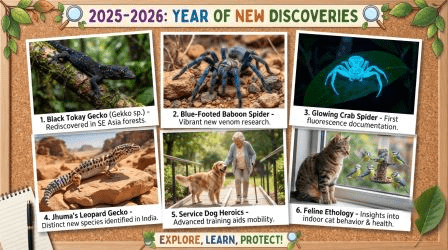
Science doesn’t always announce itself with a bang. Sometimes, it whispers.
In 2025 and 2026, while the world was distracted, researchers quietly made discoveries that are reshaping how we understand the animals we love—and the ones we’ve never even heard of. Some of these discoveries happened in remote jungles. Others happened in our own living rooms.
Here are six of the most fascinating, under-the-radar findings from the past year—and what they mean for anyone who cares about animals.
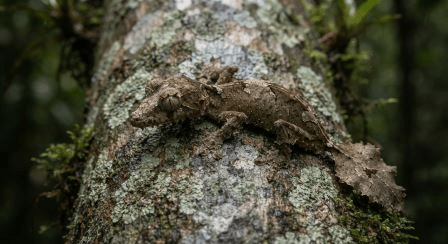
For years, scientists assumed the dark-colored geckos slinking through the borderlands of Thailand and Malaysia were just a color variant of the common Tokay gecko. They looked similar. They lived in the same places. No one thought twice.
But a Belgian-Thai research team decided to take a closer look. They analyzed the geckos’ DNA and examined their scales in detail. What they found was astonishing: these weren’t Tokay geckos at all. They were an entirely new species.
They named it Gekko dam—”dam” meaning dark or black in Thai.
Why did it take so long to discover? Here’s the twist: once the gecko is preserved in ethanol for museum storage, it loses its dark color and looks almost identical to the common Tokay. For decades, museum specimens were likely mislabeled. Only a detailed study of the live animal’s scale patterns and genetics could reveal the truth.
But here’s the worrying part: The Black Tokay’s large size and striking appearance make it highly attractive to the exotic pet trade. The same team had previously described another new species, Gekko pradapdao—named for its “Milky Way” pattern of bright white spots—which became instantly popular on the pet market.
The researchers are now calling for legal protection, but only after field surveys can determine where the species lives and whether it’s already being poached.
Why this matters: A species can go from “unknown to science” to “endangered by collectors” in a matter of months. Discovery isn’t always a happy ending—sometimes, it’s the beginning of a race against extinction.
When we think about wildlife trafficking, we imagine elephants with tusks, rhinos with horns, or pangolins with scales. We don’t imagine spiders.
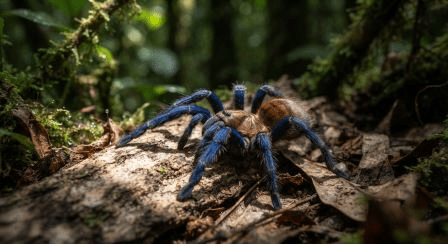
But a rare, little-known species found only in South Africa is increasingly appearing in the international exotic pet trade. It’s called the blue-footed baboon spider, and its sky-blue legs and unusual burrow-building behavior have made it desirable to collectors.
Here’s the problem: scientists know almost nothing about it. They don’t know how many exist. They don’t know its full distribution. They don’t know how quickly it can recover from population losses.
“Quiet, cryptic and closely tied to particular environmental conditions, it can disappear from an area long before anyone realises there is a conservation concern,” writes Sibongakonke Ngogodo, wildlife trade legal officer at the Endangered Wildlife Trust.
Why this matters: The animals that slip under the radar are often the ones most at risk. No one notices they’re disappearing until it’s too late. The blue-footed baboon spider isn’t famous. It doesn’t have a celebrity campaign behind it. And that makes it extraordinarily vulnerable.

Now let’s talk about the animals in our homes.
In early 2026, researchers at Eötvös Loránd University in Hungary published a study in the journal Animal Behaviour that compared something unexpected: dogs, cats, and human toddlers.
The setup was simple. A familiar caregiver—a parent or pet owner—searched for an object that had just been hidden in plain sight. They never asked for help. The scientists just watched what happened.
The hidden object was a dishwashing sponge—something of zero interest to a dog or a cat.
The results were striking. More than 75 percent of dogs spontaneously pointed to the sponge or fetched it for their human. No training. No treat. No reward. The toddlers behaved the same way.
The cats? They watched. They paid attention. But they rarely lifted a paw.
There was one exception: when the hidden object was the cat’s own favorite toy or treat, they suddenly got involved.
What does this tell us? Dogs were shaped by a long domestication history geared toward cooperation with humans. Cats, descended from more solitary ancestors, never went through that same filter.
“It does not mean cats are indifferent to us,” the researchers clarified. A cat that watches without acting is simply being a cat.
But the next time your dog brings you something you didn’t ask for, you can see it for what science suggests it is: “a small, unpaid gesture of help, the kind a toddler would make too”.
Why this matters: This isn’t about which pet is “better.” It’s about understanding that thousands of years of evolution have shaped dogs and cats to relate to us in fundamentally different ways. And that’s okay.
In one of Africa’s last uncharted wilderness areas—the remote Lisima plateau in eastern Angola—scientists made a discovery that sounds like science fiction.
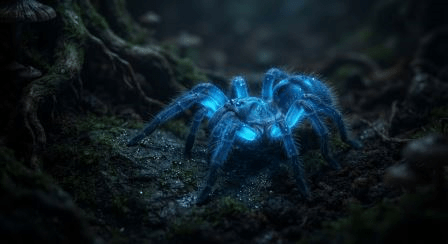
A new species of crowned crab spider that glows a brilliant neon blue under ultraviolet light.
Decades of civil war and remaining landmines kept researchers and developers away from this region for years, allowing it to function as an inadvertent ecological sanctuary. Now, finally, scientists are cataloging what lives there.
The spider’s fluorescent glow is an evolutionary feature that scientists believe could be used for mating, prey attraction, or predator deterrence—though they still don’t know for sure.
The expedition also documented a spiny flower mantis that blends seamlessly into its surroundings and an armored predatory cricket that sprays its own blood at attackers when threatened.
Why this matters: We are still discovering the most basic facts about life on Earth. Every year, an estimated 16,000 new species are described. But at the current rate, many species will go extinct before we even know they existed. The Lisima plateau is a reminder of how much we’ve yet to learn.
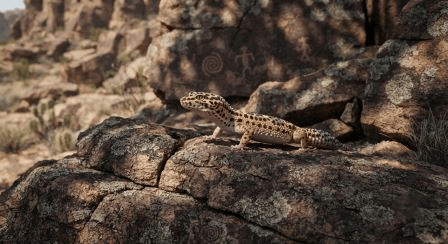
In the rocky scrublands of Bihar, India, scientists discovered a new species of leopard gecko.
Named Eublepharis jhuma—after Dr. Dhriti Banerjee, the first female director of the Zoological Survey of India—the gecko was first spotted during wildlife surveys in 2021 but only confirmed as a distinct species after DNA and physical analysis.
It has dark brown scales with pale spotted bands, large flat bumpy scales across its back, and a unique feature: if its tail breaks and regenerates, the replacement scales grow back in flat rectangular patterns instead of circular ones.
What’s concerning: Leopard geckos are among the reptiles most frequently targeted in the international exotic pet trade. Their spotted appearance, manageable size, and calm behavior make them highly desirable to collectors. Conservationists warn that newly discovered species can quickly become vulnerable to illegal trafficking once they’re named.
Why this matters: Naming a species is a double-edged sword. It brings scientific recognition—and sometimes, it brings poachers. The Jhuma’s leopard gecko is now on the map. The question is whether it can stay safe.

Finally, something that affects almost every pet owner.
In 2026, veterinary science is finally catching up to what many of us have suspected: what happens in your pet’s gut affects their mood.
Research on the gut-brain axis—the bidirectional communication between the digestive system and the brain—is revealing that probiotics can lower stress hormones like cortisol and boost serotonin.
One study found that supplementing dogs with a Lactobacillus postbiotic significantly reduced heart rate reactivity during stress—by an average of 20 beats per minute compared to placebo. The supplement also stabilized the dogs’ gut microbiomes over time.
Another study linked specific changes in gut bacteria with anxiety, fear, and aggressive behavior in dogs. Researchers are now exploring microbiome-based therapies for canine behavioral concerns.
Why this matters: This isn’t fringe science anymore. The gut-brain connection is real, and it’s opening up new ways to help anxious, stressed, or reactive pets—without relying solely on medication.
What do all these discoveries have in common?
They remind us that we don’t know as much as we think we do.
A gecko that hid in museum drawers for decades. A spider that no one was watching. A cat that watches without helping. A glowing spider in an uncharted forest. A gecko named after a scientist. A gut that talks to a brain.
These aren’t just fun facts. They’re windows into a world that’s still full of surprises—and full of urgency.
Every time we discover something new, we also discover how much we still have to lose.