Heatwave Pet Health: How to Spot, Treat, and Prevent Heatstroke
Hi seekers! When the mercury rises, our furry friends are often the ones who suffer most. Unlike humans, dogs and cats can’t sweat to cool

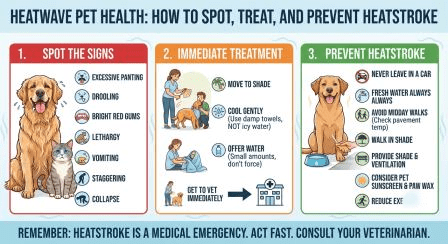
Hi seekers! When the mercury rises, our furry friends are often the ones who suffer most. Unlike humans, dogs and cats can’t sweat to cool down effectively. Dogs rely primarily on panting, while cats use grooming and seeking shade. This makes them highly vulnerable to overheating, especially during a heatwave.
Heatstroke can escalate within minutes and lead to organ failure or death. The good news is, with the right knowledge, it’s entirely preventable and treatable if caught early.
Not all dogs are equally at risk. Brachycephalic (flat-faced) breeds like Pugs, Bulldogs, French Bulldogs, Boston Terriers, and Shih Tzus are especially vulnerable. Their shortened airways make panting—their primary cooling mechanism—far less effective.
Other high-risk groups include:
Heatstroke can develop rapidly. Recognizing the early signs can save your pet’s life.
Early signs (act fast):
Moderate to severe signs (emergency):
🚨 A body temperature above 104°F (40°C) indicates heatstroke is imminent, and temperatures reaching 106°F (41°C) or higher can cause irreversible organ damage and death.
If you suspect heatstroke, act quickly but stay calm. Every minute counts.
Step 1: Move your pet out of the heat immediately
Get them indoors to a cool room, into the shade, or in front of an air conditioner.
Step 2: Cool them down—the right way
Gently pour cool (not ice-cold) water over their whole body. Tap water around 15-16°C is ideal.
Step 3: Call your vet immediately
Even if your pet appears to recover, internal organ damage can develop hours later. Transport them to the nearest vet with the car windows open or air conditioning on.
What NOT to do:
Once at the clinic, your vet will take over emergency cooling and monitoring. Treatment often includes:
💡 A 2026 report from Ahmedabad noted that veterinary clinics were seeing 40-50 heatstroke cases monthly during peak summer, with temperatures reaching 42°C (107°F). Some dogs arrived with body temperatures of 108°F (42°C) and required ICU care.
Prevention is always better than treatment. Here’s how to protect your pet when the temperature soars.
While less common than in dogs, cats can also suffer from heatstroke. Because cats are masters at hiding discomfort, you need to watch closely.
| Step | Action |
|---|---|
| 1. Recognize | Watch for heavy panting, drooling, red gums, lethargy, vomiting, collapse |
| 2. Move | Get them out of the heat immediately |
| 3. Cool | Use cool (not cold) water, fan them, apply wet towels to neck/armpits/groin |
| 4. Hydrate | Offer small sips of cool water—do not force |
| 5. Call | Contact your vet immediately—even if they seem better |
| 6. Transport | Take them to the vet with windows open or A/C on |
Heatstroke is a life-threatening emergency that can strike quickly during a heatwave. But it’s also entirely preventable.
“Most dogs with heatstroke have body temperatures greater than 40°C, and a reasonable goal of cooling is to reduce your pet’s body temperature to between 39°C and 39.5°C while transporting them to the closest veterinary facility.”
“The quicker your dog is cooled down, the better their chance of a full recovery.”
Your furry friend depends on you to keep them safe when the temperature soars. A little preparation—and knowing what to do in an emergency—can make all the difference.
Heatstroke (also called hyperthermia) is a life-threatening condition where a pet’s internal body temperature rises to dangerous levels—typically above 104°F (40°C) —and their body can no longer cool itself down. Unlike humans, dogs and cats don’t sweat effectively to cool off. Dogs rely mainly on panting, while cats rely on seeking shade and grooming. When these cooling mechanisms fail, heatstroke sets in, leading to organ failure and potentially death.
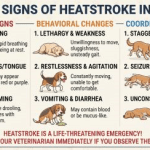
Watch for these warning signs:
Excessive, relentless panting – even when resting
Thick, ropey drool or excessive salivation
Bright red or very pale gums and tongue
Rapid heart rate
Restlessness or agitation
Lethargy, weakness, or reluctance to move
Vomiting or diarrhea (possibly with blood)
Staggering, lack of coordination, or confusion
Muscle tremors or seizures
Collapse or unconsciousness
Brachycephalic (flat-faced) breeds like Bulldogs, Pugs, French Bulldogs, Boston Terriers, and Persian cats are much more vulnerable to heatstroke. Their shortened airways make panting—their primary cooling mechanism—far less effective. One study found these breeds have a risk of heat illness more than four times higher than dogs with longer snouts.
Overweight or obese pets
Senior pets and very young puppies/kittens
Pets with thick or dark coats
Pets with heart or respiratory conditions
Other high-risk pets include:
Move your pet out of the heat immediately—to a cool, shaded area or air-conditioned space
Cool them down with cool (NOT ice-cold) water: Spray or sponge cool water over their whole body
Pay special attention to the neck, armpits, and groin—areas with major blood vessels
Use a fan to circulate air and speed up evaporative cooling
DO NOT use ice or ice-cold water—this can constrict blood vessels, trap heat inside the body, and even cause shock
Offer small sips of cool water—but do not force them to drink
Take their temperature if you have a rectal thermometer: Normal temperature: 100-102.5°F
If temperature is above 105°F, it’s a true emergency
Stop cooling once temperature drops to 103°F—do not cool below this
Call your vet immediately and transport them—even if they seem to recover
What NOT to do:
Don’t cover them with wet towels—this traps heat and prevents evaporation
Don’t put them in an ice bath—can cause shock
Don’t force water into their mouth—could cause aspiration
Don’t leave them unattended
Act fast—this is a medical emergency. Follow these steps:
No. Heatstroke is a life-threatening emergency that requires veterinary care. Even if your pet seems to recover, internal organ damage can develop hours later. Home cooling is first aid, not treatment—always follow up with a vet.
What will the vet do?
At the clinic, treatment typically includes:
Intravenous (IV) fluids to restore circulation and cool from the inside
Oxygen therapy if breathing is compromised
Medications to control vomiting, seizures, or other complications
Blood tests to check for organ damage, especially kidney function
Ongoing monitoring of temperature, electrolytes, and organ function
Prevention is the best medicine:
At home:
Provide constant access to fresh, cool water in multiple locations
Keep pets indoors in air-conditioned or well-ventilated spaces during peak heat
Create cool zones with fans, cooling mats, or damp towels
Close blinds or curtains to block direct sunlight
Never leave pets in parked cars—even with windows cracked, temperatures can become deadly within minutes
During walks:
Avoid walking during peak heat (typically 10 AM to 6 PM)
Walk early morning or late evening when temperatures are cooler
Test the ground with the back of your hand—if it’s too hot for you, it’s too hot for their paws
Skip walks entirely during heatwaves, especially for flat-faced breeds
Avoid asphalt and concrete—they absorb and radiate heat
For all pets:
Know your pet’s risk factors (breed, age, weight, health conditions)
Watch for early warning signs—panting, drooling, weakness
Consider cooling gear like cooling vests or boots for hot surfaces
Yes, though it’s less common than in dogs. Cats are generally good at finding cool spots, but they’re at risk if:
Trapped in a hot area with no ventilation (like a car, greenhouse, or shed)
Left without access to fresh water
Flat-faced breeds (like Persians)
Very young, old, or unwell
Prevention for cats:
Keep them indoors during heatwaves
Provide multiple water stations
Ensure shaded, well-ventilated areas
Never leave them in a car, garage, or sunroom
General guidelines:
Above 70°F (21°C): Use caution with exercise, especially for flat-faced breeds
Above 80°F (27°C): Limit outdoor activity and watch for signs of overheating
Above 90°F (32°C): Avoid outdoor exercise entirely for most dogs
Above 100°F (38°C): Keep all pets indoors with air conditioning if possible
Remember: Dogs can overheat even on milder days (70-75°F) if they’re exercising, in a parked car, or in a poorly ventilated space.
Extreme danger. On a 75°F day, a car can reach 100°F in just 20 minutes. On an 85°F day, it can reach 120°F in the same time. Even with windows cracked, temperatures inside a car can rise almost 20°F within the first 10 minutes. In extreme heat, a dog can die in as little as six minutes. Never leave a pet alone in a parked car—even for a moment.
The Bottom Line
Heatstroke is preventable. Know the signs, act fast if you see them, and take prevention seriously. If you’re ever unsure, call your vet—it’s always better to be safe than sorry.
Disclaimer
This article is for educational and informational purposes only.