Bringing a bearded dragon into our life is an incredibly exciting journey. These gentle, expressive reptiles make wonderful companions, but unlike a cat or a
Table of Contents
Bringing a bearded dragon into our life is an incredibly exciting journey. These gentle, expressive reptiles make wonderful companions, but unlike a cat or a dog, you cannot simply let them roam free the day they arrive.
To keep our new “beardie” happy, healthy, and thriving, we need to recreate a slice of the Australian outback right inside your living room.Setting up a reptile enclosure can feel intimidating with all the talk of tank sizes, UVB bulbs, and heating zones. But don’t worry! This step-by-step bearded dragon setup guide breaks down everything we need to build the perfect, stress-free sanctuary for our scaly friend.
Step 1: Choosing the Right Tank Size (Give Them Room to Grow)
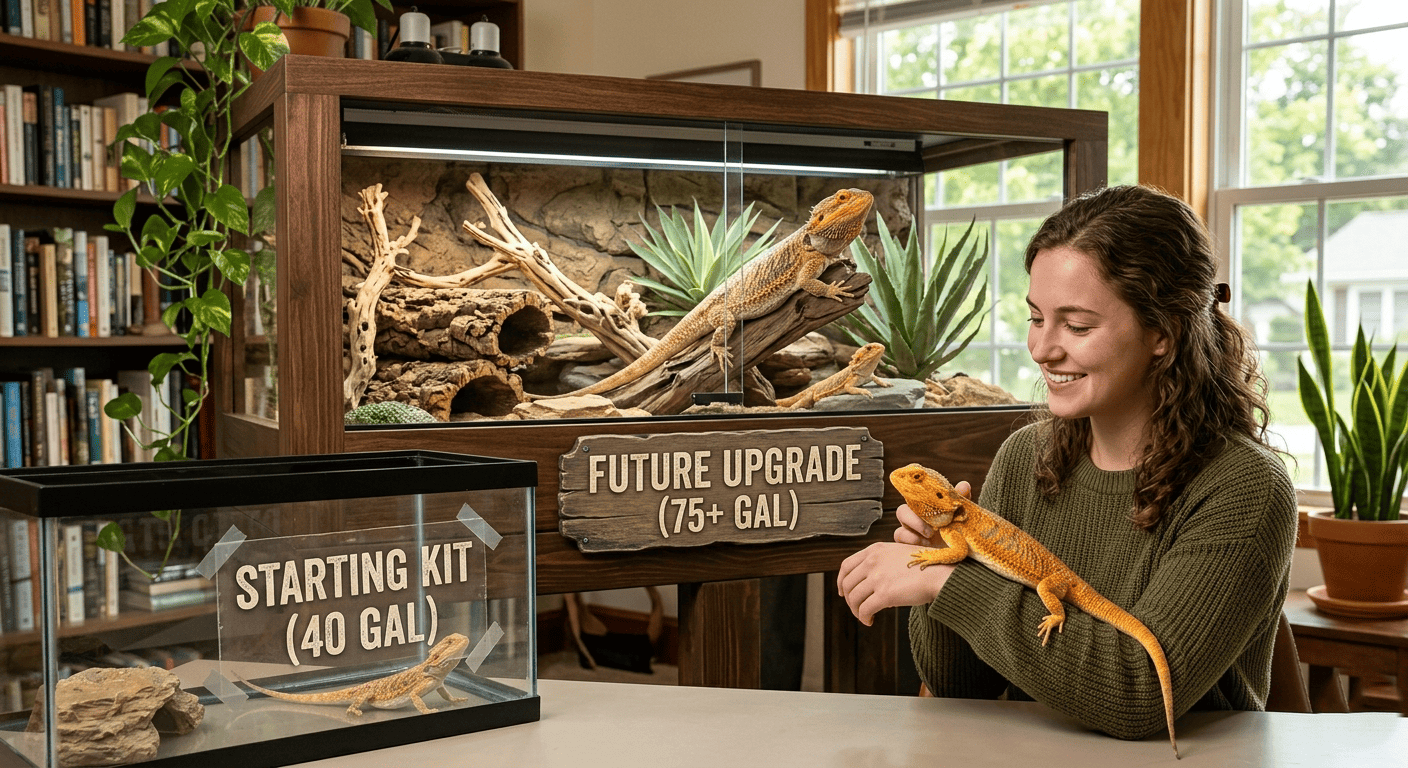
The biggest mistake beginners make is buying a tiny tank. While a baby bearded dragon looks small now, they grow rapidly, reaching up to 2 feet in length within their first year!
The Minimum Standard: For an adult bearded dragon, we need at least a 120-gallon tank (typically 4ft x 2ft x 2ft).
Material Matters: Glass terrariums are great for viewing, but front-opening PVC enclosures are highly recommended. Front-opening doors prevent us from reaching in from above, which can scare our dragon (since in the wild, predators attack from above). PVC also retains heat much better than glass.
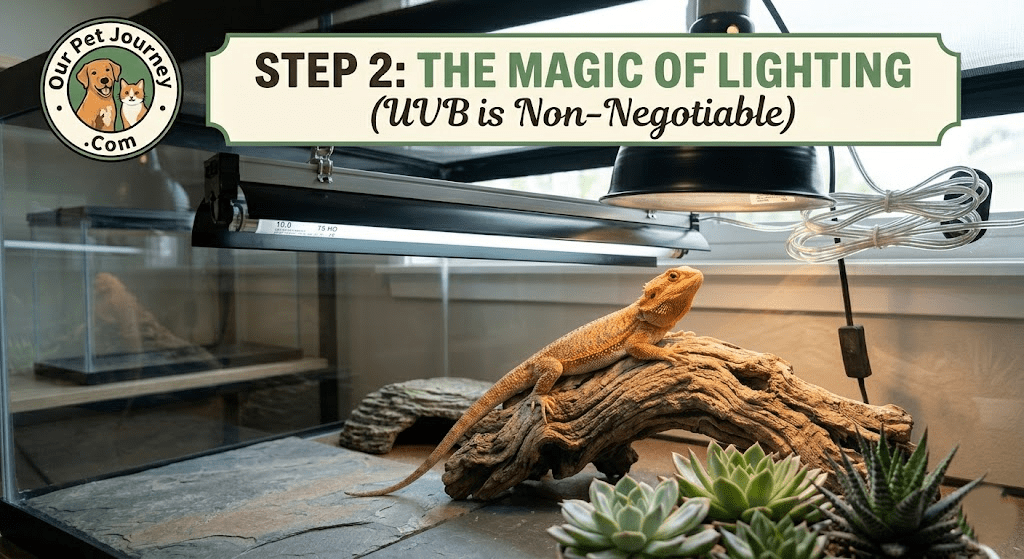
Step 2: The Magic of Lighting (UVB is Non-Negotiable)The UVB Distance Rule (Almost Everyone Gets Wrong
In the wild, bearded dragons bask under the intense Australian sun to absorb Vitamin D3, which helps them process calcium. Without proper lighting, they can develop Metabolic Bone Disease (MBD), a painful and preventable illness.
The UVB Tube Bulb: Do not use coil bulbs that twist into a regular lamp socket; they do not provide enough coverage. Instead, choose a T5 High Output UVB tube light (such as the Zoomed ReptiSun 10.0 or Arcadia 12%).
Coverage: The light fixture should stretch across roughly two-thirds of the tank’s length, overlapping with your heat source.
Step 3: Mastering the Temperature Gradient (Hot vs. Cool Side)
Reptiles are ectothermic, meaning they rely on their environment to regulate their body temperature. Your setup must feature a “temperature gradient”—a hot side for digesting food and a cool side for relaxing.
The Basking Spot (Hot Side): Use a heavy-duty halogen basking bulb. The surface temperature of the basking rock should reach 100°F to 105°F for adults, and up to 110°F for babies.
The Cool Side: The opposite end of the tank should stay around 75°F to 80°F.
Nighttime Temperature: Turn off all lights at night. As long as your home stays above 65°F, they do not need nighttime heat. If it gets colder, use a Ceramic Heat Emitter (CHE), which emits heat but no light, keeping their sleep cycle natural.
T5 UVB bulb: Must be 12–15 inches from the basking spot
T8 UVB bulb: Must be 6–8 inches away
Mesh screen blocks 30–50% of UVB —
How to test if your UVB is working (UVB test card or meter)
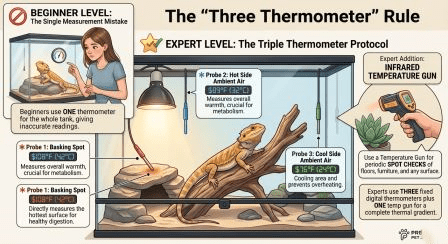
⚠️ Important Tool: Never guess the temperature! Buy a digital thermometer with a probe or an infrared temperature gun to accurately check the basking spot surface.
Step 4: Substrate (What to Put on the Bottom)
The “bedding” or floor material is called substrate. There is a lot of debate online about this, but for beginners, safety and cleanliness come first.
Safe Beginner Options: * Reptile Carpet or Slate Tile: Extremely safe, easy to wipe clean, and completely eliminates the risk of your dragon accidentally swallowing loose particles.
Non-adhesive Shelf Liner: Affordable, safe, and can be easily wiped down during spot cleanups.
What to Avoid: Avoid calcium sand, walnut shells, or wood shavings. If a dragon accidentally eats these loose substrates while catching a cricket, it can cause an internal blockage (impaction), which is life-threatening.
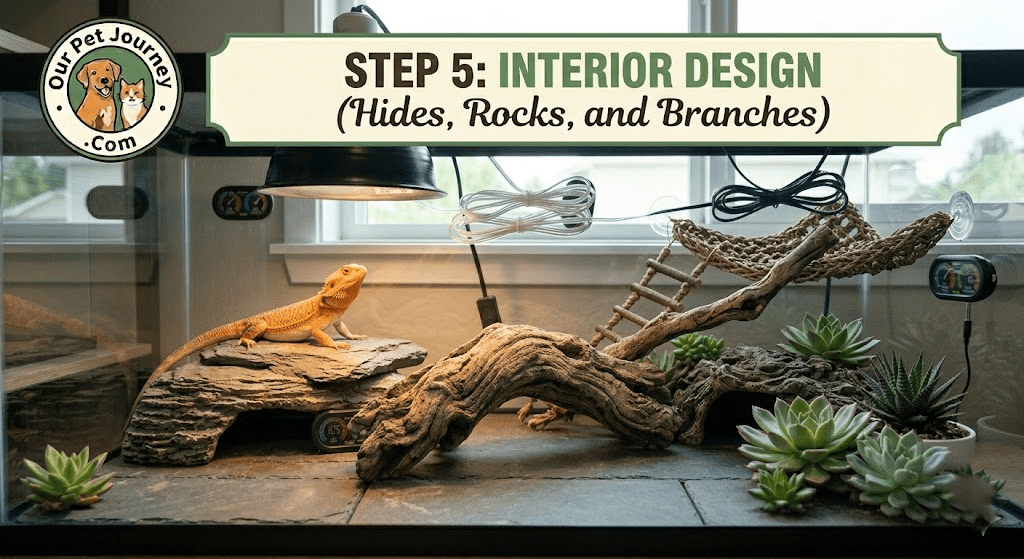
Step 5: Interior Design (Hides, Rocks, and Branches)
Now comes the fun part—decorating our dragon’s home! A bare tank causes stress, so we want to add functional decor:
A Basking Platform: Place a flat rock or a sturdy piece of driftwood directly under the heat lamp.
Two Separate Hides: Place one “hide cave” on the hot side and one on the cool side. This gives your pet privacy and options to regulate their temperature away from human eyes.
Climbing Elements: Thick branches or hammocks allow them to utilize vertical space, keeping them active and entertained.
The “First 24 Hours” Protocol
Don’t handle them for 48–72 hours
Leave food and water, then walk away — don’t stare or hover
Watch for “glass surfing” (stress behavior) and how to reduce it
Signs of relocation stress vs. actual illness
Seasonal Adjustments (Winter vs. Summer)
In winter, you may need a second ceramic heat emitter
In summer, you may need to raise lights higher or add a small fan for airflow
Brumation (reptile hibernation) — what it looks like and what to do (most new owners panic when their dragon stops eating in winter)
The “Three Thermometer” Rule
Probe 1: Basking spot surface temp
Probe 2: Hot side ambient air
Probe 3: Cool side ambient air
Add a temperature gun for spot checks
Final Thoughts: A Little Effort for Years of Love
Setting up our enclosure before our bearded dragon arrives ensures that their transition to our home is calm, safe, and comfortable. Once the temperature dials are set and the lights are running on a 12-hour timer, our job becomes incredibly simple—leaving us with plenty of time to enjoy the beautiful bond we are about to create.
Are you setting up a tank for a baby or an adult bearded dragon? If you need help choosing a specific light or bulb, drop your questions in the comments below!

Pingback: 5 Best Exotic Pets For Beginners: A Guide To Unique Companions | Paws & Antlers
Pingback: Beyond The Aesthetics: Mastering Evidence-Based Reptile Husbandry | Paws & Antlers
Pingback: Bearded Dragon Updates 2025-2026