Hi sekers! One minute your dog is chasing a ball, full of energy, and the next, they’re hobbling on three legs, holding up a paw
Table of Contents
Hi sekers! One minute your dog is chasing a ball, full of energy, and the next, they’re hobbling on three legs, holding up a paw with a worried look on their face. It’s a sight that can make any dog owner’s heart sink.
Seeing your dog in pain is distressing. But before you panic, take a breath. Limping is one of the most common reasons dogs visit the vet. While it’s always a sign that something is wrong, the causes range from a simple splinter to a more serious condition.
This guide will walk you through everything you need to know: what might be causing the limp, how to perform a safe home examination, when to rush to the emergency vet, and what to expect from treatment.
🐾 Step 1: Identify the Type of Limp
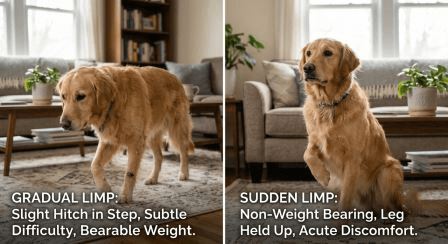
The first thing a vet will ask you is how long your dog has been limping. Knowing this can help narrow down the possible causes significantly. Veterinarians generally classify limps into two categories: gradual onset and sudden onset.
Gradual Onset Limps These limps develop slowly over days, weeks, or even months. One day your dog might have a slight hitch in their step, the next day they seem fine, and then the limp returns, more noticeable than before.
Likely Causes: This type of limp is usually caused by an underlying, chronic, or degenerative condition. Common culprits include:
Osteoarthritis: Joint inflammation and pain, especially common in senior dogs.
Hip or Elbow Dysplasia: Abnormal development of the hip or elbow joint, common in large breeds.
Bone Cancer: A serious condition that can weaken bones and cause persistent pain.
Sudden Onset Limps These limps appear instantly, often after an obvious event like a jump, a fall, or a sudden yelp during play. Your dog might have been running one minute and limping the next.
Likely Causes: This type of limp is almost always the result of an injury or trauma.
Foreign Body: A thorn, piece of glass, or grass seed lodged in the paw pad.
Soft Tissue Injury: A sprain, strain, or bruise to a muscle, tendon, or ligament.
Broken Nail: A very common and painful injury.
Cruciate Ligament Tear: A severe and painful knee injury, common in active dogs.
Fracture or Dislocation: A broken bone or dislocated joint, which is a veterinary emergency.
🕵️ Step 2: The Home Examination (Proceed with Caution)
If your dog is in severe pain, crying, or has an obvious break, do not try to examine them. Even a gentle touch could worsen the injury or get you bitten. In these cases, it’s best to keep your dog calm and call the vet immediately.
If your dog seems comfortable, is not in severe distress, and is allowing you to touch them, you can perform a careful, gentle examination. The goal is to find the source of the pain. Remember: If your dog shows any signs of discomfort, stop immediately.
How to Examine Your Dog’s Leg:
Get a Helper: It’s a good idea to have someone gently restrain your dog and keep them calm while you examine them. A dog in pain may bite, even if they love you.
Start at the Paw: The paw is the most common source of limping.
Check the Pads: Look for cuts, punctures, burns, or foreign objects like glass, thorns, or burrs.
Between the Toes: Gently separate the toes to check for grass seeds, redness, or swelling.
Check the Nails: Look for broken, cracked, or infected nails.
Work Your Way Up: If the paw seems fine, apply gentle pressure to each part of the leg, moving from the toes up to the shoulder or hip.
Feel for Swelling: Compare one leg to the other. Any warmth or swelling could indicate an injury.
Flex the Joints: Gently bend and flex the ankle, knee, and elbow. If your dog pulls away, cries, or resists, it’s a sign of pain.
🚨 Step 3: When to Call the Vet Immediately
In many cases, a mild limp can be managed with a day or two of rest. However, some situations are emergencies that require immediate veterinary attention.
Call your vet or go to an emergency clinic right away if you notice any of these signs:
Severe Pain: Your dog is crying, whimpering, or trembling.
Non-Weight Bearing: Your dog is refusing to put any weight on the leg at all.
Dangling Limb: The leg looks like it’s hanging at an odd angle or is completely limp.
Obvious Deformity: You can see a bone protruding or the leg is bent at an unnatural angle.
Swelling or Heat: The leg is significantly swollen, hot to the touch, or both.
Other Symptoms: The limping is accompanied by fever, lethargy, loss of appetite, or vomiting.
Important: Even if the limp isn’t an emergency, it’s always best to “play it safe” and call your veterinarian. A limp that lasts more than a few minutes, especially if you don’t know the cause, should be checked by a professional. Letting a gradual limp fester can lead to more serious complications.
🏥 Step 4: What to Expect at the Vet
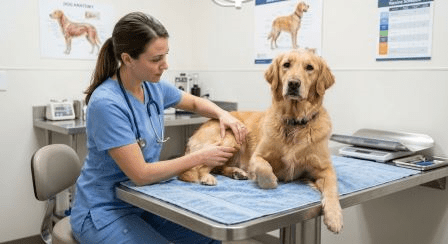
When you take your dog to the vet, they will follow a systematic process to diagnose the problem.
History: The vet will ask you questions about your dog’s limp, their activity level, and any recent events that could have caused an injury.
Physical Exam: They will perform a thorough physical and orthopedic exam, which involves manipulating the leg, bending joints, and assessing your dog’s gait to pinpoint the source of pain.
Diagnostic Tests: If they can’t find the cause, they may recommend further tests.
X-rays (Radiographs): These are the most common test to evaluate bones and joints for fractures, arthritis, or tumors.
Lab Tests: Blood work can check for infections or metabolic conditions.
Advanced Imaging: In complex cases, an ultrasound, CT scan, or MRI might be used to get a better look at soft tissues like ligaments and tendons.
💊 Step 5: Treatment Options
Treatment depends entirely on the diagnosis. It can range from simple rest at home to complex surgery.
Rest and Medication: Many minor soft tissue injuries or strains will resolve with a few days of strict rest and anti-inflammatory medication. Common pain relievers include meloxicam (Metacam®).
Wound Care: Cuts, abscesses, or paw injuries will need to be cleaned, bandaged, and treated with antibiotics.
Surgery: More serious injuries, like a torn cruciate ligament or a broken bone, often require surgical intervention to repair the damage.
Physical Therapy: After surgery or for chronic conditions like arthritis, physical rehabilitation can be crucial for restoring mobility and strength.
Lifelong Management: Chronic conditions like arthritis may require lifelong management with medication, exercise therapy, and weight control.
🛡️ Step 6: Prevention and Long-Term Joint Health
While you can’t prevent every injury, you can take steps to support your dog’s joint health and reduce the risk of chronic limping.
Weight Management: Keeping your dog at a healthy weight is one of the most effective ways to reduce stress on their joints.
Supplements: Talk to your vet about joint supplements. Common ingredients like glucosamine and chondroitin are staples that help support cartilage repair. Omega-3 fatty acids from fish oil are known to help control the inflammatory response in joints. Other helpful ingredients include turmeric and green-lipped mussel extract.
Controlled Exercise: Avoid high-impact activities on hard surfaces. Consistent, moderate exercise is better for joints than sporadic, intense bursts of activity.
Regular Vet Checkups: Routine vet visits can help catch early signs of joint disease like arthritis before they become a major problem.
✅ The Bottom Line
A dog limping is never something to ignore, but it’s also not always a reason to panic. By understanding the different types of limps, performing a safe home exam, and knowing when to seek professional help, you can be the best advocate for your furry friend.
Remember, your vet is your most valuable partner in determining why your dog is limping. When in doubt, a phone call to the vet is always the safest and wisest course of action.
Disclaimer This article is for educational and informational purposes only. I am not a veterinarian. Always consult with a qualified veterinarian for personalized advice about your dog’s health. This article is not a substitute for professional medical advice, diagnosis, or treatment.
📌 Quick Reference: Limping in Dogs
Feature
Gradual Onset
Sudden Onset
Timing
Develops slowly over time
Appears instantly
Likely Causes
Arthritis, dysplasia, bone cancer
Injury, trauma, foreign body, sprain
Action
Schedule a vet visit (don’t delay)
Assess urgency; call vet if severe or non-weight-bearing


Pingback: The Ultimate Dog Grooming & Care Guide For A Happy, Healthy Pup | Paws & Antlers