Why Is My Dog Shaking? 10 Causes & Solutions
Hi seekers! Seeing your dog shaking can be alarming. Your heart sinks, and your mind starts racing through all the worst-case scenarios. Take a breath.


Hi seekers! Seeing your dog shaking can be alarming. Your heart sinks, and your mind starts racing through all the worst-case scenarios.
Take a breath. Shaking in dogs is actually quite common, and the causes range from completely normal to genuinely serious. The key is knowing the difference.
Let me walk you through the 10 most common reasons why dogs shake—and what you should do about each one.
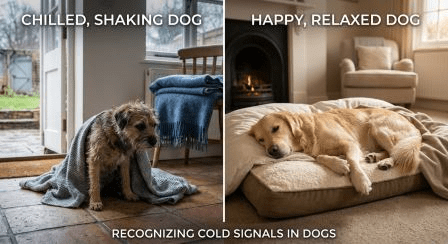
This is the most obvious and common reason.
Just like us, dogs shiver when their body temperature drops. Their muscles contract and relax rapidly to generate heat. This is especially common in:
✅ What to do:
Wrap them in a warm blanket, put on a dog sweater, or hold them close. Once they warm up, the shaking should stop within a few minutes.
⚠️ Watch for: If they’re shaking even in a warm room, the cause is something else.
Dogs are emotional creatures, and shaking is one of their primary stress signals.
Common triggers include:
How to tell: The shaking is often accompanied by tail-tucking, flattened ears, panting, whining, or hiding. The shaking usually stops when the stressor is removed.
✅ What to do:
Not all shaking is bad news.
Does your dog shake when you pick up the leash? When you come home after a long day? When you mention “walk” or “treat”? That’s excitement shaking—and it’s completely normal.
How to tell: The shaking is brief and accompanied by wagging tails, happy barks, wiggly bodies, and bright eyes. It stops once the excitement passes.
✅ What to do: Nothing! Enjoy it. Your dog is happy to see you.
You’ve seen this a thousand times. A wet dog shakes vigorously, spraying water everywhere.
They can shake off up to 70% of the water on their fur in just 4 seconds. This isn’t just efficient—it’s a survival instinct to prevent hypothermia.
But there’s another type of shake-off too.
After a stressful or tense moment (like a conflict with another dog or a loud noise), dogs will often do a quick, full-body shake. This is their way of releasing tension and “resetting” their nervous system.
✅ What to do: If they’re wet, towel them off. If it’s a stress shake-off, give them a moment to calm down. It’s a healthy way for them to decompress.
This is the one you should take seriously. When dogs are in pain, they often shake.
Dogs are masters at hiding pain. It’s an evolutionary survival mechanism—showing weakness makes them vulnerable. But eventually, the discomfort becomes too much.
Common pain-related reasons for shaking:
How to tell: The shaking may be localized (like trembling in one leg) or full-body. Your dog may also:
✅ What to do: If you suspect pain, see a vet. Don’t give human pain medications—many (like ibuprofen) are toxic to dogs.
Just like us, dogs shake when they feel sick to their stomach.
Common causes:
How to tell: Shaking is often accompanied by:
✅ What to do:
If your dog is shaking their head repeatedly, the problem is often in their ears.
Common ear issues:
How to tell: Your dog may:
✅ What to do:
Check the ears for redness, discharge, or odor. If you suspect an infection or foreign body, don’t try to clean it yourself—you could push debris deeper. See a vet for proper diagnosis and treatment.
⚠️ Pro tip: Some breeds are more prone to ear problems, including Cocker Spaniels, Golden Retrievers, and Basset Hounds. Clean their ears regularly with a vet-approved solution.
This is an absolute emergency.
If your dog has eaten something toxic, shaking can be one of the first signs.
Common toxins that cause shaking:
How to tell: Shaking is often accompanied by:
✅ What to do:
Do NOT wait. Do NOT try to make your dog vomit unless a vet or poison control center tells you to.
Call your vet or a pet poison control hotline immediately. If possible, take the product container with you to the vet so they know exactly what they’re dealing with.
Remember: The faster you act, the better the outcome.
Sometimes shaking is a symptom of an underlying health condition.
Common conditions that cause shaking:
| Condition | What It Is | Other Signs |
|---|---|---|
| Hypoglycemia (low blood sugar) | Common in puppies and toy breeds | Weakness, lethargy, collapse |
| Kidney disease | Toxins build up in the blood | Increased thirst, frequent urination, weight loss |
| Distemper | Serious viral infection | Fever, nasal discharge, coughing, neurological signs |
| Addison’s disease | Adrenal gland disorder | Weakness, vomiting, diarrhea, weight loss |
| Idiopathic tremor syndrome | Neurological condition of unknown cause | Full-body tremors, worse with excitement |
| Epilepsy or seizures | Brain disorder | Uncontrolled shaking, loss of consciousness, drooling |
| Degenerative myelopathy | Spinal cord disease (especially in older German Shepherds) | Weakness in hind legs, eventually paralysis |
How to tell: The shaking is persistent, not associated with temperature or stress, and often accompanied by other symptoms.
✅ What to do: If your dog’s shaking can’t be explained by any of the reasons above, see a vet. They can run blood work, check for parasites, and rule out serious conditions.
Here’s the cutest one on the list.
Have you ever seen your dog twitching, kicking, or shaking slightly while sleeping? This is completely normal and happens when dogs are in REM (Rapid Eye Movement) sleep—the stage where they dream.
How to tell: The shaking occurs only while sleeping. Your dog may also paddle their legs, whimper, bark softly, or twitch their whiskers.
✅ What to do:
Leave them alone. Let them enjoy their dream. Waking a dreaming dog can startle them and cause confusion or aggression.
⚠️ Exception: If your dog is shaking while awake, this doesn’t apply.
Here’s a quick cheat sheet for when shaking is an emergency.
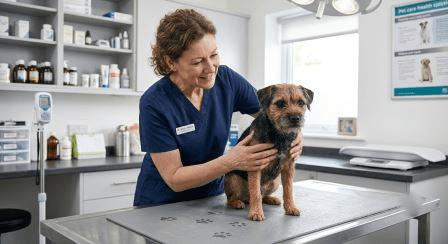
🚨 Call the vet or go to the emergency vet if shaking is accompanied by:
📞 Call your vet within 24 hours if:
👀 Monitor at home (no vet needed) if:
| Cause | How to Identify | What to Do |
|---|---|---|
| Cold | Shivering in cold environment | Warm them up |
| Fear/Anxiety | Scared by noise, people, etc. | Remove trigger, comfort them |
| Excitement | Shaking when happy or playing | Enjoy it—it’s normal! |
| Wet dog / Stress release | After getting wet or stressful event | Towel off, let them relax |
| Pain | Reluctance to move, crying | See a vet |
| Nausea | Drooling, lip-licking, vomiting | Bland diet, call vet if persists |
| Ear problems | Head shaking, pawing at ears | See a vet |
| Poisoning | Vomiting, drooling, seizures | Emergency—call vet immediately |
| Medical conditions | Persistent shaking, other symptoms | See a vet for diagnosis |
| Dreaming | Shaking only during sleep | Let them sleep peacefully |
Here’s the simple truth: most shaking in dogs is completely normal. Cold, excitement, dreaming—these are all part of being a dog.
But sometimes, shaking is a red flag. And when it is, you need to act fast.
Your quick checklist:
At the end of the day, the most important thing is that you’re paying attention. Your dog is trying to tell you something—and now you know how to listen.
Pingback: Dog Signs Of Overheating Vs. Normal Behavior | Paws & Antlers
Pingback: The Connection Between Anxiety And Health Problems In Dogs | Paws & Antlers