The Cuban Spiky Isopod: The $1,200 Bug Taking Over the Pet World
Let me tell you about something wild that’s happening right now in the exotic pet world. There’s a tiny creature, about the size of your

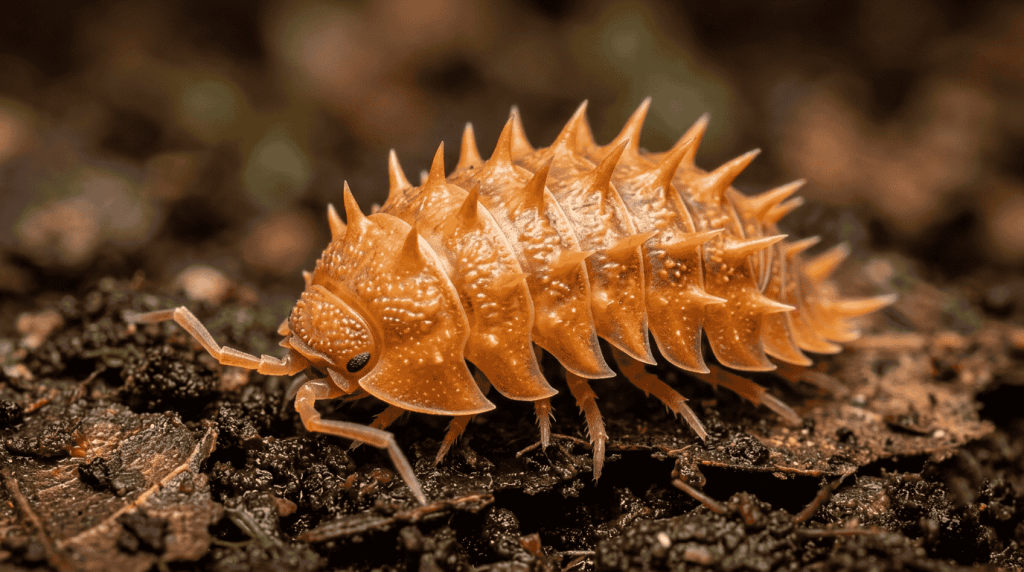
Let me tell you about something wild that’s happening right now in the exotic pet world. There’s a tiny creature, about the size of your pinkie fingernail, that people are paying up to $1,200 for.
Yes, you read that right. Over a thousand dollars for a bug.
I’m talking about the Cuban Spiky Isopod. And honestly? The story behind this little guy is absolutely fascinating—and more than a little concerning.
First things first. Despite what some people call them, these aren’t insects. They’re actually crustaceans—think of them as distant cousins to shrimp and crabs. They’re land-dwelling, which means they live on land but breathe through gills.
Their scientific name is Pseudarmadillo spinosus. And they get their common name from the rows of sharp spikes that line their bodies like dragon scales. They’ve got an orange shell with these incredible spike-like scales sticking out. Honestly? They look like tiny armored dragons.
They’re native to Cuba, specifically found in a small nature reserve on the island. And here’s the kicker—they’re critically endangered. Their habitat is tiny, and they’re not found anywhere else in the world.
Okay, so why are people dropping serious cash on a bug?
Supply and demand, plain and simple.
These little guys are incredibly rare in the pet trade. They’re slow to reproduce—each brood produces only about 10 offspring. That’s not a lot when you think about how many people want them.
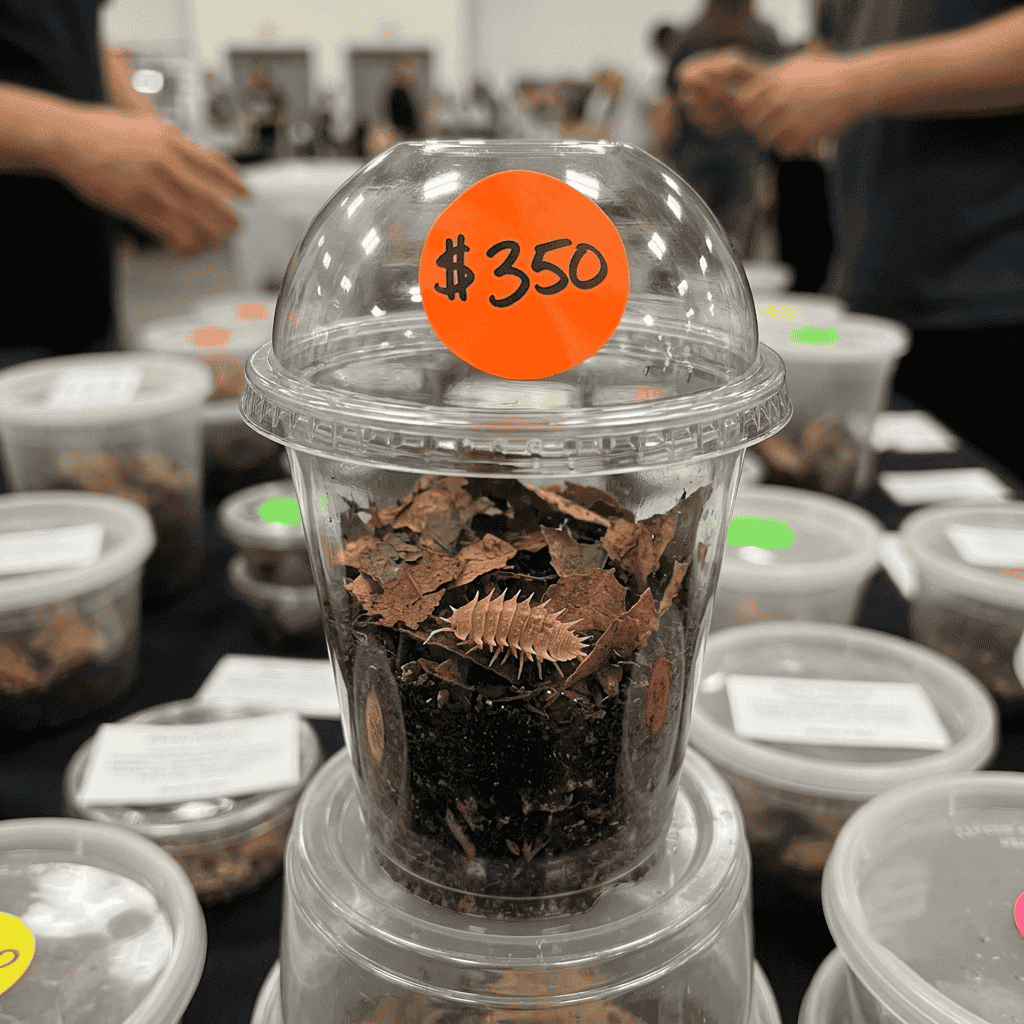
At a recent pet expo in White Plains, New York, a Cuban Spiky was listed at $350** in a small plastic cup. On some websites, that price jumps to **$425 for a group of five. And in some cases, they’ve been listed for as much as $850 apiece.
One seller even called them the “holy-grail species of isopod”. When you’ve got a creature that rare and that unique-looking, people are going to pay whatever it takes to own one.
Here’s where things get complicated.
Because these isopods are so valuable, poachers have taken notice. And that’s putting an already endangered species at even greater risk.
The problem is serious:
First, the Cuban Spiky only exists in one small nature reserve in Cuba. It’s not like we can find them all over the place. Their entire population lives in a tiny area that’s protected by law.
Second, importing them is illegal without a special permit. But that hasn’t stopped people from trying. Illegal collectors are going into protected areas and pulling them out of the wild.
Third, there’s almost no regulation. The online trade in isopods is largely unregulated. Sellers use Facebook, Instagram, and eBay to move these animals, and there’s very little stopping them.
In October 2025, the journal Conservation Biology published a warning that this illegal trade could lead to the extinction of the Cuban Spiky.
And it’s not just about losing a cool-looking bug.
Isopods serve as “nature’s janitors”. They feed on organic matter in the soil, helping to break things down and keep ecosystems healthy. They’re also an important food source for reptiles and other animals. If they disappear, it creates a ripple effect through the entire ecosystem.
One isopod breeder, David Vargas, compared collecting isopods to catching Pokémon. And honestly? I get it. There’s something exciting about tracking down rare species, building a collection, and showing off your finds.
But here’s the thing—Pokémon aren’t real. These are. And the rush to “catch them all” is having real-world consequences.
Technically, yes. But I’ll be straight with you—these are not beginner pets.
Most sellers classify them as “advanced care”. They’re not like the common isopods you find under a rock in your backyard. They have specific needs.
They’re also slow to breed. So if you’re hoping to start a colony and sell babies, you’ll need a lot of patience.
One more thing: Some breeders explicitly say these are better as pets than for bioactive setups. In other words, they’re display animals, not cleanup crews for your reptile tank.
Here’s the thing I keep coming back to.
If you buy a Cuban Spiky, how do you know where it came from? Was it captive-bred, or was it poached from the wild?
Many species sold online have unknown origins. And unless the seller can prove their stock is captive-bred, there’s a real chance you’re contributing to the problem.
One researcher, Nathan Jones, warned that “even a single act of poaching can cause serious damage to the entire population”. That’s not hyperbole—that’s the reality when a species has such a tiny range.
So what should you do?
If you’re serious about keeping these, buy from reputable breeders who can prove their stock is captive-bred. Avoid sellers who can’t tell you where their animals came from. And be prepared to pay a premium for ethical sources.
The Cuban Spiky Isopod is one of the most fascinating—and controversial—pets to hit the exotic pet scene in years. It’s beautiful, it’s rare, and it’s incredibly expensive. But it’s also critically endangered, and the demand for it is driving poaching that could push it to extinction.
If you’re thinking about getting one, do your homework. Make sure you’re buying from a responsible source. And be honest with yourself about whether you can provide the advanced care these little guys need.
Because at the end of the day, these aren’t just collectibles. They’re living creatures. And they deserve better than being treated like trading cards.
Disclaimer
The information in this article is for educational purposes only.
About the Author
Hi, I’m [Huma Sham]. I’ve been fascinated by exotic pets for years and love digging into the stories behind the trends. When I’m not writing, I’m usually reading about wildlife conservation or planning my next visit to a reptile expo. Thanks for reading—and please, always do your research before bringing any animal into your home.
You might also like
Pingback: New Species Discoveries In 2026: Meet The Animals That Could Become The Next Pet Stars | Paws & Antlers