The 3-3-3 Rule Explained: A Realistic Timeline for Rescue Dogs to Adjust to Their New Life
Hi seekers! Bringing home a rescue dog is one of the most rewarding things you can do. But it can also be one of the

Hi seekers! Bringing home a rescue dog is one of the most rewarding things you can do. But it can also be one of the most confusing.
You bring this sweet, grateful dog home, expecting them to settle in right away. Instead, they hide under the couch, refuse to eat, and give you a look that says, “Who are you and why am I here?”
You start to worry. Did you make a mistake? Will they ever feel at home?
Take a breath. What you’re seeing is completely normal. And there’s a simple framework that can help you understand exactly what your new dog is going through. It’s called the 3-3-3 Rule.
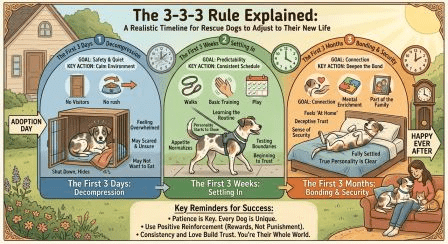
The 3-3-3 rule is a guideline used by trainers, shelters, and behaviorists to help adopters understand the typical adjustment timeline for rescue dogs. It breaks down the transition into three key stages:
It’s important to remember that this is a guideline, not a strict rule. Every dog is different. Some dogs adjust faster, others take longer—sometimes six months to a year. The key is patience, consistency, and understanding.
What your dog is feeling:
Your new dog is likely feeling overwhelmed, confused, and scared. Imagine being dropped off in a new country where you don’t know the language or customs. You’d be cautious and observant, not relaxed and outgoing. That’s exactly how your dog feels. Everything is new—the smells, the people, the routine.
Common behaviors you might see:
These are normal responses to fear and stress. They are not a reflection of how your dog will behave forever.
What you should do:
The big idea: Your goal during these first three days is to create a calm, predictable environment. Think of it as giving your dog space to catch their breath and realize that they are safe.
What your dog is feeling:
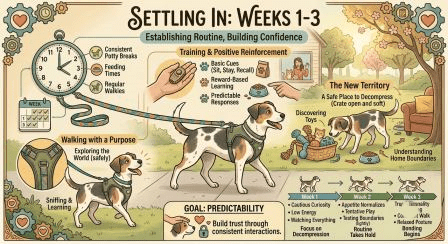
After the initial shock wears off, your dog will start to realize they’re in a safe place. They’ll begin to settle in, learn the household routine, and their true personality will start to emerge. The timid dog who hid under the table might suddenly get the zoomies or bring you a toy for the first time.
Common behaviors you might see:
This testing of boundaries isn’t misbehavior—it’s a normal part of learning and getting comfortable enough to express themselves.
What you should do:
The big idea: This is the time to build a foundation of trust and communication. Your dog is learning that you are a safe, predictable source of good things—and that’s the foundation of your entire relationship. This three-week period is when a consistent routine becomes so important for building trust.
What your dog is feeling:
By now, your dog feels more at home. They’ve learned your family’s routine and are forming deeper emotional bonds. Most dogs fully settle into their new home by the three-month mark.
Common behaviors you might see:
What you should do:
The big idea: By three months, most dogs feel truly comfortable and secure in their new home. This is often the point where dogs feel at home. But every dog is different, and that’s okay.
It’s very common for rescue dogs to have a reduced appetite in the first few days. Stress can do that to anyone, dogs included. As long as they’re drinking water and seem otherwise okay, give them time. If they haven’t eaten for more than 48 hours, check with your vet.
Even house-trained dogs can have accidents in a new environment. They’re stressed, confused, and learning new routines. Be patient and use enzymatic cleaners to remove the smell so they’re not tempted to go in the same spot again.
Every dog copes with stress differently. Some become clingy, looking for reassurance. Others withdraw and hide. Both are normal responses. Let your dog set the pace.
Some dogs—especially those from puppy mills, dog meat farms, or high-kill shelters—may need more time. That’s okay. Keep being patient, consistent, and supportive. Celebrate the small wins along the way.
There’s real biology behind the 3-3-3 rule. Cortisol (the stress hormone) spikes when a dog enters a new environment and takes several days to normalize. During the first three days, your dog is in survival mode—their body is flooded with stress hormones.
Over the next few weeks, as they learn the routine and feel safe, those stress levels drop. By three months, their body has adapted to the new normal, and they can form deeper emotional bonds.
Adopting a rescue dog is a journey—not a single event. The 3-3-3 rule is a realistic timeline for rescue dogs to adjust to their new life. It helps you set realistic expectations, avoid overwhelming your dog, and give them the best chance to become a happy, well-behaved member of your family.
What to remember:
It generally takes around three months for a newly adopted dog to feel truly comfortable in their new home—but it may take shorter or longer depending on your rescue dog’s age, background, and temperament.
Not all dogs follow the 3-3-3 timeline perfectly. The key is patience, consistency, and understanding. Every small step is progress, and the journey of watching your rescue dog grow into their best self is absolutely worth it.
Disclaimer
This article is for educational and informational purposes only. I
Pingback: Gastritis In Dogs: Causes, Symptoms, And Treatment | Paws & Antlers