Dog Not Eating? 5 Things to Check First (Before You Panic)
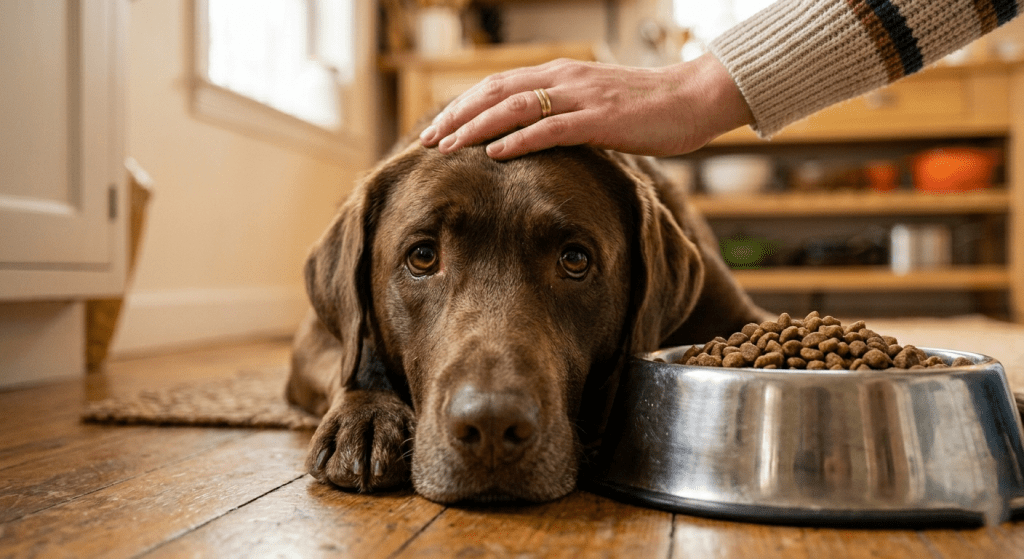
Let me guess. You put down your dog’s breakfast this morning, and they just… walked away. Didn’t even sniff it. Now you’re staring at that

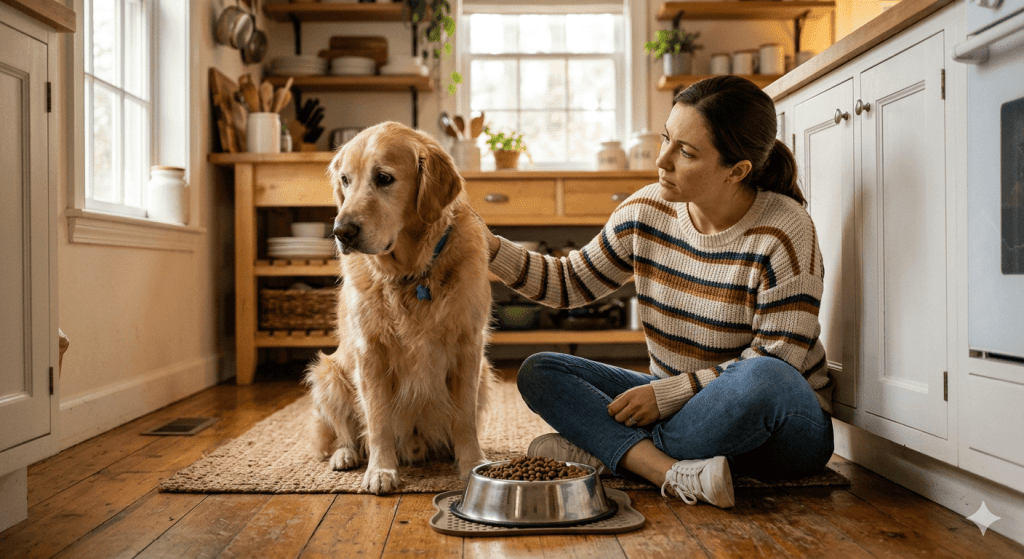
Let me guess. You put down your dog’s breakfast this morning, and they just… walked away. Didn’t even sniff it. Now you’re staring at that full bowl, heart racing, thinking the worst.
I’ve been there. It’s scary when our furry best friend refuses food. But here’s the thing—most of the time, it’s not an emergency. Before we rush to the vet in a panic, take a deep breath and run through this checklist. I’ve put together five things to check that might save you a stressful vet visit.
My dog stopped eating. i am worried. Maybe even scared..
Every dog owner goes through this at least once. In fact, most vets say that “dog not eating” is one of the top three reasons people call their office.
Here is the good news: Most of the time, the reason is simple and easy to fix.
But sometimes, it is serious. And that is why you need to know what to look for.
This guide will walk you through 5 things to check before you panic and rush to the emergency vet. By the end, you will know whether you can handle this at home or need to see a vet immediately.
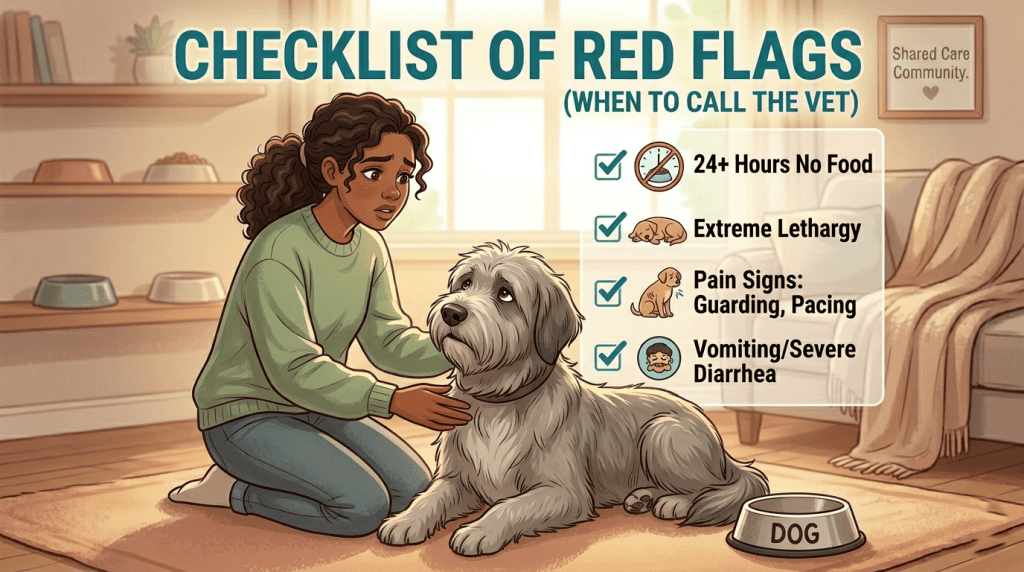
Let us start with the most important question.
| Warning Sign | What to Do |
|---|---|
| Has not eaten for more than 48 hours | Call vet today |
| Is also vomiting or has diarrhea | Call vet within 24 hours |
| Seems weak, wobbly, or collapsed | Go to emergency vet NOW |
| Has a bloated or hard belly | Go to emergency vet NOW |
| Is a puppy under 6 months old | Call vet after 12 hours of not eating |
| Has a medical condition (diabetes, kidney disease, etc.) | Call vet after 24 hours |
If none of these warning signs apply, your dog is likely fine. Keep reading to find out why.
This is the first thing I check with my own dog. And many vets say this should be your first step too.
| Problem | What You Might See |
|---|---|
| Broken tooth | A tooth that looks cracked or darker than others |
| Swollen gums | Red, puffy, or bleeding gums |
| Something stuck | A piece of bone, stick, or toy wedged between teeth |
| Sore or ulcer | A small white or red spot on the tongue or gum |
| Bad breath | Extreme bad breath can mean an infected tooth |
| Finding | What to Do |
|---|---|
| Something stuck between teeth | Try to gently remove it with your fingers. If it does not come out easily, see a vet. |
| Broken tooth or swollen gums | Make a vet appointment within a few days |
| Sore or ulcer | Watch for 24 hours. If it does not improve, see a vet. |
Dogs are very good at hiding mouth pain. In the wild, showing pain makes them look weak. So your dog may eat less but never whine or cry. Always check the mouth first.
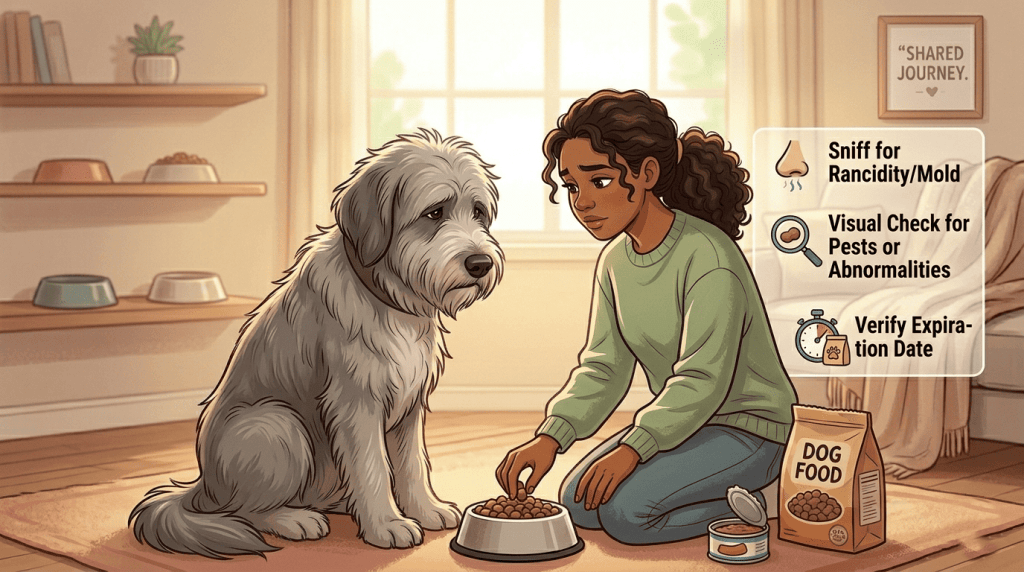
This sounds obvious, but you would be surprised how many people miss this.
| Question | What to Check |
|---|---|
| Is the food expired? | Check the “best by” date on the bag or can |
| Does it smell bad? | Open the bag. Does it smell stale, musty, or rotten? |
| Has the food changed? | Did you buy a new flavor or brand recently? |
| Is the bowl clean? | Bacteria grows in dirty bowls and can make food smell bad to dogs |
| Is the food too hard? | Older dogs or dogs with sore teeth may refuse hard kibble |
Here is a simple test vets recommend:
| My Dog’s Reaction | What It Probably Means |
|---|---|
| Eats from My hand but not from the bowl | The bowl is the problem (dirty, or it makes noise, or they had a bad experience with it) |
| Sniffs but walks away | The food itself is the problem (expired, spoiled, or they are tired of it) |
| Ignores completely | Something else is wrong (keep reading) |
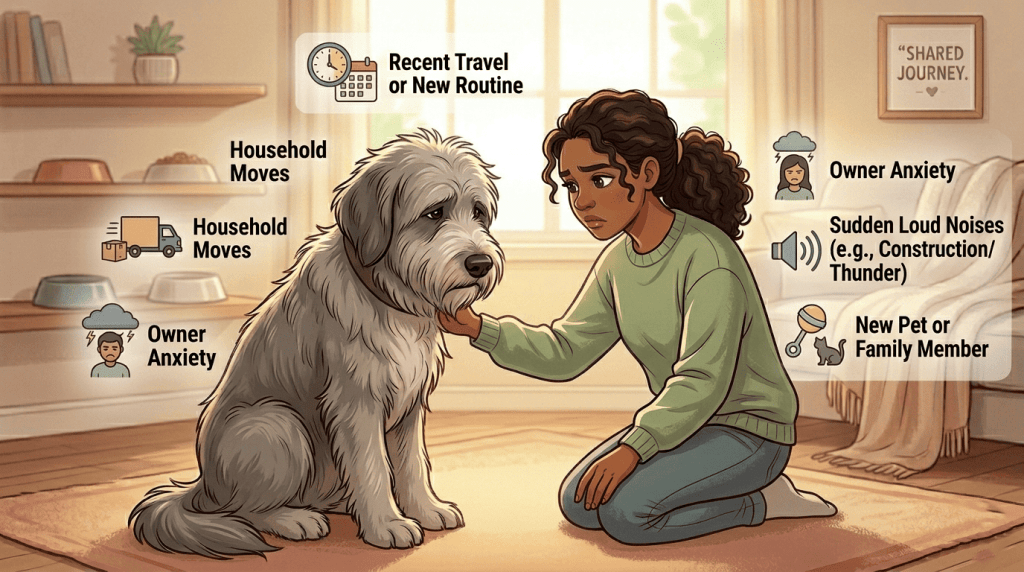
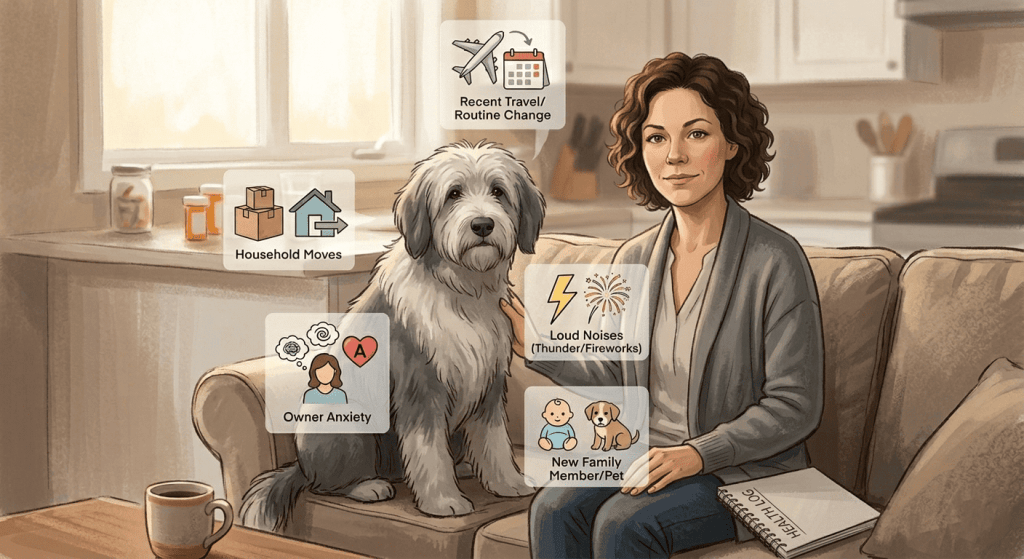
Dogs are creatures of habit. Even small changes can make them stop eating.
| Stressor | Why It Affects Eating |
|---|---|
| New home or moved furniture | Dogs feel unsafe in unfamiliar spaces |
| New person or pet in the house | Jealousy or anxiety |
| Loud noises (construction, fireworks, storms) | Fear response shuts down appetite |
| Change in your schedule | Dogs get anxious when routines break |
| You are stressed | Dogs feel your emotions. If you are anxious, they may be too. |
| Recent vet visit or vaccination | Some vaccines cause temporary appetite loss |
| Cause | Typical Duration |
|---|---|
| Loud noise (one time) | A few hours to 1 day |
| New person or pet | 2-7 days |
| Moving to a new home | 3-10 days |
| Change in your schedule | 3-7 days |
Try feeding your dog in a different location. Some dogs stop eating because something scared them near their food bowl. Move the bowl to a quiet corner or a different room for a few days.
A dog who is not eating but is otherwise fine is usually not an emergency. But a dog who is not eating AND has other symptoms needs a vet.
Go through this list. Put a check next to anything you have noticed in the last 24 hours.
| Symptom | Check if Yes |
|---|---|
| Vomiting (once or more) | ☐ |
| Diarrhea | ☐ |
| Lethargy (sleeping more than usual, hard to wake up) | ☐ |
| Drinking much more water than usual | ☐ |
| Drinking no water at all | ☐ |
| Coughing or sneezing | ☐ |
| Runny nose or eyes | ☐ |
| Hiding or avoiding people | ☐ |
| Whining or seems in pain | ☐ |
| Bloated or hard belly | ☐ |
| Yellowish gums or eyes | ☐ |
| If You Checked… | What to Do |
|---|---|
| 0 symptoms (just not eating) | Likely fine. Try the tips below. |
| 1-2 mild symptoms (like sneezing + not eating) | Call vet within 24 hours |
| 3+ symptoms OR any severe symptom (vomiting, bloated belly) | Go to vet today |
Sometimes the problem is not that your dog is not eating. The problem is that you expect them to eat on your schedule.
| Age | Normal Eating Pattern |
|---|---|
| Puppy (under 6 months) | Eats 3-4 times per day. Missing one meal is concerning. |
| Adult dog (1-7 years) | Eats 2 times per day. Missing one meal is common. Missing two meals in a row is concerning. |
| Senior dog (8+ years) | Eats 1-2 times per day. Appetite naturally decreases with age. Missing two meals in a row is concerning. |
Most healthy adult dogs can skip one meal with no problem.
Here is a simple rule:
| Time Passed | Action |
|---|---|
| Missed 1 meal | Watch and wait. Try again at next meal time. |
| Missed 2 meals in a row (24 hours) | Call your vet for advice. |
| Missed 3 meals in a row (36-48 hours) | Make a vet appointment. |
If your dog has missed 1-2 meals, try this test:
Offer a small amount of something most dogs love:
| Their Reaction | What It Means |
|---|---|
| Eats it eagerly | They are hungry but do not like their regular food right now. Try adding warm water or switching flavors. |
| Sniffs but does not eat | They may feel mildly sick or stressed. Call vet if it continues another 12 hours. |
| Completely ignores | This is more serious. Call your vet. |
Most articles stop here. But I want to give you information that is very hard to find elsewhere — from real vets and experienced dog owners.
Many dog owners do not realize that plastic bowls can trap bacteria in tiny scratches. Over time, this creates a bad smell that humans cannot detect but dogs hate.
What to do: Switch to stainless steel or ceramic bowls. Wash them after every meal with hot soapy water.
Dogs have 300 million smell receptors (humans have only 6 million). They smell things we cannot.
Warmed food releases more smell. Many dogs who refuse cold kibble will eat the same kibble warmed up.
What to do: Add a little warm water to dry food. Microwave wet food for 5-10 seconds (not too hot!). Let it cool slightly before serving.
Many owners start hand feeding when their dog stops eating. This works for a day or two. But then the dog learns: “If I refuse the bowl, I get hand fed.”
What to do: Only hand feed for 1-2 days maximum. Then go back to the bowl. If they refuse, pick up the bowl and try again at the next meal time.
Yes, dogs can get bored of eating the same food every single day for years. It is rare, but it happens.
What to do: If your dog has eaten the exact same food for over a year and suddenly stops, try switching to a different flavor of the same brand. Or add a spoonful of wet food as a topper.
Some dogs naturally prefer to eat late at night or very early in the morning. If you feed them at 8 AM and 5 PM, they may simply not be hungry at those times.
What to do: Try leaving food down overnight. Check if it is gone by morning. Some dogs are just night eaters.
Q: My dog ate yesterday but not today. Should I worry?
A: Not yet. If they are acting normal otherwise, wait until they miss two meals in a row (about 24 hours). Then call your vet.
Q: Can I give my dog human food to get them to eat?
A: Yes, in small amounts for 1-2 days. Plain cooked chicken, white rice, or scrambled eggs are safe. Do not add salt, oil, or seasoning. Do not do this for more than 2 days or your dog may refuse dog food permanently.
Q: My dog is drinking water but not eating. Is that bad?
A: Drinking water is good — it means they are not severely sick yet. But if they refuse food for more than 48 hours, see a vet even if they are drinking.
Q: My dog stopped eating after vaccines. Is this normal?
A: Yes, very common. Vaccines can cause mild fever and tiredness for 24-48 hours. This can reduce appetite. Call your vet if it lasts more than 48 hours.
Q: My dog is old and barely eats anymore. What should I do?
A: Senior dogs often eat less. But they should still eat every day. Try softer food, warmed food, or a senior-specific diet. Talk to your vet about appetite stimulants if it continues.
Q: How long can a dog really go without eating?
A: Healthy adult dogs can go 3-5 days without eating and still be okay. BUT you should never wait that long. Call your vet after 48 hours. Puppies and sick dogs cannot go that long.
Here is what I want you to remember:
First: Most of the time, a dog not eating is not an emergency. Check the five things in this guide before you panic.
Second: Look at your dog, not just their bowl. A happy, active dog who missed one meal is fine. A tired, hiding, or vomiting dog needs a vet.
Third: You know your dog best. If something feels wrong, trust your gut. Call your vet. It is always better to ask and be told “nothing is wrong” than to wait too long.
Fourth: Keep a log. Write down when your dog eats and does not eat. Note any other symptoms. This information is gold for your vet.
Fifth: Do not blame yourself. Dogs stop eating for hundreds of reasons. Most are small and fixable. You are a good pet owner for noticing and for seeking answers.
Your dog loves you. And with a little patience and the right information, they will be back to eating normally soon.
This article was written for PawsandAntlers — a website dedicated to helping pet owners give their animals the best possible care using evidence, not folklore.
Disclaimer: This article is for informational purposes only. Always consult a licensed veterinarian for medical advice about your specific dog.
Pingback: The Complete Guide To Dog Health Symptoms: What Your Dog Is Trying To Tell You | Paws & Antlers