
Exotic Pet Rescue From Heat Waves: A Life-Saving Guide for Owners
Every summer, emergency clinics get the same heart-wrenching calls: “My rabbit is lying on its side and won’t move.” “My guinea pig is breathing really fast and
Every summer, emergency clinics get the same heart-wrenching calls: “My rabbit is lying on its side and won’t move.” “My guinea pig is breathing really fast and
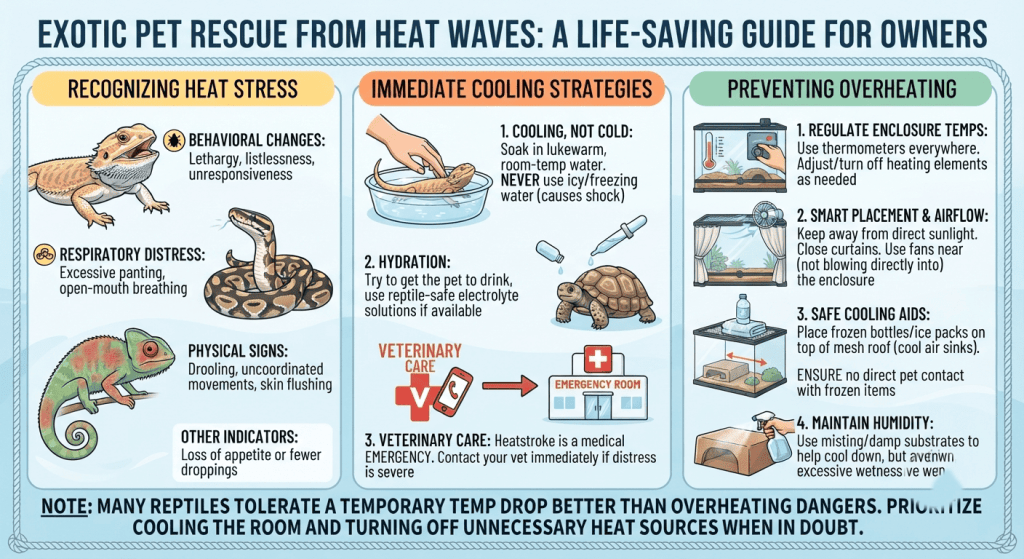
Every summer, emergency clinics get the same heart-wrenching calls: “My rabbit is lying on its side and won’t move.” “My guinea pig is breathing really fast and feels hot.” “My bearded dragon is limp and pale.”
And almost every time, it’s heat-related. Completely preventable. But it catches people off guard.
Here’s the thing: dogs and cats handle heat better than most people think. Exotic pets? Not even close. Rabbits, guinea pigs, birds, reptiles—they’ve got very little ability to regulate their own body temperature when the ambient temperature spikes.
This guide will help you recognize the signs of overheating in exotic pets, perform emergency first aid, and prevent heatstroke before it happens.
Exotic pets come from all over the world, but very few come from environments that regularly hit 100°F. Their bodies simply aren’t built for extreme heat.
Rabbits and guinea pigs can’t pant effectively. They can’t sweat. Their only real cooling mechanism is blood flow through their ears, and once the air temperature gets above about 80°F, even that stops working well.
Reptiles are ectothermic—they rely entirely on their environment to regulate body temperature. When that environment becomes too hot, they have nowhere to escape. They can’t sweat, they can’t pant effectively, and they can’t move to a cooler spot if their enclosure is overheating.
Birds lack sweat glands and rely on rapid breathing and evaporative cooling through their air sacs. Sudden heat spikes can quickly overwhelm their ability to cool down.
Axolotls are even more sensitive. When water temperature climbs above 72°F (22°C), their immune system weakens, dissolved oxygen drops, and opportunistic pathogens multiply. Above 75°F (24°C), organ stress and systemic failure can follow within days.
Exotic pets often hide signs of illness until their condition becomes critical. Knowing what to look for can save your pet’s life.
This is the big one. If you own a rabbit, take this seriously: rabbits cannot handle heat. Period.
Early signs:
Severe signs:
A rabbit that has collapsed and is showing signs of severe shock has a grave prognosis. They need immediate veterinary intervention, including drugs to combat shock and cool intravenous fluids.
Guinea pigs have basically the same problem as rabbits. They’re small, they’ve got thick fur, and once the room gets above 80°F, they start struggling.
Signs to watch for:
Signs of overheating:
Bearded dragons are particularly vulnerable. Temperature problems are one of the most common emergency questions in bearded dragon communities—and they’re regularly missed in the early stages because symptoms look a lot like brumation, stress, or general illness.
Early signs:
Moderate signs:
Heatstroke—veterinary emergency:
Heatstroke in bearded dragons progresses rapidly and can cause irreversible organ damage. Do not wait to see if the dragon improves on its own.
Signs of heat stress:
If you suspect heatstroke, act fast. Every minute counts.
What NOT to do:
Important: The axolotl.org captive care requirements page warns that temperatures above 24°C are “very stressful to axolotls” and that “the stress resulting from more than a day or two of exposure to these temperatures will quickly lead to disease and death”.
Prevention is always better than emergency treatment.
Call your vet immediately if:
A note on prognosis: Rabbits that have collapsed from heatstroke have a grave prognosis. Unfortunately, they are much less likely to recover if they have a severe case of heatstroke, have already developed organ damage, or if their treatment is delayed.
Heatstroke in reptiles can cause irreversible organ damage. The faster you act, the better the outcome.
Here are the most common questions about rescuing exotic pets from heat waves, with clear, practical answers.
High ambient temperature combined with poor ventilation. Unlike dogs and cats, most exotic pets cannot sweat or pant effectively. Rabbits, guinea pigs, birds, reptiles, and axolotls rely on environmental cooling—when the room gets too hot, they have no way to cool themselves down. A room temperature above 80°F (27°C) is dangerous for most exotic pets, and temperatures above 85°F (29°C) can be fatal within hours
atch for:
Lying flat and stretched out – they’re trying to maximize surface area to release heat
Rapid breathing or panting – rabbits normally breathe quietly through their nose
Drooling or salivating more than usual
Reddened ears – this is where they release heat
Warm to the touch, especially the ears
Lethargy, confusion, or difficulty moving
Collapse or seizures – this is a medical emergency
If your rabbit is showing any of these signs, act immediately
Move them to a cool, air-conditioned room immediately
Wet their ears with cool (not cold) water – this is where they release heat most effectively
Place frozen water bottles wrapped in towels in their enclosure
Put a ceramic or marble tile in the fridge and lay it flat for them to lie on
Offer fresh, cool water if they’re alert
Call your vet immediately – rabbits that collapse from heatstroke have a grave prognosis and need urgent veterinary care
Guinea pigs show very similar signs to rabbits:
Panting or rapid breathing
Drooling
Lying flat and stretched out
Lethargy or unresponsiveness
Warm to the touch
First aid: Same as for rabbits. Move to a cool space, wet ears and body with cool water, provide frozen bottles, and call your vet immediately.
Bearded dragons are particularly vulnerable to heat. Early signs include:
Gaping mouth (panting) – the most obvious early signal
Moving to the cool end and staying there
Excessive digging – attempting to burrow to escape heat
Dark coloration – attempting to absorb less heat
Dark beard without social trigger
Moderate signs:
Lethargy that looks like brumation but occurs outside autumn/winter
Reduced appetite
Spending all time hiding
Severe signs (emergency):
Limp or unresponsive
Pale or mottled coloration
Very slow breathing – more than 20-30 seconds between breaths
Staggering or falling over
Move them away from the heat source immediately
For mild overheating (panting, gaping): Move them to a quiet, cooler location
Mist the bearded dragon with water until the skin is wet
Provide a shallow dish of cool (not cold) water to soak in
For heatstroke (limp, pale, slow breathing): This is a veterinary emergency – call your vet immediately
DO NOT attempt a bath – an unresponsive reptile cannot protect its airway and may aspirate water
Move them to a cool, ventilated container and transport to the vet
Do NOT use ice or ice-cold water – this can cause shock
Absolutely. Birds lack sweat glands and rely on rapid breathing and evaporative cooling through their air sacs. In a poorly ventilated room or enclosure, they can overheat quickly.
Signs to watch for:
Holding wings away from the body (to release heat)
Open-mouth breathing or panting
Lethargy
Fluffed feathers
Red or flushed skin on legs or around the beak
Disorientation, collapse, or seizures
Prevention: Keep cages away from windows, provide fresh water for drinking and bathing, mist birds regularly, and ensure good air circulation.
Axolotls are extremely temperature-sensitive. They thrive in water between 60-68°F (16-20°C) . Water temperature above 72°F (22°C) is very stressful, and temperatures above 75°F (24°C) can be fatal within days.
Signs of heat stress in axolotls:
Rapid gill movement
Surface gulping (spending more time near the surface)
Lethargy and loss of appetite
Pale mucus patches on skin
Emergency cooling: Float frozen water bottles (sealed) in the tank, move the axolotl to a cooled container with fresh dechlorinated water, or use a fan to cool the water surface.
Essential supplies for every exotic pet owner:
Frozen water bottles (several, stored in the freezer)
Cooling tiles – ceramic or marble tiles that can be refrigerated or frozen
Towels – for wrapping frozen bottles or wetting for cooling
Fan – to circulate air (but not directly on the animal)
Digital thermometer – to monitor room and enclosure temperatures
Your vet’s emergency contact information – saved in your phone
Pet Type
Safe Range
Danger Zone
Rabbits
60-70°F (15-21°C)
Above 80°F (27°C)
Guinea Pigs
65-75°F (18-24°C)
Above 80°F (27°C)
Birds
65-80°F (18-27°C)
Above 85°F (29°C)
Bearded Dragons
75-85°F (24-29°C) cool side
Above 95°F (35°C) in enclosure
Axolotls
60-68°F (16-20°C)
Above 72°F (22°C)
Call your vet immediately if:
Your pet has collapsed or is unresponsive
Your pet is showing signs of severe heatstroke (limp, pale, very slow breathing)
Your pet’s temperature is above 104°F (40°C)
Your pet is having seizures
Your pet doesn’t improve within 10-15 minutes of cooling
You’re unsure about what to do
If in doubt, call. It’s always better to be safe than sorry.
Prevention is always better than emergency treatment:
For all exotic pets:
Keep enclosures away from windows that receive direct sunlight
Monitor temperatures daily with accurate thermometers
Ensure good air circulation (fans, open windows with screens)
Provide fresh, cool water at all times
Know your pet’s specific temperature requirements
For small mammals:
Use frozen water bottles (wrapped in towels) in the enclosure
Provide ceramic or marble tiles that can be cooled
Keep a fan moving air across the space (not directly on the animal)
Never place them in direct sunlight
For reptiles:
Ensure the cool side of the enclosure stays within a safe range
Provide multiple hides so they can escape the heat
During extreme heat, consider moving the enclosure to the coolest room
For axolotls:
Keep frozen water bottles ready for emergency cooling
Invest in a chiller if you live in a warm climate
Monitor water temperature daily
Heatstroke in exotic pets is a life-threatening emergency—but it’s almost entirely preventable.
Your action plan:
A skipped walk or a missed play session is better than a trip to the emergency vet. Your exotic pet will forgive you. Heatstroke won’t
How Casinos Are Rebounding After COVID-19: Recovery Strategies Revealed The COVID-19 pandemic has had a
Олимп казино официальный сайт в Казахстане – Olimp Casino ▶️ ИГРАТЬ Содержимое Преимущества игры в
Олимп казино официальный сайт в Казахстане – Olimp Casino ▶️ ИГРАТЬ Содержимое Преимущества игры в
Олимп казино официальный сайт в Казахстане – Olimp Casino ▶️ ИГРАТЬ Содержимое Преимущества игры в
Олимп казино официальный сайт в Казахстане – Olimp Casino ▶️ ИГРАТЬ Содержимое Преимущества игры в
Олимп казино официальный сайт в Казахстане – Olimp Casino ▶️ ИГРАТЬ Содержимое Преимущества игры в
Pingback: Step 1: Before You Even Try To Feed—Check The Bird's Condition | Paws & Antlers