Skip to content

The Ultimate Beginner’s Guide to Keeping a Pet Parrot

Pet Parrots are beautiful, intelligent, and lovely creatures that can bring immense joy to our home. However, becoming a parrot owner for the first time

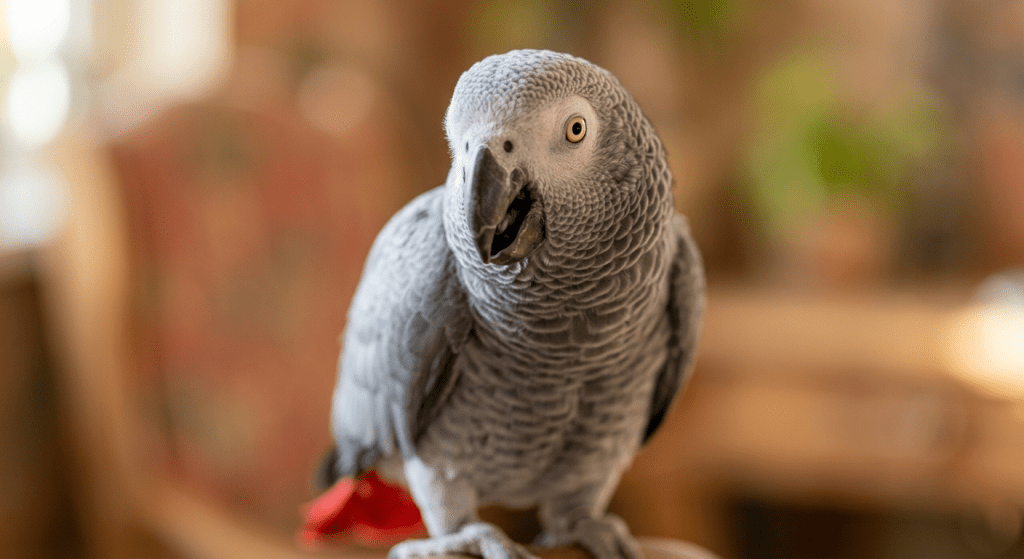
Table of Contents

clse up picture of parrot

Pet Parrots are beautiful, intelligent, and lovely creatures that can bring immense joy to our home. However, becoming a parrot owner for the first time can be a bit overwhelming. Unlike other pets, parrots have unique needs, from their diet to their social life. If we are planning to bring a feathered friend home, this ultimate beginner’s guide will help us understand everything we need to know.
Best Pet Parrot Species for Beginners

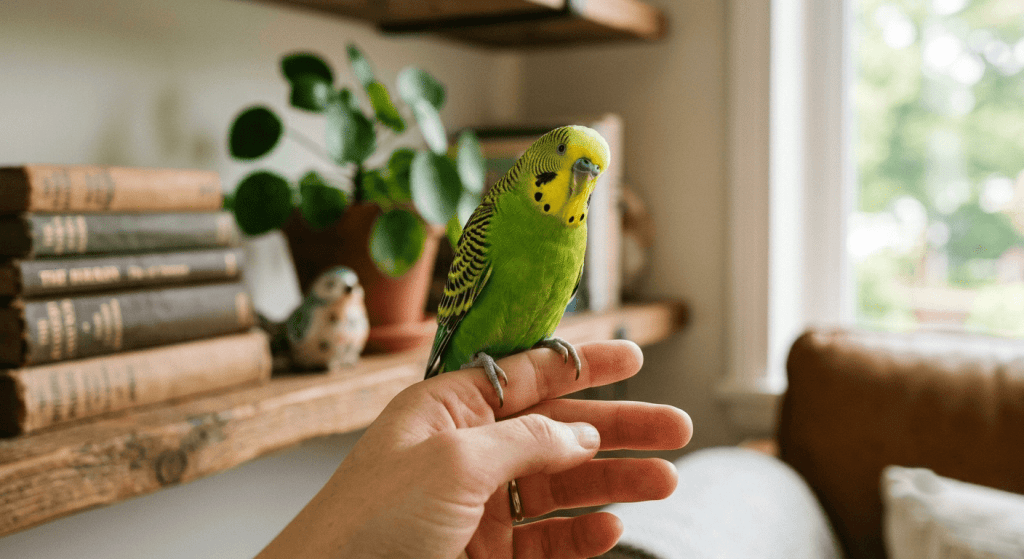
Not all parrot species are suitable for first-time owners. Some require professional handling, while others are gentle and easy to manage. Here are the top choices for beginners:
  • Budgies (Parakeets): These small, colorful birds are incredibly friendly, low-maintenance, and perfect for small spaces.
  • Cockatiels: Famous for their sweet nature and lovely whistling, cockatiels form strong bonds with their owners.
  • Lovebirds: Small but full of energy, lovebirds have a big personality and are very entertaining to watch.

Ideal Cage Size and Setup For Pet Parrot

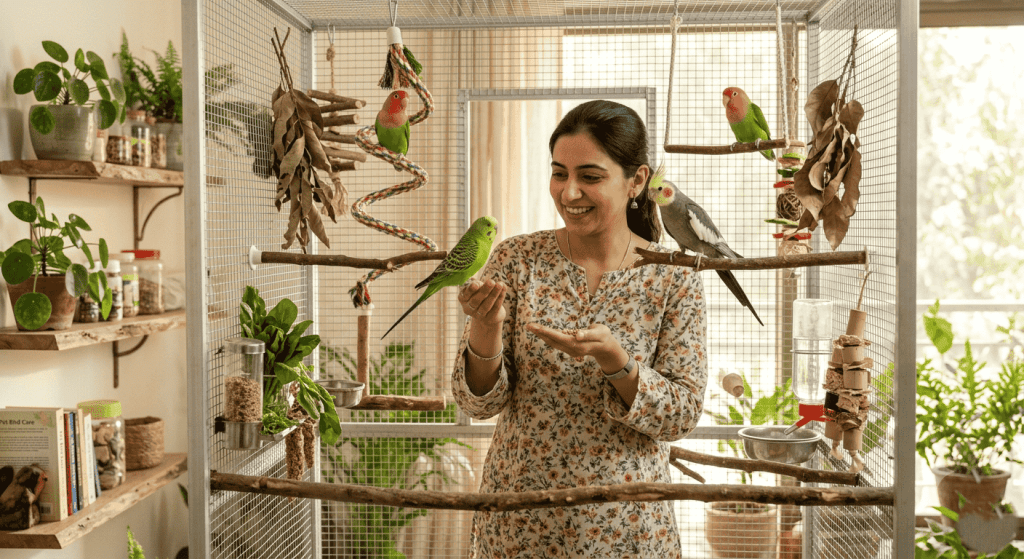
A smiling South Asian woman inside a large, well-equipped bird aviary cage feeding a green budgie, with a cockatiel and two lovebirds perched nearby.

A cage is our parrot’s safe haven, so it needs to be comfortable and spacious.

  • The Right Size: Always choose a cage where our parrot can fully stretch its wings and fly from one side to the other without touching the bars.
  • Perches: Use natural wood perches of different shapes and thicknesses. This keeps their feet healthy and prevents joint problems like arthritis.
  • Safe Location: Place the cage in a lively room, such as the living room, so your bird doesn’t feel isolated. However, keep it away from direct sunlight, cold drafts, and the kitchen, as cooking fumes can be highly toxic to birds.

A Healthy Diet Beyond Just Seeds

Many people believe that parrots only eat seeds, but a seed-only diet is high in fat and lacks essential vitamins. A balanced daily diet should look like this:
  1. Pellets (70%): High-quality bird pellets should be the main food because they provide complete nutrition.
  2. Fresh Fruits & Vegetables (20%): Feed them chopped carrots, broccoli, spinach, bananas, and apples.
  3. Seeds and Nuts (10%): Use these only as rewards during training sessions.
  4. 🚨 Toxic Foods to Avoid: Never feed your parrot chocolate, avocado, caffeine, onions, garlic, or apple seeds, as these can be fatal.

Social Interaction and Mental Exercise

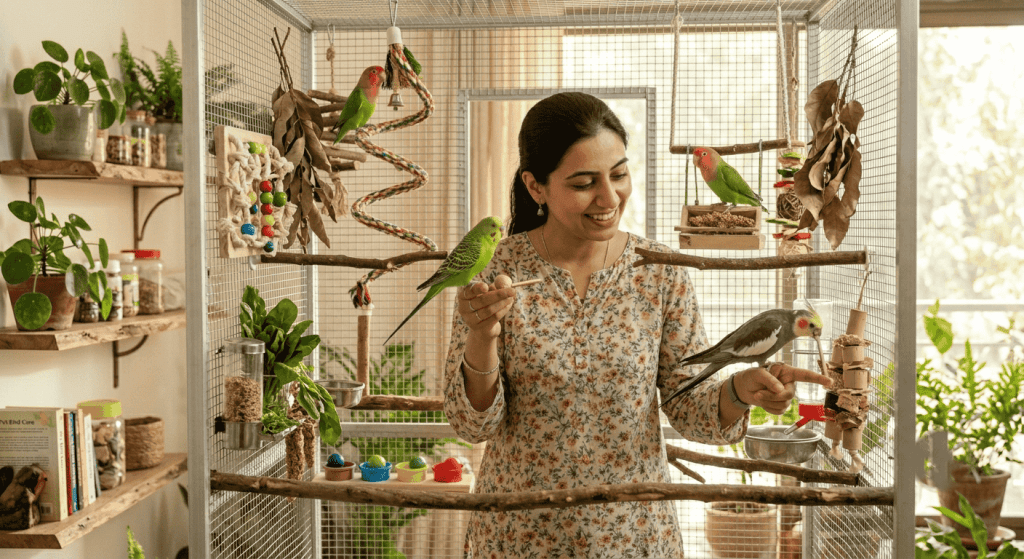
A smiling South Asian woman inside a large, well-equipped bird aviary cage feeding a green budgie, with a cockatiel and two lovebirds perched nearby.

Parrots are highly emotional and smart animals. They cannot survive just sitting inside a cage all day. To keep them happy:

  • Out-of-Cage Time: Allow your parrot at least 2 to 3 hours outside the cage daily to fly and explore in a safe, closed room.
  • Toys and Enrichment: Provide bird-safe wooden blocks, bells, and shredding toys. Rotate these toys weekly so your pet doesn’t get bored.
  • Your Attention: Spend time talking, whistling, and interacting with them. A lonely parrot can get depressed and start plucking its own feathers.

Simple Grooming Tips

Keeping our parrot clean is simple. Offer a shallow bowl of fresh, clean water 2 to 3 times a week. Most parrots absolutely love to splash around and bathe themselves. Alternatively, we can gently mist them with water using a clean spray bottle. For their nails, natural wood perches usually keep them trim, but we can seek professional help if they become too sharp.
Warning Signs of a Sick Parrot

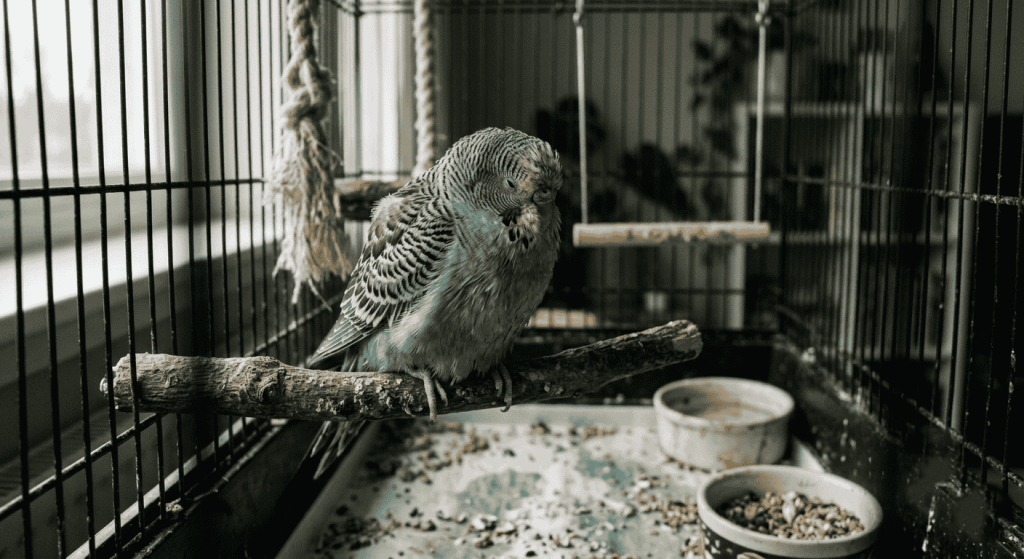
A sick and lethargic blue and green budgerigar parakeet with fluffed-up feathers sitting with eyes closed on a wooden perch inside a cage.

Birds are experts at hiding their illnesses until they are very sick. You must visit a veterinarian immediately if you notice any of these signs:

  • Sitting fluffy for long hours.
  • Sleeping continuously on the bottom of the cage instead of sitting on a perch.
  • Watery eyes, a runny nose, or clicking sounds while breathing.
  • A sudden loss of appetite or changes in their droppings.

Leave a Reply

Your email address will not be published. Required fields are marked *

Latest Posts