First, How Do You Know If Your Leopard Gecko Is Underweight?
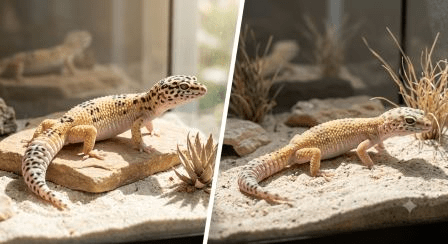
Before you start worrying, let’s figure out if your gecko is actually underweight or just naturally lean. A healthy leopard gecko should have: Signs your

Before you start worrying, let’s figure out if your gecko is actually underweight or just naturally lean.
A healthy leopard gecko should have:
Signs your gecko is underweight:
A quick rule of thumb: If the tail is significantly skinnier than the neck, your gecko is likely underweight.
Before you can fix the problem, you need to understand what’s causing it. Here are the most common reasons:
Leopard geckos are ectothermic — they rely on external heat to digest food properly. If the enclosure is too cold, their metabolism slows down and they can’t absorb nutrients.
The correct temperatures:
Internal parasites steal nutrients from your gecko. The single most common reason for weight loss in leopard geckos is cryptosporidiosis, a nasty parasitic infection.
Symptoms to watch for:
A veterinarian can perform a fecal exam to diagnose parasites and prescribe appropriate medication.
Are you offering the right foods? Are you feeding enough? Are you dusting with supplements?
Common dietary mistakes:
Stress can suppress appetite. Common stressors include:
Various illnesses can cause weight loss — from metabolic bone disease (MBD) to organ failure. Impaction (a blockage in the digestive tract, often from eating substrate) can also prevent nutrient absorption.
If your female is carrying eggs, this can temporarily affect her appetite.
This is the most important step. Before you start any weight-gain plan, have an exotic vet examine your gecko. They can:
A severely underweight gecko, especially one that’s lethargic or showing signs of illness, needs immediate veterinary attention.
Before changing the diet, make sure the environment is right:
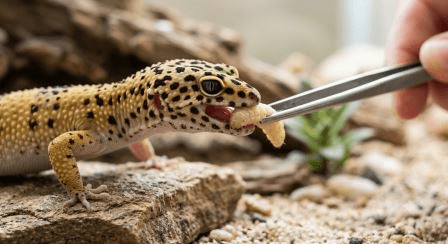
For an underweight adult: Feed every day or every other day, offering as much as they’ll eat in a 10-15 minute period.
For juveniles: Daily feeding is crucial.
General guidelines:
But remember: An underweight gecko needs more frequent feedings until it reaches a healthy weight.
Variety is key for healthy weight gain. Don’t just offer one type of insect.
Staple insects (feed regularly):
Fattening treats (for weight gain, use in moderation):
How to use fatty treats:
Gut-loading means feeding nutritious foods to the insects before offering them to your gecko. This increases the nutritional value.
Good gut-loading options:
Dusting means coating insects with calcium and vitamin powder before feeding.
Supplement schedule:
Track progress with a digital kitchen scale.
What to look for:
Realistic timeline: Don’t expect overnight results. It can take several weeks to months for a gecko to reach a healthy weight. Some geckos might not gain any weight one week, then gain 4-6 grams the next.
If your gecko is refusing food entirely, you may need to intervene more directly.
A “gecko slurry” is a highly nutritious, easily digestible liquid food.
Option 1: Insect-Based Slurry
Option 2: Commercial Carnivore Diet
Option 3: Baby Food (Use Sparingly)
Nose Dabbing (Gentlest Method):
Syringe Feeding:
Start small: Begin with 0.1-0.2 ml and gradually increase.
A fat tail is the best indicator of a healthy leopard gecko. Here’s how to get that tail plump:
The tail is where leopard geckos store fat and energy reserves. It’s a natural survival mechanism from their native arid environments. A fat tail indicates good health — if your gecko is feeding well but the tail isn’t fattening, there’s an underlying problem.
1. Adjust the diet — offer variety, not just one staple insect
2. Offer occasional fatty treats — waxworms, butterworms, superworms
3. Provide ideal temperatures — proper heat for digestion
4. Give supplements — calcium and vitamins
5. Remove stress factors — check enclosure, hiding spots, handling
6. Create a consistent feeding schedule
There’s no single answer — it depends on age, health, and underlying causes.
General guidelines:
What to expect:
Mistake #1: Power Feeding
Don’t rush the process. “Power feeding” — forcing huge amounts of food — can be dangerous. Slow and steady wins the race.
Mistake #2: Only Feeding Waxworms
Waxworms are like candy — geckos love them, but they’re not nutritious enough to be a staple. They can become addictive and lead to nutritional deficiencies.
Mistake #3: Ignoring the Root Cause
If your gecko has parasites, no amount of food will help until the parasites are treated. Always see a vet first to rule out medical issues.
Mistake #4: Over-supplementing
More isn’t always better. Follow recommended dusting schedules — too much calcium or vitamins can also cause problems.
| Step | Action |
|---|---|
| ✅ | Visit an exotic vet for examination |
| ✅ | Check enclosure temperature (88-92°F warm side) |
| ✅ | Check humidity (30-40%) |
| ✅ | Increase feeding frequency (daily for underweight adults) |
| ✅ | Offer varied diet (crickets, roaches, mealworms, silkworms) |
| ✅ | Add fatty treats (waxworms, butterworms — in moderation) |
| ✅ | Gut-load all insects before feeding |
| ✅ | Dust with calcium and multivitamin |
| ✅ | Weigh weekly to track progress |
| ✅ | Be patient — healthy weight gain takes time |

Helping an underweight leopard gecko gain weight requires patience, consistency, and attention to detail. The key steps are:
The most important advice: Never rush the process. Overfeeding to “fix” the problem quickly can lead to obesity and health issues. Slow, steady progress with proper nutrition and care is the safest way to get your leopard gecko back to a healthy weight.
If you’re ever unsure, consult a reptile veterinarian. They can help diagnose underlying issues and give you a personalized plan for your gecko’s specific needs.
Disclaimer
This article is for educational and informational purposes only.